Why should you go there and how do you do it right?
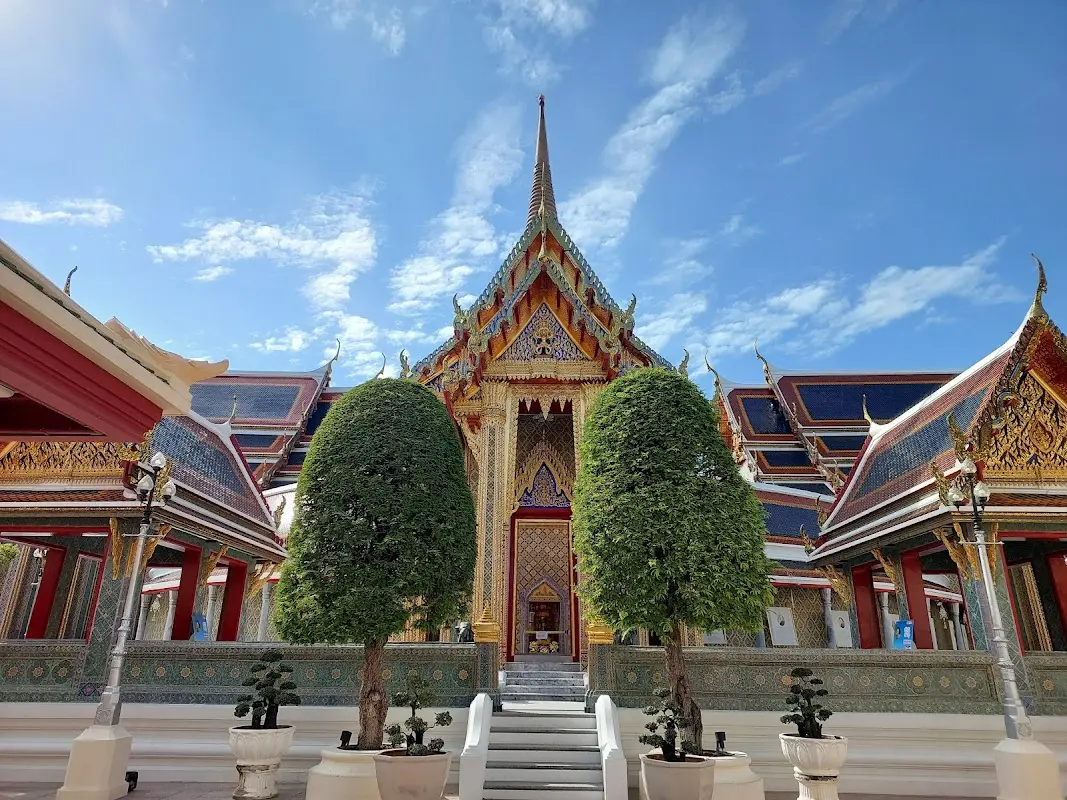
The tilework is the real reason to visit. King Rama V commissioned Wat Ratchabophit and completed its construction in 1869. The circular cloister surrounding the 43-meter-high, gilded chedi is covered with colorful, glazed ceramic tiles, the details of which are crafted from Benjarong porcelain. You can stand there for half an hour and still discover something new – and admission is free.
Rama V had traveled in Europe, and it shows. The ordination hall's exterior is in the Thai style, but the interior is in the Neo-Gothic style, with pointed arches and gilding that is more reminiscent of a European chapel than a temple in Bangkok. Its doors are decorated with mother-of-pearl and royal insignia. The hall is not always open to the public, so consider it a special experience if you are able to visit. At the western end of the grounds is a royal cemetery with Gothic-style tombs, including the tomb containing the ashes of Prince Mahidol, the Princess Mother, and Princess Galyani Vadhana.
The temple is open daily from 6:00 AM to 6:00 PM and has a peaceful atmosphere; it is visited more by monks and Thai guests than tourists. The abbot of the temple is Thailand's Supreme Patriarch. Shoulders and knees should be covered. The temple is located on Fueang Nakhon Road, about a 10-minute walk from Wat Pho and the Grand Palace, and roughly the same distance from the Sam Yot MRT station. Wat Suthat and the Giant Swing are just a short walk to the east, making a visit an ideal addition to a trip to the old city.




Community
Comments 0
Start the conversation.