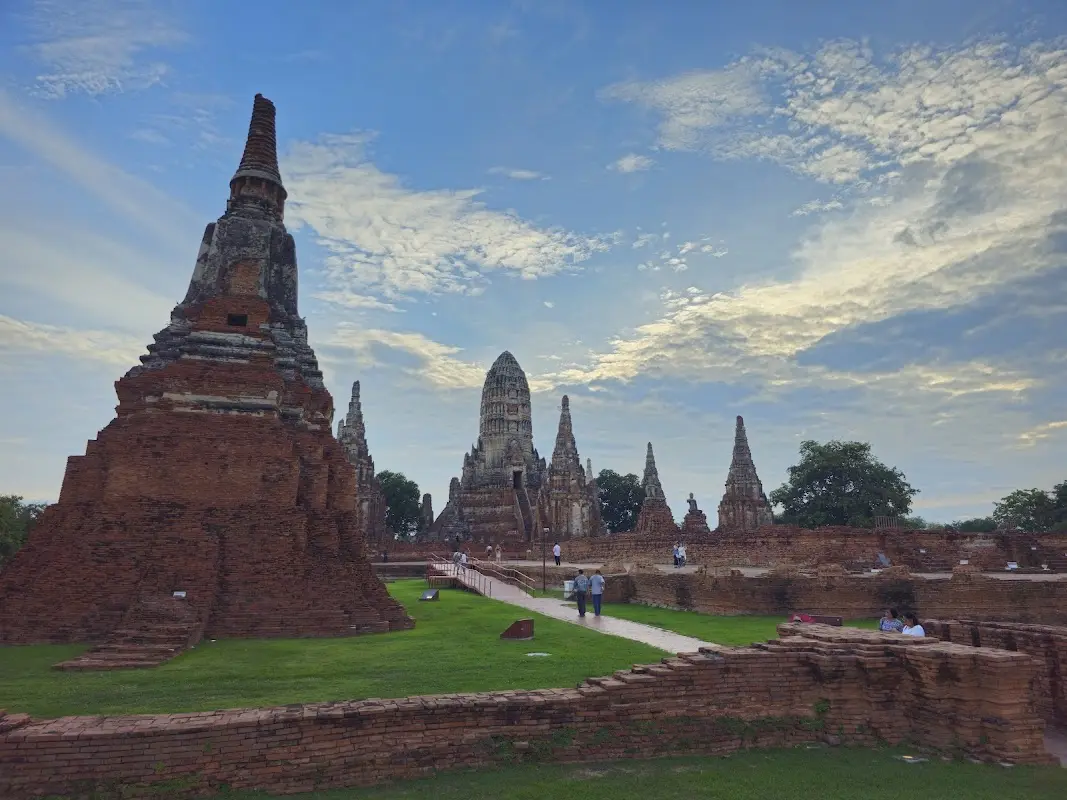
Why should you go there and how do you do it right?
If you can only visit one temple on a day trip to Ayutthaya, make it this one. King Prasat Thong commissioned it in 1630 in the Khmer style as a memorial to his mother: a 35-meter-high central prang surrounded by four smaller prangs, eight chedi-shaped chapels, and a gallery that once housed 120 seated Buddha statues, most of them now headless. The temple is located on the west bank of the Chao Phraya River, outside the historic island, far from any other buildings. The grounds are spacious and open, the paths are paved with bricks, and reviews consistently praise its tranquility and serenity. And rightly so.
Entry costs 80 baht for foreigners at the entrance. Alternatively, there's a combination ticket for 300 baht that covers all seven temples and pays for itself after just four visits. According to Google, the temple is open daily from 8:00 AM to 6:30 PM, although some sources state 5:00 PM for weekdays. I would therefore recommend arriving in the early afternoon to enjoy the sunset. Shoulders and knees should be covered. Near the entrance, there are shops where you can rent traditional Thai clothing, which explains the many people taking photos along the paths.
The floodlights are the point that is often misunderstood. After nightfall, the grounds are only open during the seasonal events of the Fine Arts department, most recently from December 26, 2025, to February 1, 2026, from 4:30 p.m. to 9:30 p.m. Outside of this period, daytime visits are possible, and the evening view can be enjoyed from the river on one of the boat trips that circumnavigate the island at sunset.
The temple is located opposite the main temples on the other side of the river. Cycling across the bridge is quite long (50 to 100 baht per day in the city), so a tuk-tuk, costing around 200 to 300 baht per hour, is a more comfortable option for a same-day visit. The Department of Fine Arts restored the temple starting in 1987 and reopened it in 1992. During the 2011 floods, it was submerged under two meters of water, and restoration work is still ongoing. In September 2026, the military constructed flood barriers along the river, allowing the temple to remain open.




Community
Comments 0
Start the conversation.