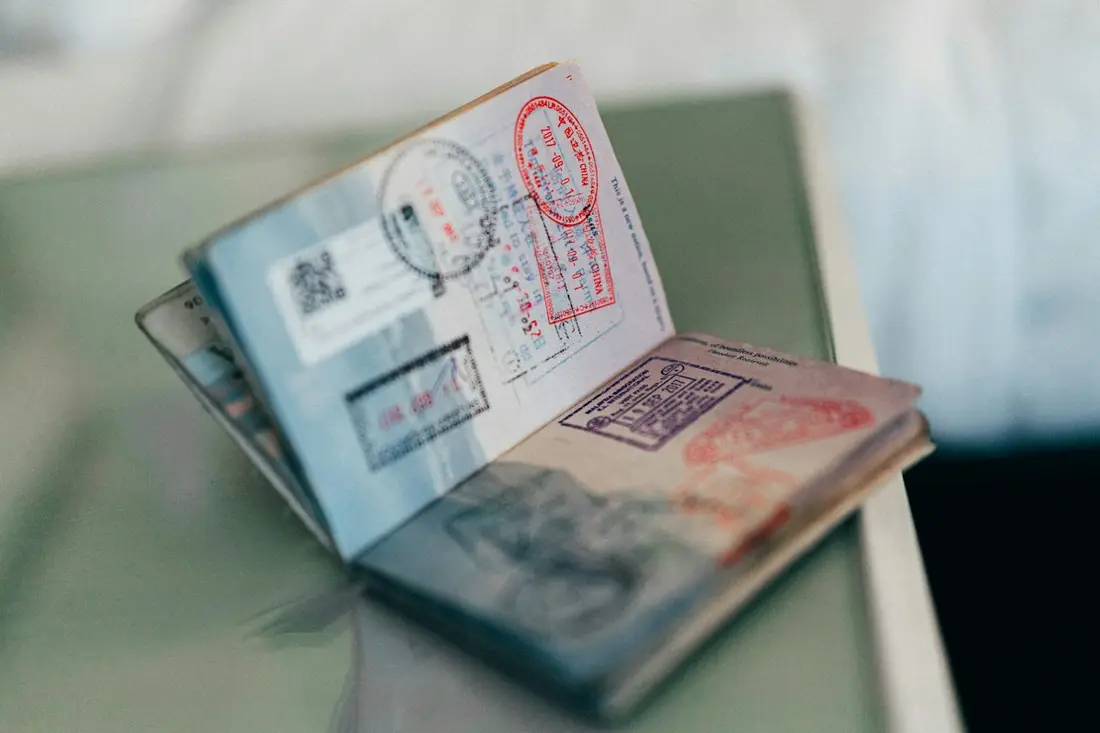
A visa run means leaving Thailand and immediately re-entering to obtain a new visa run stamp. Since September 15, 2026, this stamp has been valid for 30 days for nationals of the 60 eligible countries. The system still operates, but with two limitations: Land entry is limited to two per calendar year, and since November 2025, anyone who has made more than two visa runs is subject to checks at both airports and border crossings and may be refused entry.
Cambodia's land borders are closed, leaving only Laos, Malaysia, and the Ranong border crossing into Myanmar as options. However, for 1,900 baht, one can first secure a 30-day extension of stay at the immigration office.
The short answer
Yes, a visa run is still possible, however, only two land entries per year count under the exception, and repeated entries by plane are also subject to checks. First, apply for a visa extension for 1,900 baht and then travel to Laos or Malaysia.
Key facts
Two land entries per calendar year
The announcements issued by the Ministry of the Interior on September 15, 2026, limit visa-free entry via land border crossings to two entries per calendar year. Nationals of Malaysia, Brunei, Indonesia, and Singapore are exempt from this count.
The return flight will be checked.
The Immigration Bureau's order from November 2025 requires all checkpoints, including airports, to deny entry to individuals who have made more than two visa runs and cannot provide a justification. Round-trip flights do not circumvent this restriction.
Increase the runtime before executing the function.
A 30-day extension costs 1,900 baht at the immigration office. It is granted at the discretion of the official and allows you one of your two entries by land.
Cambodia is closed
The British and Canadian governments list all land border crossings between Thailand and Cambodia as closed or blocked. Poipet and Hat Lek are no longer options, meaning routes to Pattaya now lead through Laos.
Each time a new TDAC
The digital entry card for Thailand is valid for one-time use only. One entry comprises two entries: one into the neighboring country and one back into Thailand. A new card must be issued within three days of arrival for entry into Thailand.
The rules since November 2025 and September 2026
Two amendments established the rules. On November 12, 2025, the Immigration Bureau ordered four measures against visa runs. Checkpoints at airports and borders were instructed to screen foreigners repeatedly entering and leaving under the visa exemption and to deny entry to those who have made more than two visa runs without a justifiable reason. Provincial authorities were instructed to refuse or cancel extensions if they observed a pattern of visa runs. The government press office summarized that visa runs would be limited to two.
The 60-day exception ended on September 15, 2026. The 60 eligible countries and territories now receive 30 days. The new regulations, published in the Official Gazette on August 31, limit visa-free entry via land border crossings to two per calendar year. Malaysia, Brunei, Indonesia, and Singapore are exempt from this rule. Thai authorities have not yet commented on whether entries made by land at the beginning of 2026 under the old 60-day rule will count towards this year's two-entry limit. Therefore, do not assume that the count restarted in September.
The written restriction refers to entry by land. However, two pages from the Royal Thai Embassy go further. London states that eligible passport holders may only use the exemption twice per calendar year, and Oslo mentions two entries per year by air, land, or sea. Given these regulations and airport security checks, I would plan as if two entries per year, regardless of the chosen route, were the realistic limit.
The immigration authorities can also check your total length of stay in the country. In December 2025, the head of the Ranong immigration office told the Phuket News that stays using visa-free entry and tourist visas must not exceed a total of 150 days per year – regardless of whether entry is by land, air, or sea. His checkpoint enforces this rule particularly strictly. This is the official guideline of a provincial authority, not an official regulation, but it illustrates how an official checks a passport with many stamps.
Entry is not guaranteed. Entry with a special permit is always at the discretion of the official, and refusal of entry at the border means that one must find a way back home.
Expand first or execute?
Extend your visa first. The extension costs 1,900 Baht, is usually granted the same day at the nearest immigration office, and requires your passport, form TM.7, a passport photo (4x6 cm), and the fee in cash. The extension adds 30 days to your visa stamp. In eight provinces, including Bangkok, Chiang Mai, Pattaya, and Koh Samui, you can apply for the extension online via e-Extension and only need to appear in person for the stamp. Your two land entries are not counted towards this extension. Apply for the extension before your visa stamp expires, as a one-day delay will result in an overstay. Our Thailand visa extension guide describes both methods and the relevant authorities.
If you need more time, you should apply for an extension. An extension towards the end of your stay will earn you a new 30-day stamp, which can also be extended once. Thus, a 60-day stay is extended to 120 days with a single extension. And that's precisely why the checks become stricter if you apply for a second extension in the same year.
Some guides on visa runs claim that an entry stamp from a land border cannot be extended. However, I could not find this in any official document. The websites of the Royal Thai Embassies in Washington, London, and Doha state that the 30-day stay can be extended by up to 30 days at the officer's discretion, and none of the embassies handle land entries differently. Officially, the only directive is from November 2025 to refuse extensions if an officer detects a pattern of visa runs. So, an entry stamp from a land border can usually be extended, but a passport with multiple consecutive visa runs might not.
The expansion, step by step, and the full terms and conditions of participation.
The nearest open border from each base.
The prices and timetables shown are from 12Go's public route pages; train prices for Bangkok are from our Bangkok–Vientiane travel guide. Prices quoted by travel agencies are based on information provided by the agencies and their clients and are subject to change; please confirm these before booking. A visa is required upon arrival for Laos (approximately US$30–42, depending on the passport). The prices shown do not include the Lao visa, the shuttle service across the bridge, or the boat trip to Kawthaung.
From Bangkok and Pattaya, we travel to Laos.
Since Cambodia is closed, Bangkok's route goes through Laos. The safest way to travel is on express train No. 133, the only train to Laos. It departs Bangkok (Krung Thep Aphiwat) at 9:25 PM and arrives at Khamsavath station near Vientiane at 9:05 AM. A seat costs between 281 baht and 874 baht for a sleeper berth. Exit checks for Thai citizens take place on the platform in Nong Khai. The journey from Bangkok cannot be completed in one day, so at least two nights on the train or one night in Vientiane should be planned, which is the more comfortable option anyway.
A visa is required to enter Laos. The official Laotian e-visa website lists the Friendship Bridge and Khamsavath Railway Station as e-visa terminals. Visas on arrival cost approximately US$30–42 in cash, depending on your passport; baht is accepted at a less favorable exchange rate. Bring a passport photo and well-preserved US dollar bills.
From Pattaya, it's the same border crossing, but with a longer bus ride. Night buses to Nong Khai depart between 6:30 pm and 10:15 pm and take 10 to 15 hours for 800–850 baht. Most travelers from Pattaya opt for the easier route to Bangkok and then take a train or plane.
Bookable departures · updated daily
Bangkok → Vientiane: Departure times you can book now
All flights currently bookable via 12Go on this route, sorted by booking class. The prices shown are distributed across the different booking classes; the exact price for a seat and a specific date can be found on the booking page.
bus
12Go timetables and fares are updated daily. Services that operate only locally—regular trains, weekend trips, and ferry terminal tickets—are not listed; these can be found in the table above. Sponsored link: We may receive a commission if you book, at no extra cost to you.
Check the train and bus connections from Bangkok to Vientiane.
12Go sells e-tickets for the Rapid Line 133 and the Mo-Chit bus to Vientiane, which you can show on your smartphone. Train fares are slightly higher than those at the station, so you should also check the national railway website.
Sponsored link – We may receive a small commission if you book, at no extra cost to you. Learn more.
From Chiang Mai, Chiang Khong and Huay Xai
The route from Chiang Mai crosses the Friendship Bridge IV at Chiang Khong on the Mekong River, beyond Chiang Rai. GreenBus departs at 8:30 a.m. and arrives in Chiang Khong at 2:10 p.m. for 434 baht. The last minibuses back depart at 3:45 p.m. and 4:00 p.m., allowing for an overnight stay in Chiang Khong without a fixed itinerary. Minibuses operated by travel agencies, departing before sunrise and returning the same evening, cost between 2,000 and 5,300 baht, with the more expensive options often not including a visa for Laos. According to local sources, the Mae Sai border crossing into Myanmar has been closed to foreigners since 2024.
Chiang Mai → Chiang Khong: Departure times you can book now
Chiang Mai → Chiang Khong
Check the bus connections from Chiang Mai to Chiang Khong.
GreenBus and the minivans to Chiang Khong can be booked via 12Go, as can the vans that return in the afternoon.
Round trip by bus, agency vehicles, field office and flights.
From Phuket, Ranong and the boat to Kawthaung
Phuket's nearest departure point is Ranong. There, you'll pass through Thai immigration control at the pier, cross the river estuary to Kawthaung in Myanmar by boat, and then return. The Rungkit tour bus departs at 5:30 a.m., arriving in Ranong at 11:00 a.m., and costs between 315 and 520 baht with a 12Go ticket. Return trips depart at 1:15 p.m. and 3:45 p.m., making for a long day trip. Alternatively, tour operators offer the route for around 2,500 baht. Kawthaung has been closed to foreign day tourists on several occasions, so it's advisable to check the day before. The British Foreign Office advises against all non-essential travel to this part of Myanmar, which may affect your travel insurance. The head of the immigration office in Ranong has stated that visa regulations are most strictly enforced at his border crossing.
Phuket → Ranong: Departure times you can book now
Check the bus connections from Phuket to Ranong.
Rungkit Tour buses between Phuket and Ranong operate with 12Go, three times daily in each direction.
Ranong step by step, the options Satun and Hat Yai, as well as the return flights.
From Koh Samui, Malaysia via Hat Yai
From Samui, you can travel to Malaysia. Early ferry and bus services reach Hat Yai around 3:00 PM for 570–690 baht. The Sadao–Bukit Kayu Hitam border crossing is about 60 km further along the road, so you should plan for at least one overnight stay if traveling independently. Travel agencies on the island offer day trips to the border at Satun for approximately 4,200–4,500 baht, although information from the Malaysian side is contradictory. Overnight trips to Penang cost approximately 4,500–4,800 baht. A free MDAC entry card is required for entry into Malaysia.
The day trip to Satun, exploring Sadao on your own, overnight stay in Penang and the flight to Singapore.
From Krabi and Hua Hin
Krabi is half a day away from two Malaysian border crossings, and Hua Hin is far from any open borders.
Krabi and Ao Nang
Krabi offers two travel options from Malaysia. In the morning, minibuses reach Hat Yai between 12:00 and 12:30 for 360–460 baht. The Sadao border crossing is about 60 km further south. The other option is Satun, 175 km south. Minibuses arrive there around 12:30–13:00 for 510–850 baht. A ferry departs daily from Tammalang to Langkawi at 11:30. The only return ferry from Langkawi departs at 7:30, so the ferry crossing requires an overnight stay on Langkawi.
I would prefer taking the road to Sadao to the train to Padang Besar. The British Foreign Office advises against all non-essential train travel between Hat Yai and Padang Besar, and this advice may affect your insurance coverage. The Sadao district is not on this list.
Hua Hin
Hua Hin does not have an easy border crossing. Ranong is the nearest border crossing (271 km away), and 12Go only lists private taxis there, which take about five and a half hours and cost between 4,485 and 5,200 baht. For most Hua Hin residents, traveling via Bangkok (a three-hour drive) and then flying or taking an overnight train to Laos is the better option.
Instead, they fly
The other type of trip is a short break: a few days in Kuala Lumpur, Singapore, or Vientiane, and then back home. The land travel restrictions don't apply to entry by plane, but the checks scheduled for November 2025 do, so the two-part travel rule remains in place. Flying makes the trip seem like what it is: a short break – and that's exactly the right reason to give at the check-in counter.
Kuala Lumpur is easily accessible from Bangkok: there are about a dozen direct flights daily, with a flight time of 2 hours 15 to 2 hours 20 minutes. AirAsia, Thai AirAsia, and Batik Air fly to Don Mueang Airport, while Malaysia Airlines, Thai Airways, and Thai Vietjet fly to Suvarnabhumi Airport. From Phuket, there are approximately eight to nine daily flights to Singapore with Singapore Airlines and Scoot. Vientiane can be reached from Bangkok in 70 to 80 minutes with Thai Airways, Lao Airlines, or Thai AirAsia.
What you should take with you when running
A passport valid for at least six months
A passport valid for six months is required for entry into Thailand; for Laos, two additional blank pages are required. Up to four passport stamps are needed per trip.
A new TDAC for the return journey
Submit your application within three days of your re-entry at tdac.immigration.go.th. You can also do this on the Thai website before crossing the border. The application is free.
US dollars and a photo for Laos
The Lao visa on arrival costs approximately US$30–42 in cash, depending on the passport, and is most easily paid with clean US dollar bills and a passport photo. The e-visa is valid at both Friendship Bridges and processing takes about three business days.
The MDAC for Malaysia
Malaysia's free digital entry card must be applied for online at imigresen-online.imi.gov.my within three days of arrival. Holders of British passports, for example, receive 90 days visa-free entry with this card.
A connecting ticket from Thailand
Regarding the exemption permit, the official may require you to leave Thailand within 30 days. It's advisable to have a cheap flight or bus ticket for your departure saved on your mobile phone.
Proof of financial resources, which the official may request.
The Tourism Authority of Thailand (TAT) states that the minimum amount required for visa-free entry is 10,000 baht per person or 20,000 baht per family, while the Royal Thai Embassy specifies 20,000 baht per person or 40,000 baht per family. Carry cash or bank statements and do not rely on card payments or app balances being accepted.
When a visa run is the wrong approach
A "run" visa is suitable for longer trips that extend by several weeks. It's not recommended for those planning to spend most of the year in Thailand, and the immigration authorities now point this out. For long-distance workers and long-term travelers, the Destination Thailand Visa (180 days per entry, valid for five years) is appropriate. For stays of six months or more, a Multiple Entry Tourist Visa or a 60-day Tourist e-Visa is required, which must be applied for before arrival. An education visa is necessary for studying, Muay Thai training, or language courses, and individuals over 50 or with Thai family members need a Non-Immigrant O Visa. Our visa guide compares the different visa options.
The long-term visas and the trips that can result from a run.
Frequently Asked Questions
Frequently asked questions about the Thailand Visa Run.
Yes. Even if you leave and re-enter the country, you will receive a new 30-day exemption stamp, provided you are from one of the 60 eligible countries. Entry by land is limited to two per calendar year. Since November 2025, immigration authorities – including at airports – can refuse entry to individuals who have left the country more than twice without a valid reason.
Two entries by land are visa-free (according to regulations in effect since September 15, 2026), unless you hold a Malaysian, Brunei, Indonesian, or Singaporean passport. There is no official limit on the number of returns, however, immigration authorities check all travelers after more than two entries. The embassies in London and Oslo state a limit of two entries per year for all routes. Therefore, plan for two entries.
Yes, and the two-entry-per-year limit does not apply here. However, entry checks are repeatedly carried out at airports, and the immigration office states that it has turned away approximately 2,900 people with this entry pattern since the beginning of 2025. This route typically involves a few days' stay in Kuala Lumpur or Singapore followed by a return flight.
The bus trip from Phuket to Ranong and back costs about 550 baht, plus the boat trip to Kawthaung. From Chiang Mai, the bus trip to Chiang Khong costs 434 baht each way, plus the Lao visa of about US$30–42. An even cheaper option is to extend your visa for 1,900 baht, allowing a 30-day stay without leaving the country.
From Phuket to Ranong, there's a bus at 5:30 am and a return bus in the afternoon. From Chiang Mai, a rental car from an agency leaves before sunrise; the public bus and the last return bus leave about 90 minutes before the border – you can't rely on this. From Koh Samui, you can only reach the border at Satun with a rental car from an agency. From Bangkok and Pattaya, as well as from the islands using public transport, you should plan for at least one overnight stay.
No. According to travel advisories issued by the British and Canadian governments, all land border crossings between Thailand and Cambodia are closed. Entry into Cambodia is only possible by air via Phnom Penh or Siem Reap.
Cross the border at the Friendship Bridge in Nong Khai using the direct night train No. 133 from Bangkok or the shuttle bus across the bridge, or at Chiang Khong from the north. Apply for a Lao e-visa in advance or pay for the visa upon arrival (approximately US$30–42 in cash) along with a passport photo. Submit a new TDAC certificate before your return.
Coming from the south, you can cross the border at Sadao, about 60 km from Hat Yai, or take the ferry from Satun to Langkawi and stay overnight there. Apply for the free MDAC form within three days before your arrival in Malaysia and a new TDAC form for Thailand before your departure. British citizens, for example, can stay in Malaysia visa-free for up to 90 days.
Laos, at the Friendship Bridge between Nong Khai and Vientiane, as the border crossings to Cambodia are closed. The overnight train journey takes approximately 12 hours, so at least two nights' accommodation are necessary. A flight to Kuala Lumpur (2 hours 15 minutes each way) is often easier.
Normally. The Royal Thai Embassy website states that the 30-day stay can be extended by up to 30 days at the official's discretion, and that no distinction is made between entry by land and by air. Some guidebooks claim that entry stamps for land arrivals cannot be extended, but I haven't found any official text confirming this. Authorities can refuse entry if they detect a pattern of visa runs.
Yes. The card is valid for one entry. For re-entry into Thailand, a new card must be applied for within three days of arrival. This is available free of charge at tdac.immigration.go.th.
Sources
The rules, border regulations, and fares listed here are from these websites. As rules are subject to change, please check the official regulations before traveling.
Where to stay in Thailand
Compare prices on different trusted booking sites for the destinations listed in this travel guide.
Compare prices on Booking.com
We may receive a commission for bookings made through these links – this will not incur any additional costs for you. Learn more.
You might also like this
Best time to travel to Thailand
The best time to travel is from November to February; the rest of the year is best on the east coast.
Thailand on a budget
Thailand for less money, without sacrificing the best
Is Thailand safe?
What actually poses risks, what is only mentioned in the news, and what do four government advisories say – destination by destination?
Thailand Visa and Entry Requirements
Who is allowed to enter visa-free, what entry controls are in place, what is the TDAC, and how can you extend your stay?
Ethical elephant sanctuaries in Chiang Mai
No riding, no shows, and the protected areas where you watch rather than wash.
I lived in Bangkok for four years and traveled throughout the country from there. The guidebooks reflect my personal opinion and are written as I would explain things to a friend planning a trip.
Ready to create your travel itinerary?
Use our free trip planner to save places, organize days, and share your trip.
Community
Comments 0
Start the conversation.