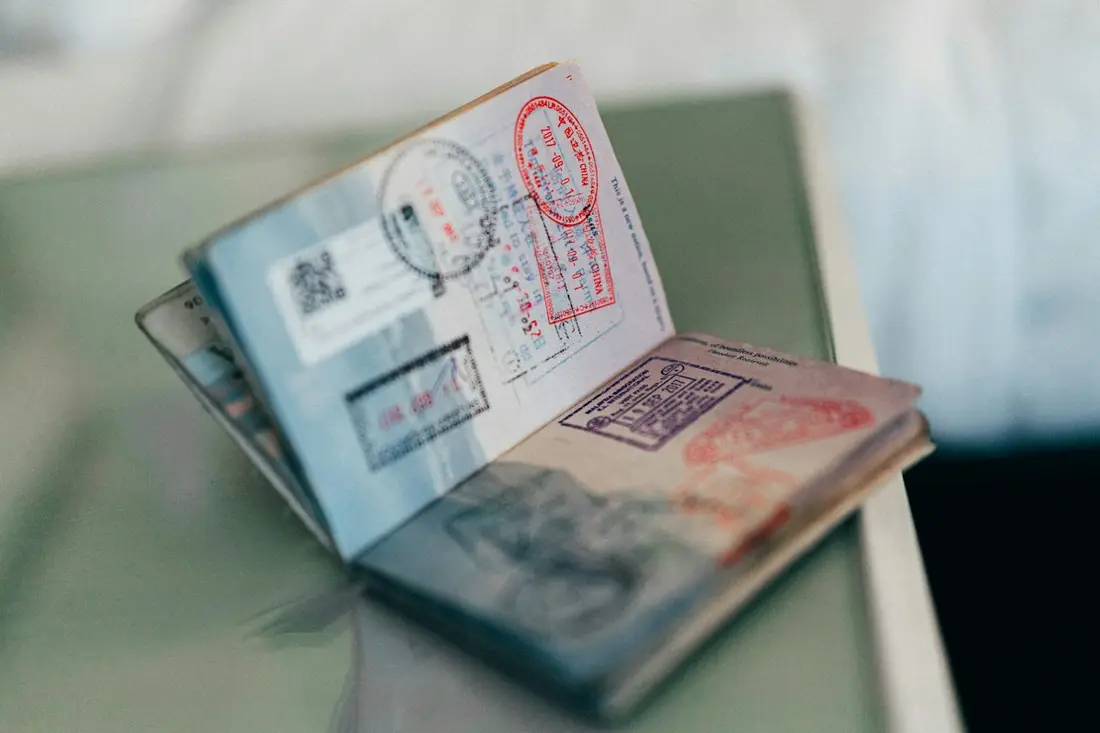
Do you need a visa for Thailand?
Most visitors don't do this, but the visa-free stay is shorter than before. Since September 15, 2026, passport holders from 60 countries and territories receive an entry stamp for 30 days without a visa. Previously, 60 days applied to nationals of 93 countries. The USA, UK, Canada, Australia, New Zealand, the EU and EEA, Japan, India, Singapore, Malaysia, and all six Gulf states are on the new list. The stay can be extended once at any immigration office for 1,900 baht. 60 days is therefore the maximum length of stay without a visa. For a longer stay, a 60-day tourist e-visa is required, which must be applied for before departure.
Nationals of 21 countries, including Mexico and Sri Lanka, have lost visa-free entry. China, Russia, and South Korea were never on the list and continue to enter under existing agreements. All arrivals must complete the free Thailand Digital Arrival Card (TDAC) online within three days of arrival. This page provides passport requirements, the entry control checklist, and information on extending your stay.
Book a refundable first night
The TDAC will ask for an accommodation address, and immigration officials may require them to verify your accommodation for the first night. A free room in your arrival city covers both of these requirements, and you can change the rest of your travel arrangements later.
Open Booking.com with your travel dates · also on Expedia · Trip.com
Which visa do you need? Select your passport.
Select your passport and the length of your stay. You'll find the answer in the table below with the entry requirements. The same rule applies as stated in the table, except you don't have to read through twenty lines.
Select a passport, and the answer will appear here.
These rules changed on September 15, 2026. If you entered before this date and have a 60-day stamp, it remains valid until the date printed on it. Regardless of the specific rules, the expiry date printed on your stamp ("Entry until") is the one that applies.
Official source: tdac.immigration.go.th
What you need at the immigration desk
The five things a police officer might ask about, and the three most people forget.
Regardless of your nationality, the basic requirements for entering Thailand are essentially the same: a passport valid for at least six months from your entry date and containing at least one blank page; your TDAC confirmation (a smartphone copy is sufficient); an onward ticket for departure within your permitted stay (30 days if visa-free); the address of your accommodation for the first night (as this is requested on the TDAC form and may also be asked by officials); and proof of sufficient funds (the official may request this). The Tourism Authority of Thailand (TAT), in its July 2026 reminder, states that the required amount is 10,000 baht per person or 20,000 baht per family for a visa on arrival and certain visa-free entries, and 20,000 baht per person or 40,000 baht per family for a tourist or non-immigrant visa. The websites of the Royal Thai Embassies in Washington and Los Angeles, however, state that the visa waiver fee is 20,000 baht per person or 40,000 baht per family. The Tourism Authority of Thailand (TAT) accepts baht, the equivalent in another currency, or proof of payment. Children under 12 are exempt from the fee. No official website states that a balance in a banking app or a credit card is sufficient. Therefore, I would recommend carrying 20,000 baht or the equivalent in cash.
Customs regulations lead to more frequent violations than visa regulations. Thai customs allows each adult to bring in 200 cigarettes or 250g of tobacco, one liter of alcohol, and other personal goods worth up to 20,000 baht duty-free. Exceeding the cigarette limit results in a fine of ten times the value of the goods. Possession of e-cigarettes, vapes, pods, and heated tobacco products is prohibited, as is their sale. The British Foreign Office states that fines range from 5,000 to 30,000 baht, and the device will be confiscated. Cannabis is only available in Thailand for medical purposes with a prescription, so it's best to leave it at home.
Three cases not explicitly mentioned in the rules. Every child, including infants, requires their own TDAC and enters Thailand according to the regulations of their own passport. Dual nationals must leave Thailand with the passport they used to enter, as the exit stamp must match the entry stamp. And if you are in Bangkok's transit area for less than 12 hours without going through immigration, you do not need a visa or a TDAC unless you are changing terminals or airports, or your onward flight is with a low-cost carrier that requires re-checking in during transit.
No vaccinations, tests, or insurance are required for entry into Thailand. The only exception is the yellow fever vaccination for travelers arriving from countries with a risk of transmission (certain countries in Africa and South America, but not countries in Asia, Europe, North America, or Australia). Tourists are not asked about their travel insurance at the border, but it is mandatory for retirees and long-term residents. Not mandatory does not mean unnecessary. Thai private clinics charge foreigners full costs; accidents involving motor scooters are the most common type of claim. Insurance purchased before your flight is the most economical option.
At the counter, you will need your passport (valid for at least 6 months, with at least one blank page), the TDAC QR code, your onward travel ticket within your stay, your address for the first night, and 20,000 baht or the equivalent in cash in case the official requests proof of funds. This is the complete list for tourists. Information regarding the maximum length of stay is provided below.
What changed on September 15, 2026?
The 60-day exception rule has been abolished. Last review: September 26, 2026
On July 15, 2026, the Thai Cabinet decided to abolish the 60-day visa exemption. The four announcements from the Ministry of the Interior were published in the Official Gazette on August 31 and came into effect on September 15, 2026. This is no longer a proposal or a trial period, but the regulation now in force at immigration counters. Four things changed simultaneously: The regular visa-free stay was reduced from 60 to 30 days. The list of eligible nationalities shrank from 93 to 60 countries and territories. 21 nationalities lost visa exemption entirely, while the permitted stay for Mauritius and the Seychelles was reduced to 15 days. The number of countries for which a visa on arrival could be issued was limited from 19 to three: Azerbaijan, Belarus, and Serbia.
Two further changes are less significant. The maximum stay for visa-free travel is now 60 days instead of 90, as visitors are granted a 30-day stay upon arrival and can apply for a one-time 30-day extension for 1,900 baht. A second extension is not permitted. The visa exemption now applies exclusively to tourism; a Non-Immigrant B visa or the corresponding E visa is required for meetings and conferences. Entry by land is limited to two visits per calendar year; nationals of Malaysia, Brunei, Indonesia, and Singapore are excluded from the visa exemption.
It remains unchanged that the TDAC certificate is still mandatory for every entry, the DTV for teleworkers still applies, the 60-day tourist visa continues to serve as an alternative for longer trips, and there are still no vaccination or insurance requirements for entry. Since some national travel advisories have been updated slowly, the mention of 60 days on a government website is not proof that the old regulation is still in effect.
Reviewed on September 26, 2026. Valid since September 15: 30 days visa-free for 60 countries, 15 days for Mauritius and the Seychelles, visa on arrival only for Azerbaijan, Belarus, and Serbia. Nationals of 21 countries are no longer exempt from visa requirements. An extension for 1,900 Baht is still possible, extending the stay to a maximum of 60 days.
The Thailand Digital Arrival Card (TDAC) in brief
Mandatory from May 1, 2025, free of charge and no visa required.
All foreign nationals arriving in Thailand by air, land, or sea must apply for the Thailand Digital Arrival Card (THAC) before arrival, regardless of their nationality, visa type, or length of stay. This card has replaced the paper TM6 card. The THAC is available free of charge on the official portal tdac.immigration.go.th or via the THIM app of the Immigration Department. Entering passport details, flight number, address of first overnight stay, and a brief health declaration takes approximately five minutes. You will receive a QR code by email, which you present on your smartphone at immigration. Printing is not required.
The application window opens three days before arrival. According to the official FAQs, the day of arrival is included in this calculation. Therefore, applying the day before your flight is ideal, but applying at the departure gate is also possible. A new card is required for each entry, including border crossings and return journeys. Infants and children need their own card. Websites demanding a "TDAC fee" are not government-affiliated; the official portal ends in .go.th and never asks for the card number.
For complete step-by-step instructions, explanations of all fields (including "country you entered" and the occupation selection list), the THIM app, group registration for families, and what to do if you make a mistake, please see our guide to the Thailand digital entry card.
How long can you stay in Thailand without a visa? The 30-day exception rule
From September 15, 2026, passport holders from 60 countries and territories will automatically receive a 30-day visa exemption upon arrival. No application is required. Simply present your passport and TDAC card and you will receive an entry stamp valid for 30 days, with the day of arrival being considered the first day. The 60 eligible countries and territories include: Australia, Austria, Bahrain, Belgium, Bhutan, Brunei, Bulgaria, Canada, Croatia, Cyprus, Czech Republic, Denmark, Estonia, Fiji, Finland, France, Georgia, Germany, Greece, Hungary, Iceland, India, Indonesia, Ireland, Israel, Italy, Japan, Jordan, Kuwait, Kyrgyzstan, Latvia, Liechtenstein, Lithuania, Luxembourg, Malaysia, Maldives, Malta, Netherlands, New Zealand, Norway, Oman, Philippines, Poland, Portugal, Qatar, Romania, Saudi Arabia, Singapore, Slovakia, Slovenia, South Africa, Spain, Sweden, Switzerland, Taiwan, Turkey, Ukraine, United Arab Emirates, United Kingdom, and the United States. Mauritius and the Seychelles will receive a shorter visa exemption of 15 days.
The exemption applies exclusively to tourism. Entry by land is limited to two entries per calendar year, with Malaysian, Brunei, Indonesian, and Singaporean passports exempt from this restriction. There is no limit on entries by air or sea; however, repeated entries under this exemption have always led to inquiries at immigration control. For most passports, there is no cumulative stay limit as in the Schengen Area; each entry starts a new 30-day period.
You can extend your stay once by 30 days at any Thai immigration office for 1,900 Baht. This equates to a total of 60 days without leaving the country. The previous 90-day limit has been abolished with the introduction of the 60-day visa. For a longer stay, please apply for a 60-day tourist e-visa before your flight.
How to extend your stay with the 30-day extension (฿1,900)
If you entered Thailand under the 30-day exception and wish to stay longer without leaving the country, apply for a 30-day extension at a Thai immigration office. This costs 1,900 baht, is usually granted on the same day at most offices, and requires your passport, a completed TM.7 form, a passport photo (4 x 6 cm), and the fee in cash. Apply for the extension before your entry stamp expires, not after. A one-day delay is considered an overstay, not a late application. Only one extension is permitted; a second is not allowed. Authorities may also refuse an extension application if the passport shows a pattern of visa runs.
The offices visitors actually use are the Temporary Visa Extension Service Center in IT Square Laksi (3rd floor) in Bangkok, where tourist visa holders and online applications are processed at the Chaeng Watthana Government Complex; the immigration office in Chiang Mai on Airport Road; the immigration office in Phuket Town; and the immigration office in Chonburi on Jomtien Soi 5 for Pattaya. In Bangkok, Chiang Mai, Pattaya, and five other provinces, you can apply for the extension online via e-Extension (1,900 baht plus a 500 baht service fee) and only need to appear in person for the stamp. It's best to arrive right at 8:30 a.m. when they open; processing takes one to three hours and is at the officer's discretion. After 60 days, you must leave the country or have a visa for a longer stay. The 60-day tourist e-visa, which can be extended once, is the easiest way to stay for up to three months. After that, you will need a DTV (Days Tourist Visa), an LTR (Long-Term Visa), or a retirement visa. Our guide to visa extension for Thailand includes the online process, all main offices, and the refusal rules.
Overstaying your permitted stay will incur a fee of 500 baht per day, up to a maximum of 20,000 baht. In addition, you will face detention and deportation if the police catch you first. After 90 days (1 year), a re-entry ban is automatically imposed, which increases to 10 years for stays of five years or more. The date stamped on your passport is your departure date.
The 21 nationalities that have lost visa-free entry
What should you do if your passport was removed from the list on September 15, 2026?
Nationals of 21 countries who previously had visa-free entry to Thailand no longer require a visa. This includes Albania, Andorra, Colombia, Cuba, Dominica, the Dominican Republic, Ecuador, Guatemala, Jamaica, Kosovo, Mexico, Monaco, Morocco, Panama, Papua New Guinea, San Marino, Sri Lanka, Tonga, Trinidad and Tobago, Uruguay, and Uzbekistan. If you hold a passport from one of these countries, you must obtain a visa before traveling. You will be denied boarding without a valid visa; this issue cannot be resolved upon arrival.
The usual route for almost all travelers is via the tourist visa, which is applied for through the official e-visa portal at thaievisa.go.th. The online application costs approximately US$40 and grants a 60-day stay – twice as long as for nationals of visa-exempt countries. An extension is possible after arrival for 1,900 baht. Processing time varies between 3 and 5 business days depending on the visa office, but can also take up to 15 business days. Therefore, apply for your visa before booking non-refundable flights. The visa on arrival option is no longer available, as it has been discontinued for Azerbaijan, Belarus, and Serbia. Egypt, Uzbekistan, and Armenia, which previously relied on this option, now also require the e-visa.
If you hold one of these 21 passports and have already booked flights, apply for the e-visa now. Airlines check visa status at check-in for flights to Thailand. The change took effect on September 15, 2026; there is no grace period for later bookings.
China, Russia, South Korea and Brazil are joining agreements, not the exemption list.
Why these passports were not affected by the change of September 15th
Some nationalities can enter Thailand visa-free due to bilateral agreements, not unilateral visa exemptions. As these are agreements between two governments, they remain unaffected by the announcements made by the Thai Ministry of the Interior on August 31, 2026. Nationals of China, Hong Kong, Macau, Russia, Mongolia, Kazakhstan, Laos, and Vietnam are granted a 30-day stay; for China, Hong Kong, Macau, Mongolia, and Kazakhstan, there is also a maximum stay of 90 days within any 180-day period. Cambodians and Myanmar nationals are granted a 14-day stay; Myanmar is only accessible by air.
For South Korea, Brazil, Argentina, Chile, and Peru, a 90-day stay allowance applies—three times the current standard allowance. A Korean citizen and an American citizen arriving on the same flight will therefore receive 90 and 30 days, respectively. These periods can be adjusted independently of the allowance. If your travel depends on the number of days you are entitled to, please check with the Royal Thai Embassy in your country before booking.
Visa requirements by nationality
The rule applies to all 60 exempt countries; the difference lies in who is asked for which information.
Thai visa regulations are uniform for all 60 visa-free countries and territories: 30 days stay upon entry, one-time extension for 1,900 baht, TDAC for everyone. US citizens have their own guide, while British and Indian citizens each have their own section due to differing requirements. All others are listed in the table. Canadians, Australians, New Zealanders, and all holders of EU and EEA passports are subject to the same US regulations: 30 days stay, extendable to 60 days, e-visa for longer stays. For a three-month winter stay, a visa is now required instead of a stamp.
An overview of the 30-day exception rule for US citizens
US citizens still do not need a visa for tourist purposes in Thailand; however, the stay is now limited to 30 days instead of 60 and can be extended once for 1,900 baht to a total of 60 days. For a trip of six to eight weeks, which was easily possible with the old visa, either an extension or a 60-day tourist e-visa (US$40 at the US Embassy in Washington and the US Consulate in Los Angeles; processing time 3 to 5 business days in Washington, up to 15 in Los Angeles) is now required, which must be applied for before departure. Detailed instructions on visa extensions, a comparison of long-stay options, and information on US taxes can be found in our dedicated Thailand visa guide for US citizens.
Do US citizens need a visa for Thailand? No, for tourist stays of up to 30 days, with an extension fee of 1,900 baht for up to 60 days. Yes, for stays longer than 60 days, such as for business trips or if you plan to work remotely for an extended period. See below for information on the DTV or LTR options.
Thailand visa for British citizens
British citizens with passports will continue to receive the same 30-day exemption (previously 60 days, as of September 15, 2026). Therefore, a visa is still not required for a regular holiday. According to the regulations of the Royal Thai Embassy in London, this entry exemption applies only to tourist purposes, with a maximum of two entries per calendar year. A prerequisite is proof of onward travel within 30 days of arrival and the provision of 20,000 baht per person upon request. Holders of British Overseas Passports, British Overseas Citizens, and other British passport categories should contact the embassy before booking.
The travel advice on gov.uk reflects the changes of September 15 and includes two additional pieces of information missing from the Thai website. British nationals were refused entry if they could not show proof of sufficient funds or an onward travel ticket. Possession of e-cigarettes is illegal and punishable by fines of between 5,000 and 30,000 baht. For a winter holiday of two months or longer, the 60-day tourist e-visa (or the six-month METV) is now the safer option.
Thailand visa for Indian citizens
India retained its place on the visa-free list following the restructuring on September 15, 2026. Indian citizens therefore remain visa-free, but only for 30 days instead of 60, and no longer require a visa for tourism. Visas on arrival are no longer issued for Indian passport holders; the e-visa is therefore the only way to apply for a visa in advance. At the border, you will need a passport valid for at least six months, the TDAC QR code, a return ticket within 30 days, and proof of accommodation. Officials may request proof of sufficient funds: 20,000 baht per person or 40,000 baht per family. Information on this can be found on the Royal Thai Embassy website (the Tourism Authority of Thailand (TAT) list specifies 10,000 baht for certain visa-free entries). No official website mentions that funds in a banking app are accepted. Therefore, carry 20,000 Baht or the equivalent in cash with you.
For stays longer than 30 days, there is an extension to 60 days for 1,900 Baht; the 60-day tourist visa, which must be applied for in advance via thaievisa.go.th; the DTV for remote workers, freelancers and travelers for skills development (Muay Thai, cooking schools); and the LTR for higher earners.
Do Indian citizens need a visa for Thailand? No. Holders of Indian passports can enter Thailand visa-free for 30 days starting September 15, 2026 (previously 60 days). They simply need to submit the TDAC form and travel with their passport, a return ticket, and a passport valid for at least six months.
Visa eligibility for Thailand based on nationality (from 15 September 2026)
As of September 26, 2026, according to the announcements of the Thai Ministry of the Interior, published in the Royal Gazette on August 31, 2026, and effective from September 15, all travelers, regardless of nationality or visa type, must complete the TDAC form before entering Thailand. This applies only to tourist travel; business travel is exempt. Sources: Royal Thai Consulate General Los Angeles, Royal Thai Embassy London, thaievisa.go.th, Wikipedia entry on visa policy for bilateral visas. Please verify your nationality on the official website of the Thai consulate before booking.
Thailand visa on arrival is now only valid for three nationalities.
The visa on arrival was previously valid for 19 nationalities. Since September 15, 2026, it is only valid for citizens of Azerbaijan, Belarus, and Serbia. It grants a 15-day stay, costs 2,000 baht in cash, and cannot be extended. If your passport is not from one of these three countries, this section does not apply to you, as you are either exempt from the 30-day exception or need an electronic visa (e-visa) before your flight. This regulation applies to those relying on an older guideline. Nationals of India and China can now enter visa-free due to the exception or a bilateral agreement, respectively. Egypt, Uzbekistan, and Armenia have lost the visa on arrival option without an exception and now require an electronic tourist visa (e-visa).
The three nationalities for whom the visa is still valid require exactly 2,000 baht, a passport photo, the completed application form, a connecting flight ticket, and proof of accommodation. Applying for the e-visa in advance is the more relaxed option and allows for a validity of 60 days instead of 15.
The Thailand e-Visa, the Tourist Visa (TR) and the METV for multiple entries
Apply for your visa online before traveling at thaievisa.go.th; embassies no longer issue visa stickers.
The official Thai e-Visa portal handles tourist visas, non-immigrant visas, and the DTV (multiple-entry visa). You create an account, upload documents, pay by card, and receive an approval letter via email, which you must present to the airline and immigration authorities. The single-entry tourist visa costs US$40 and is available at the embassy in Washington and the consulate in Los Angeles. It is valid for three months from the date of issue and allows a stay of 60 days from the date of entry. A 30-day extension is available at the immigration office for a fee of 1,900 baht, extending the stay to a total of 90 days. The multiple-entry tourist visa (METV) costs US$200, is valid for six months, and allows a stay of 60 days per entry. Each entry is extendable. This visa is suitable for longer trips through Southeast Asia with stopovers in Thailand. The fees are set by the respective embassies or consulates in their local currency; therefore, different amounts apply to applicants from the UK and Australia. The fees are non-refundable.
The required documents are the data page of your passport, a photo taken no more than six months ago, proof of your current address (if applying from outside your home country), flight and hotel bookings, and proof of sufficient funds of at least 20,000 baht (according to the portal). The US Embassy in Washington requires bank statements for the last three months showing a monthly income of at least US$700 per person or US$2,000 per family. Processing takes 3 to 5 business days in Washington and at least 15 business days in Los Angeles. According to the portal's instructions, processing can take up to 10 business days, and longer if the documents are incomplete. Submit your application at least two weeks before your flight.
Common reasons for tourist visa refusal include bank statements that do not cover three months or are below the required amount, a passport validity of less than six months, missing onward travel documents, bookings that do not match the requested dates, a previous visa violation, or applying from a country for which you do not have a visa or residence permit. Correct your documents and submit a new application; the fee is non-refundable.
Use only the official portal at thaievisa.go.th. The e-visa gained significant importance on September 15, 2026. It is the only way for the 21 nationalities that lost visa-free status, and for all others, to obtain a 60-day stay upon arrival instead of 30.
The Destination Thailand Visa (DTV), 5 years for remote workers
Introduced in July 2024, tightened in August 2026
The Thailand visa is a five-year, multiple-entry visa for remote workers, freelancers, long-term tourists, and individuals pursuing specialized activities in Thailand, such as Muay Thai training, Thai cuisine, or traditional medicine. Each entry allows a stay of up to 180 days, which can be extended once at immigration for an additional 180 days and 1,900 baht, extending the stay to a maximum of 360 days per entry. The visa fee is 10,000 baht (approximately US$300). You will need proof of remote employment with a foreign company or income from freelance work or enrollment in a recognized Thai course; savings of 500,000 baht (approximately US$15,000) shown on bank statements for the last three months; and, starting August 31, 2026, a police clearance certificate. Passport, photo and proof of accommodation.
Since August 31, 2026, applicants have also been required to provide a police clearance certificate. Applications must be submitted in the applicant's country of origin or country of permanent residence. The previous practice of submitting applications while traveling from Laos or Vietnam is no longer accepted. Embassies interpret the residency requirement differently, so please check your embassy's DTV page before booking a flight. Processing times vary by embassy and consulate, ranging from two to six weeks.
The difference between the Direct Tourism Pass (DTV) and visa-free travel increased on September 15, 2026. You can now stay for 180 days per entry (compared to 30 days with visa-free travel), extend your stay once by another 180 days, and re-enter Thailand as often as you like within five years. If you are planning a stay of more than a few months in Thailand within the next five years, the DTV now becomes significantly more advantageous sooner than before.
The retirement visa (non-immigrant OA/OX) for travelers aged 50 and over.
Thailand offers two main categories of retiree visas. The Non-Immigrant OA visa is issued for one year and can be renewed annually. The Non-Immigrant OX visa is issued for five years and can be renewed for another five years. It is restricted to citizens of 14 countries, including the USA, UK, Canada, Australia, Japan, Germany, France, Italy, Norway, Sweden, Denmark, Finland, the Netherlands, and Switzerland. The standard requirements are a minimum age of 50 and a balance of 800,000 baht in a Thai bank account held for at least two months, or a monthly income of at least 65,000 baht, or a combination of both totaling 800,000 baht per year. The OX visa has stricter requirements: 3 million baht in a Thai bank account or 1.8 million baht plus 1.2 million baht in annual income.
Health insurance with coverage of at least 40,000 baht for outpatient treatment and 400,000 baht for inpatient treatment is mandatory and must be issued by an insurer recognized in Thailand. Apply for the insurance before entering Thailand via the e-Visa portal. After arrival, pension visa holders must report their address to the Immigration Bureau every 90 days. Annual renewals are applied for at any provincial Immigration Bureau.
Health insurance is the most common hurdle. It must be from an insurer recognized in Thailand (the list of approved insurers is maintained by the Insurance Regulatory Agency of Thailand), and many travelers arrive with foreign insurance only to find it's invalid at the embassy. Plan for this two to three months in advance.
Options for longer stays
Border crossings and re-entry
Entering Malaysia, Laos, Cambodia, or Myanmar and then re-entering the country will extend your exemption by another 30 days, with a new TDAC authorization being issued each time. Land border entries under this exemption are limited to two per calendar year (excluding ASEAN passport holders). There is no explicit limit for re-entry by air. However, since November 2025, immigration authorities can refuse entry at airports and land border crossings if entry has occurred more than twice without a justifiable reason. The possibility of consecutive exemptions raises questions.
Six months in Thailand mean METV
The multiple-entry tourist visa (US$200) is valid for six months and allows a stay of 60 days per entry. Each entry can be extended by 30 days. With entry and exit every 60 to 90 days, it covers six months without the need for a long-term visa. It is the ideal solution for those who do not work from home or are over 50 years old.
Thailand LTR Visa (Long-Term Residence Permit)
A visa renewable for up to ten years for high-net-worth international citizens, retirees, highly skilled professionals, and remote employees of large foreign companies. The application fee is 50,000 baht. For the "Working from Thailand" category, an annual income of US$80,000 and an employer with a turnover of US$50 million are required. This applies to permanent remote employees of large companies, not freelancers, for whom the DTV visa is intended.
Thailand Privilege (formerly Elite)
A paid long-term membership starting at 650,000 Baht for five years or more, including airport fast-track access and concierge service. No income or age verification is required. This is the ideal option for those wishing to spend several years in Thailand without meeting the requirements for DTV, LTR, or retiree categories, and the only way to directly obtain a visa for at least one year.
Frequently Asked Questions
Frequently asked questions about visa and entry requirements for Thailand.
For most travelers: No. Nationals of 60 countries and territories, including the USA, UK, EU/EEA, Canada, Australia, New Zealand, Japan, India, Singapore, and the Gulf States, have been granted visa-free entry for 30 days since September 15, 2026 (previously 60). This can be extended once to 60 days for 1,900 Baht. Nationals of 21 countries lost visa-free entry on this date and require an electronic tourist visa (Tourist e-Visa). Every traveler must apply for the free Thailand Digital Arrival Card (TDAC) within three days of arrival. For a two-week vacation, only a passport, the TDAC, and a return flight ticket are required.
You will need a passport that is valid for at least six months after your arrival and has at least one blank page, your TDAC QR code on your smartphone, a return or onward ticket within your permitted stay, the address of your first overnight stay, and proof of sufficient funds that you can show upon request (20,000 baht per person or 40,000 baht per family). (The TAT states 10,000 baht per person for a visa on arrival and certain visa-free entries.) Proof of vaccination is only required if you are arriving from a yellow fever area. Tourists do not need insurance.
The official information differs. The Tourism Authority of Thailand (TAT), in its memorandum from July 2026, states 10,000 baht per person or 20,000 baht per family for a visa on arrival and certain visa-free entries, and 20,000 baht per person or 40,000 baht per family for a tourist or non-immigrant visa. However, the websites of the Royal Thai Embassies in Washington and Los Angeles state 20,000 baht per person or 40,000 baht per family for visa exemption. Officials may request proof of sufficient funds, but the decision rests with them. The British Foreign Office points out that British citizens have been refused entry without this proof. The TAT accepts baht, other currencies, or proof of payment. Children under 12 are exempt from the visa requirement. No official website states that a balance on a banking app or a credit card is sufficient. Therefore, I recommend carrying 20,000 Baht or the equivalent in cash.
The requirements differ from those at immigration. The e-visa portal requires proof of funds of at least 20,000 baht, usually bank statements from the last three months. The US Embassy in Washington states that this equates to at least US$700 per person per month or US$2,000 per family. For the DTV visa, 500,000 baht is required, based on bank statements from the last three months; for the retirement visa, 800,000 baht in a Thai bank account or a monthly income of 65,000 baht is required.
For the 60 exempt nationalities, a stay of 30 days applies (reduced before September 15, 2026), plus a one-time 30-day extension at any immigration office for a fee of 1,900 baht. Thus, the maximum stay is 60 days per entry. A longer stay is possible by leaving and re-entering the country (land border crossings are limited to two per year), obtaining a 60-day tourist visa (e-visa) in advance, a DTV visa, an LTR visa, or a retirement visa. Nationals of South Korea, Brazil, Argentina, Chile, and Peru are granted a 90-day stay under bilateral agreements.
No. The 60-day visa exemption ended on September 15, 2026. Nationals of the 60 countries on the current list receive an entry stamp valid for 30 days, which can be extended once for another 30 days for a fee of 1,900 baht. 60 days now represents the maximum length of stay, not the permitted period of leave. Anyone who entered with a 60-day stamp up to and including September 14 will retain it until the date printed on the stamp. Any government notice still stating 60 days is outdated and does not prove that the old regulation is still in effect.
This does not qualify for the exception, which is limited to 60 days with an extension. The standard route is the multiple-entry tourist visa (METV, US$200) valid for six months (60 days per entry, extendable by 30 days each time). This allows you to leave and re-enter once or twice. Long-distance workers should instead consider the DTV (180 days per entry, valid for five years, 10,000 baht), and those over 50 with 800,000 baht in a Thai bank account can apply for the retirement visa.
There is no one-year tourist visa. The one-year options are the Non-Immigrant OA visa for retirees over 50 (US$200 at US embassies and consulates plus an 800,000 baht deposit and Thai health insurance), a Non-Immigrant B visa with a Thai employer and work permit, or Thailand Privilege membership starting at 650,000 baht for five years. For most travelers, the DTV visa (10,000 baht for five years with 180-day entries) is the cheapest option.
Not if you stay airside at Suvarnabhumi for under 12 hours without clearing immigration, and then you don't file a TDAC either. You do need an exemption or visa and a TDAC if you clear immigration, which means changing between Suvarnabhumi and Don Mueang, bags not checked through, or an onward low-cost flight that requires landside check-in. Pakistani passport holders need a transit visa in all cases.
฿500 per day, capped at ฿20,000, plus detention and deportation at your own expense if the police find you first. Leaving voluntarily after more than 90 days over brings an automatic re-entry ban, one year for 90+ days, rising to ten years for five years. Since September 15, 2026 the stamp is 30 days out rather than 60, and assuming otherwise is how people overstay. The ฿1,900 extension is the legal way to stay longer.
Got your visa answer? Now sort the arrival card and plan where to go.
Where to stay in Bangkok
Compare prices on the major booking portals and filter for rooms with free cancellation if you want to book now and decide later.
Compare prices on Booking.com
Compare prices on Trip.com
We may receive a commission for bookings made through these links – this will not incur any additional costs for you. Learn more.
You might also like this
Best time to travel to Thailand
The best time to travel is from November to February; the rest of the year is best on the east coast.
Thailand on a budget
Thailand for less money, without sacrificing the best
Is Thailand safe?
What actually poses risks, what is only mentioned in the news, and what do four government advisories say – destination by destination?
Ethical elephant sanctuaries in Chiang Mai
No riding, no shows, and the protected areas where you watch rather than wash.
Elephant Sanctuaries on Koh Samui
Five sanctuaries, no riding at any of them, and one clear first choice.
I lived in Bangkok for four years and traveled throughout the country from there. The guidebooks reflect my personal opinion and are written as I would explain things to a friend planning a trip.
Ready to create your travel itinerary?
Use our free trip planner to save places, organize days, and share your trip.

Community
Comments 0
Start the conversation.