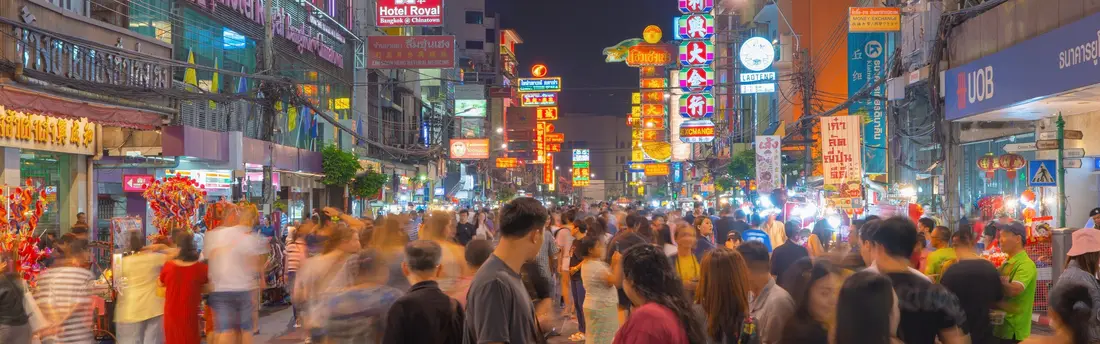
Are you planning your first trip to Thailand? Then get ready for new discoveries.
Some travelers fall in love with Thailand immediately – from its temples to its beaches – while others encounter minor frustrations right after landing.
After many visits, I've discovered what really helps first-time visitors enjoy the country without the usual problems.
To make your trip easier, I have compiled practical tips, cultural dos and don'ts, and common mistakes to avoid – so you can enjoy the Land of Smiles like a pro.
Arrival & Preparation for the Journey
1. Fill out your TDAC form before landing.
Entry into Thailand is now entirely digital. Therefore, you must complete the Thailand Digital Arrival Card (TDAC) within 72 hours of your arrival. Please use the official website (tdac.immigration.go.th) for this purpose.
It's free. If a website demands payment, it's most likely a scam.
Filling out the form takes some time, so you should complete it before landing. If you haven't already done so, immigration officials may ask you to fill it out on your smartphone. This could add 20–30 minutes to your wait.
After submitting, you will receive a QR code and can save a screenshot on your phone for easy access at any time.
Learn more about visa and entry requirements for Thailand.
2. Make your first day in Bangkok uncomplicated
Bangkok is a fantastic city, but after a long flight you can feel a bit overwhelmed, especially on your first visit.
Traffic is often the biggest surprise. Even short distances can take forever during rush hour. I once spent almost two hours on a 30-kilometer drive from the airport to my hotel.
It is therefore very helpful to stay near a BTS Skytrain or Metro station. The trains are air-conditioned, easy to use, and often much faster than sitting in traffic.
For an even more pleasant journey, a hotel along the Airport Rail Link line is recommended. From there it's about 20 minutes to the city, and there are good connections to other train lines.
When you land at Suvarnabhumi Airport, you can take a taxi from Level 1 or use Grab at Gate 4. Have about 150 THB in small bills ready, and if your driver asks about the expressway, it's usually worth answering yes – you simply pay the tolls (around 25 + 50 THB) along the way.
Money & Payments
3. Have cash ready.
Taxis, the airport express, and street vendors often only accept cash. Large shopping malls and 7-Eleven usually accept Apple Pay or Visa.
You should avoid exchanging money at the airport, as the exchange rates are unfavorable. You can easily exchange 1,000–2,000 THB for your first taxi ride or airport express train journey, but for the rest, you should wait until you reach the city.
Look for currency exchange offices near BTS or MRT stations, or in most shopping malls – the rates are usually much better there.
4. How to use ATMs correctly
ATMs are readily available, usually right outside 7-Eleven stores. However, foreign cards often charge a flat fee of 220 THB per withdrawal. To save on fees, it's advisable to withdraw a larger amount at once.
When using an ATM, you usually receive the cash first, and your card a few seconds later, sometimes up to 30 seconds. Be sure to wait until you have received your card before leaving!
If the ATM asks you to convert the currency, always decline. You'll get a better exchange rate if your bank handles the conversion.
5. Give a casual tip – no need to stress.
Tipping is quite straightforward in Thailand. In many restaurants, service is already included in the bill, so there's no pressure.
Upscale hotels typically add a 10% service charge automatically. For a private driver or tour guide, a tip of 300–500 THB (8–14 USD) per day is a nice gesture to express appreciation for excellent service.
Transport and locomotion
6. Try using a tuk-tuk, but agree on the price beforehand.
Tuk-tuks are a fun way to get around. You should definitely try it sometime. But keep in mind that they are often more expensive than you might expect, especially for short trips.
When taking a tuk-tuk, always agree on the price beforehand. Otherwise, you might end up paying too much. I once paid 500 THB for a short ride in the rain, when it would have only cost around 60 THB with Grab. If a driver approaches you on the street offering a "tour," it's best to politely decline. These tours are often overpriced or include unwanted stops.
For those who prefer a more relaxed experience, a guided tuk-tuk tour is usually a better choice. Our culinary city tour of Bangkok by tuk-tuk is very popular with many travelers.
7. Check the meter reading or simply use Grab.
In Bangkok, taxis are legally required to use a meter, but in tourist areas (such as the Grand Palace, Khao San Road, or late at night on Sukhumvit Road) it's not uncommon for drivers to refuse and charge a fixed fare. It's therefore advisable to always check that the meter is running before getting into a taxi.
If there are language barriers, simply show your destination on Google Maps; that usually solves the problem.
For more convenience, Grab (Thailand's version of Uber) is often the easiest option. It's inexpensive, there's no need to haggle, and it works well in cities. Short rides in Bangkok cost only a few dollars. Alternatively, you could try Bolt or inDrive; Bolt is often cheaper than Grab in Thailand.
Outside of Bangkok, the situation is different. In places like Phuket, taxis often forgo meters altogether, and fares are usually fixed or negotiable. For longer journeys, the taxi counters at the airport with prepaid fares are a safe and inexpensive alternative.
8. Fly if you can.
Thailand is bigger than many people expect, so getting from Bangkok to places like the islands is not as easy as taking a taxi.
The good news is that domestic flights are often very cheap, sometimes starting from as little as $20 to destinations like Phuket or Krabi.
Unless you specifically want this experience, you don't have to travel by night bus or train. Flying is usually the fastest and easiest option.
More on the topic of getting around in Thailand: flights, trains, buses & island travel tips.
9. Plan your journey according to the ferry schedules (otherwise you might get stuck).
Flights are fast, but to get to the Thai islands you usually have to take a ferry. And the ferries are never late.
Most flights to destinations like Koh Phi Phi or Koh Lanta arrive around 4:00–5:00 PM. If your flight lands late, you may have to spend the night on the mainland.
The weather can also affect ferry schedules, especially during the monsoon season. Ferries may be cancelled in rough seas. It is therefore advisable to have an alternative plan or a flexible hotel booking ready, just in case.
Time & Climate
10. Plan your trip properly.
It's well known that the months of November to February offer the best weather in much of Thailand. Don't let the rainy season deter you, though. The rain usually falls in short, heavy downpours lasting less than half an hour. Traveling during this time can definitely be worthwhile, as there are fewer tourists and prices are lower.
Even during peak season, it can get particularly crowded and expensive at certain times, such as Christmas, New Year's, Chinese New Year, or the Yi Peng Lantern Festival in Chiang Mai. For a better balance of weather, crowds, and costs, early November or late February are recommended. These are the ideal times to travel.
Discover the best time to travel to Thailand by month.
11. Interesting facts about the burning season in Northern Thailand
If you are planning to visit Chiang Mai between February and April, you should find out about the "slash-and-burn" season.
During this time, air quality can be severely affected by agricultural burning, with an Air Quality Index (AQI) often reaching 200–400. The difference is also clearly visible: distant mountains appear hazy, and the sky may seem gray. If you have asthma or respiratory conditions, or are traveling with children, it is advisable to travel south during these months, where air quality is generally better.
Culture, Food & Shopping
12. Use spices sparingly at first.
Thai food can be very spicy. Even the description "medium" can be quite hot. If you want to be on the safe side, choose "pet nit noi" (slightly spicy) or "mai pet" (not spicy).
If a dish turns out to be spicier than expected, skip the water – rice or a sip of Thai iced tea are usually better choices. And don't worry, not everything is spicy, and there are plenty of milder dishes or international cuisine available if you need a break.
13. Avoid tap water
In Thailand, ice is generally safe to drink as it's made from filtered water, so most drinks are fine. Tap water, however, is not suitable for drinking. It's best to opt for bottled water. It's inexpensive and readily available everywhere.
14. Avoid the “Thailand belly” (your stomach will thank you)
Stomach problems are not uncommon for first-time visitors to Thailand.
Some travelers take probiotics to ease the change in their stomach. Start taking them 2–3 weeks before your trip and continue throughout your stay.
If you have concerns about street food, look for vendors wearing a blue apron or displaying the "Clean Food, Good Taste" (Shell Shuan Shim) certificate. These certificates generally indicate basic hygiene training and adherence to higher food safety standards.
This is not a foolproof solution. So if you are unsure, ask a doctor before your visit.
And if you feel unwell, electrolyte drinks and rehydration salts are readily available in convenience stores such as 7-Eleven.
15. Please observe the dress code in the temple.
In temples, shoulders, chest, and knees should be covered – leggings, ripped jeans, or bare shoulders are not permitted. Men should wear long trousers, although shorts are sometimes acceptable in very hot weather.
A lightweight sarong is practical because you can wrap it around your waist or shoulders as needed. Some temples even lend them out at the entrance.
You must also remove your shoes before entering temple buildings, and sometimes even before entering small shops or restaurants. Shoes that are easy to put on and take off make this considerably easier.
16. Respect monks and Buddha images.
Monks are highly respected in Thai culture. Keep your distance and never touch them. A simple sign of respect is to slightly bow your head when passing a monk.
Treat Buddha statues and religious symbols with respect. Never touch them, climb on them, or sit with your feet pointing towards them.
17. Negotiate cleverly when shopping.
Shopping in Thailand can feel like a sport, especially in places like the weekend markets in Bangkok or the night markets in Chiang Mai.
Negotiation is part of the process. Usually, you start with about half the asking price and then meet in the middle.
The important thing is to remain friendly and relaxed. If you don't like the price, feel free to walk away – sellers often get back to you with a better offer. But don't overdo it. Haggling over small things is usually not worth it, and a few baht might mean more to them than to you.
And don't be surprised if you end up buying more than you planned. From inexpensive clothing and indie fashion to bespoke pieces, art, and jewelry – Thailand is a true shopper's paradise. It's advisable to leave some space in your suitcase or even bring an extra bag.
18. Carefully select elephant sanctuaries
Elephant tourism used to be very popular in Thailand, and some places still offer elephant rides – I advise against this. Others call themselves "sanctuaries" or "rescue centers," but that doesn't always mean they act ethically.
In Chiang Mai and Phuket there are authentic, animal-friendly elephant sanctuaries. Activities are offered there where you can observe, feed and learn about the animals, but direct contact with them is not permitted.
If you're planning a close encounter with elephants in Thailand, you should consider a certified sanctuary instead. We've selected some trusted elephant sanctuaries that offer a responsible experience.
Security & Law
19. Leave your e-cigarette at home (Update 2026)
From 2026, Thailand will have a zero-tolerance policy on e-cigarettes. Tourists who violate this policy can be fined up to 50,000 THB. Customs scanners at Bangkok Airport are extremely sensitive. Do not bring e-cigarettes into the country.
20. Be vigilant against common scams.
In Bangkok or Phuket, anyone who is excessively friendly on the street usually has something up their sleeve.
Thai people are friendly, but it is unusual for them to strike up conversations with strangers on the street.
Discover our guide to your safety in Thailand and how to avoid scams.
21. Caution with cannabis (Updated 2026)
Thailand's cannabis laws have been tightened again, and the chaos that once seemed to reign is no longer there.
Smoking in public or purchasing from unlicensed stores can result in heavy local fines or legal problems.
Those who are curious should look for shops with a valid medical license from 2026 onwards. For most travelers, it is safest to adhere to the strict cannabis regulations and stick to licensed wellness or CBD shops.




Community
Comments 0
Start the conversation.