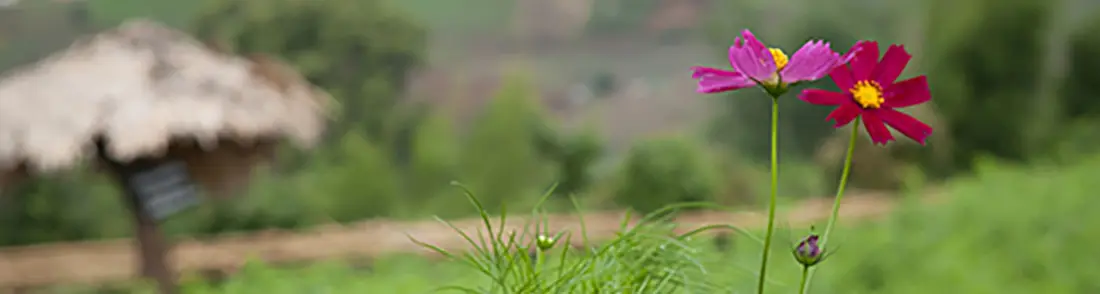
During his reign, the universally popular King Bhumibol Aduladej initiated numerous royal projects throughout the country with the aim of caring for the poorest people of Thailand, sharing the country's wealth, and protecting Thailand's natural resources.
One does not have to be in Thailand for long to recognize the great veneration that His Majesty King Bhumibol Adulyadej enjoys among the Thai people, and how deeply his loss is now felt.
The King dedicated his life to improving the living conditions of his subjects, fighting poverty, and preserving the kingdom's national resources for future generations. Nowhere is his commitment to his country and people more evident than in the various royal projects that His Majesty initiated in rural areas throughout the land.
King Bhumibol traveled to Thailand more often than any other Thai monarch and was acutely aware of the challenges faced by rural communities in farming to feed their communities. Therefore, in 1969, he initiated the Royal Projects to address issues such as poverty and opium cultivation in the Golden Triangle region of northern Thailand. By promoting alternative crops and supporting reforestation efforts, he provided farmers with a new source of income and a sense of pride in their produce and their communities.
All royal projects are launched only after close collaboration with the local population and experts to ensure optimal results. Nationwide, there are also six royal development centers where research is conducted and regional strategies are developed. Farmers can visit these centers to expand their knowledge and learn about environmental protection.
Throughout the kingdom, royal projects have been initiated that not only boost the local economy but also address practical problems such as water conservation, swamp drainage, self-sufficiency, and the preservation of Thailand's forests. These projects aim not only to help people meet their immediate needs but also to ensure that future generations can enjoy the country's rich natural heritage.
These royal projects also offer tourists a new way to experience Thailand and to establish a genuine, down-to-earth connection with the diverse people of the kingdom.
All royal projects welcome visitors, whether for a few hours or several days, and offer a wide range of recreational activities. You could learn to prepare a typical local dish, release fish into Thai waters, feed cattle, or teach the village children before spending the night with a local family.
The royal projects already offer businesses and organizations new opportunities to create incentives, strengthen teamwork, and support local communities. They also provide tourists with a fantastic opportunity to create unforgettable memories. Here are some of the most accessible projects for tourists.
Royal Agricultural Station Angkhang, Chiang Mai
Angkhang is home to one of the royal projects and, thanks to an average annual temperature of just 16.9 degrees Celsius and fertile soils, serves as a research center for cold-climate plants. The project involves various ethnic groups living in the surrounding villages. Visitors are welcome to experience the local culture or rent accommodation during their trekking tours.
Keep an eye out for native wildlife, as some of the bird species found here are very rare.
Royal Agricultural Station Inthanon, Chiang Mai
This is one of the oldest royal projects, established in 1979. Here, hill tribes cultivate sustainable crops with regular harvests to prevent slash-and-burn agriculture and ensure they never again rely on opium as a source of income. Inthanon is a beautiful place, serving as a research center for flowers, ferns, and ornamental plants, as well as vegetables and fruits. Its mountainous location and proximity to Thailand's highest peak, Doi Inthanon, provide ideal hiking conditions thanks to its cool climate.
Don't miss the opportunity to visit the Siribhume Waterfall, stroll through the orchards and vegetable gardens, visit the rose gardens, and take part in cultural tours around the village of Mong Khun Klang.
Nong Hoi Royal Project Development Center, Chiang Mai
Another royal project in the north, Nong Hoi, was established in 1974 with the aim of helping the Hmong hill tribes diversify their crops. Today, it is a popular destination for ecotourism and agritourism. So, if you want to learn about different forms of agriculture, visit farms, and experience the daily life of the locals, this is an ideal place. The Yao, Lisu, and Haw hill tribes (of Chinese descent) also live here. With a bit of luck, you might witness the production of unique handicrafts and traditional ceremonies.
Don't miss the opportunity to explore the local nature trails or climb the Doi Mon Chaem trail, which leads to a viewpoint with breathtaking views.
Laem Phak Bia Environmental Research and Development Project, Phetchaburi
One of the most important royal projects is located near Bangkok in Phetchaburi. This is the Laem Phak Bia Environmental Research and Development Project (LERD), dedicated to improving water conservation methods and restoring mangroves. Mangroves and wetlands are crucial to Thailand's ecosystem, making the work of the LERD increasingly important in light of the growing waste and wastewater production from human activities. Visit this model of environmental protection and stroll along the picturesque mangrove trails. Among the tangled roots and vines, you might be lucky enough to spot birds, mudskippers, and a variety of crabs.
At the end of the walkway is the Sai Met Raek viewpoint, which offers a magnificent view of the Gulf of Thailand.
Royal Project Chang Hua Man, Phetchaburi
This is one of the newest royal projects, initiated in 2009 by His Majesty King Bhumibol Adulyadej. Located in Phetchaburi province, the project aims to demonstrate how crops can be grown commercially without harmful chemical fertilizers. It now operates a dairy farm and serves as a learning center for farmers to increase their milk production. Tourists can experience the lives of Thai farmers and even plant rice in the rice paddies. Guided tours are offered regularly, and bicycles are available for rent to explore the region and enjoy the orchards and wildflower meadows.




Community
Comments 0
Start the conversation.