Geographical Overview
Thailand ranks 50th in the world in terms of land area, similar to that of Spain. Located 15° north of the equator, Thailand has a tropical climate with year-round temperatures ranging from 19 to 38°C. Its highest peak is Mount Inthanon (Doi Inthanon), at 2,565 meters. Thailand has a land area of 510,890 square kilometers and a water area of 2,230 square kilometers. Its coastline is 2,815 kilometers long. Thailand's longest shared border is the 1,800-kilometer-long Thai-Myanmar border. The full name of Thailand is the Kingdom of Thailand (Thailand), formerly known as Siam. On May 11, 1949, the Thai people adopted the name of their main ethnic group, changing "Siam" to "Thailand," meaning "freedom." Thailand is located on the Indochina Peninsula in Southeast Asia, in the heart of Southeast Asia. Thailand has a land area of approximately 514,000 square kilometers. It borders Laos and Cambodia to the east, the Gulf of Thailand and Malaysia to the south, the Andaman Sea and Myanmar to the west, and Myanmar and Laos to the north. Thailand has more than 30 ethnic groups, with the Thai being the majority, comprising 75% of the population; others include Lao, Chinese, Malay, Khmer, and hill tribes. Thai is the official language. Thailand is administratively divided into 76 provinces. Bangkok, the capital, is the country's political, economic, cultural, educational, financial, and entertainment center.
Thailand's natural resources
Thailand boasts a diverse landscape, including beaches, coastlines, islands, plains, plateaus, and mountains exceeding 2,500 meters in altitude. It is rich in natural resources and has a highly diverse biodiversity.
Beaches and Islands
Thailand boasts a 2,815-kilometer-long coastline, geographically divided into three parts: the east coast, the Gulf of Thailand coast, and the Andaman Sea coast. Its 350,000 square kilometers of sea area endows Thailand with world-renowned azure waters, pristine white sand beaches, untouched coral reefs, and a diverse array of marine life. The Gulf of Thailand and the Andaman Sea are dotted with islands of varying sizes suitable for year-round tourism, as well as diving paradises of varying depths.
National Park
Thailand boasts over 100 national parks, where visitors can enjoy the diverse and beautiful natural scenery.
Tree species and wildlife
Located in the equatorial region, Thailand boasts vast tropical rainforests with unparalleled biodiversity, making it one of the world's most valuable natural resource areas. Thailand's forests are primarily composed of evergreen forests and various deciduous forests, ranging from the humid rainforests extending into Malaysia to the relatively arid evergreen forests found in Cambodia, Laos, Myanmar, and within Thailand itself. Therefore, Thailand possesses numerous unique and precious tree species.
Although global wildlife populations are declining, wildlife remains well protected in Thailand's natural forest reserves. For example, Khao Yai National Park...
The park, the Huai Kha Kaeng Wildlife Reserve, and the Hala Bala Forest in the south all have a large number of wild animals.
In addition, thanks to the bounty of the forests, Thailand is dotted with abundant streams and rivers, as well as a considerable number of man-made reservoirs and dams.
climate
Located 15° north of the equator, Thailand has a tropical climate. Influenced by the convergence of warm, humid air currents from the Indian Ocean and cold currents from the South China Sea, the average annual temperature ranges from 19°C to 38°C. Generally speaking, Thailand has only three seasons: summer, rainy season, and cool (winter) season.
summer
Summer is characterized by dry, hot weather with little rainfall. The hottest month is April, with temperatures typically reaching 28°C to 32°C, while temperatures in the southern regions range from 26°C to 30°C.
rainy season
Storms are frequent during the rainy season, bringing widespread rainfall across the country, sometimes heavy to torrential. The national average annual rainfall is 1100–1500 mm. The areas with the highest rainfall are the southern and eastern coastal regions, with an average annual rainfall of over 2000 mm, and in some places even reaching 4000 mm per year. The areas with the lowest rainfall are the high mountain regions in the central part of the country, with an average annual rainfall of less than 1000 mm.
Cool (winter) season
The weather is cool in the northern region, while the average temperature in January in the northeastern and mountainous areas is 26-28°C.
Specifically, due to differences in temperature, rainfall, and distance from the ocean, the seasonal characteristics vary across different regions of Thailand. Northern, northeastern, and central Thailand have a tropical savanna climate with distinct rainy and dry seasons; while eastern and southern Thailand have a tropical rainforest climate with rainfall throughout the year.
The north has three seasons: March to April is summer, May to October is the rainy season, and November to February of the following year is winter.
The northeastern region has three seasons: summer from February to April, rainy season from May to October, and winter from November to January of the following year.
The central region has three seasons: summer is from February to April; rainy season is from May to October; and cool season is from November to January of the following year.
The south has only two seasons: the rainy season (monsoon season) and summer (tourist season). In the Gulf of Thailand area, summer is from May to September; in the Andaman Sea area, summer is from November to April.
Regional division
North
The northern part of the region is mostly mountainous and jungle-dominated, boasting stunning scenery. Elephants are relied upon for daily work. The north is the coolest region in Thailand, with Chiang Mai and Chiang Rai being representative cities. The cool winters allow for the cultivation of fruits such as cherries and peaches.
Eastern and Northeastern
The most famous tourist attraction in the east is Pattaya. Among the numerous islands scattered along the coast are many other tourist destinations, such as Koh Samet and Koh Chang.
The northeastern region, known locally as "Isan," is part of the Mekong River basin and is a mountainous plateau. 5,600 years ago, this area was a hub of ancient Bronze Age culture. Influenced by neighboring Khmer and Laos, it has developed a rich history, culture, and folk festivals.
Central
The central plains are fertile, producing abundant rice and fruit; the crisscrossing mountains and valleys make it an ideal region for hydroelectric power development. Bangkok is located in central Thailand, along with Hua Hin and Chitwan.
South
Southern Thailand boasts pristine beaches, numerous islands, and abundant resources such as tin mines, rubber plantations, and fisheries. Surrounded by the Andaman Sea and the Gulf of Thailand, southern Thailand has some of the world's best beaches. Besides Phuket, Koh Samui, Koh Phangan, and Koh Tao are all excellent vacation and diving destinations.
Population and ethnicity
Thailand has a population of approximately 65 million, primarily Thai, but also includes Chinese, Indians, Malays, Mons, Khmer, Burmese, and Laos.
Language and writing
Thai is the official language of Thailand, and English is also widely used. Linguistically, Thai belongs to the Tai-Kadai branch of the Sino-Tibetan language family.
Thai script is based on the ancient Khmer script of Cambodia, with improvements and evolution, and began to be standardized during the reign of King Ramkhamhaeng of the Sukhothai Kingdom. Thai consists of 44 consonants, 18 vowels, and 5 tone marks. Reading and writing Thai is relatively complex because its spelling is not as regular as other languages, and the spaces between characters are not as pronounced. However, road signs in Thailand are usually displayed in both Thai and English, and many tourist areas offer multilingual maps, menus, and other texts.
For tourists trying to learn Thai, one of the most common problems is the confusion when translating Thai pronunciations into Roman letters. For example, the place name "Phuket" is pronounced "Poo-ket," but if pronounced according to English pronunciation, it would generally be "foo-ket." Because Thailand does not have an official standard for character translation, the same pronunciation may be spelled slightly differently on different maps or road signs. For example, the "Chitlom" station on the Bangkok BTS Skytrain is sometimes also marked as "Chidlom" station.
Furthermore, although the vast majority of Thais can speak and understand standard Thai pronunciation, Thai actually contains several dialects, such as the Southern and Northeastern dialects. The residents of the Northeast are mainly of Lao descent, and their Thai pronunciation is very similar to Lao. Northern Thailand, due to its geographical origins from 1259 onwards...
In 1939, the area belonged to the independent Lanna and Chiang Mai kingdoms, so the distinctive dialects of the north remained unaffected and have continued to this day, although they can all speak standard Thai. Regardless of the dialect, the writing system is the same.
history
Thailand is a country with a long history. As early as prehistoric times, ancestors lived and thrived on this land. Over the long course of history, they gradually created their own country and culture, which have continued to this day, ultimately forming the Thailand we know today.
Prehistoric period
Multiple archaeological discoveries in Thailand prove that human populations existed in this area more than 6,000 years ago. The first dominant groups were the Rawa and Wild People of the ancient Khmer and Mon ethnic groups. They established the Lopburi Kingdom in what is now Lopburi Province.
Sukhothai Dynasty (1238–1438)
In the early 13th century, while the Lanna Kingdom in the north was flourishing, a Thai ethnic group under Khmer rule broke away and established an independent kingdom—Sukhothai. The Sukhothai Kingdom practiced a centralized monarchy, and its founding monarch was King Sri Intraditya. The capital was Sukhothai, which is the location of present-day Sukhothai Province.
The Ayutthaya Kingdom (1350–1767)
In the mid-14th century, the Thai people, residing in the lower reaches of the Chao Phraya River, founded the Ayutthaya Kingdom (also known as the Kingdom of Ayutthaya) under the leadership of King Uthong. The Ayutthaya Kingdom was located in Thailand.
It was located in the south of the country, with its capital in Ayutthaya. It replaced the Sukhothai Kingdom, defeated the Khmer Empire, and gradually unified some surrounding small kingdoms and most of the territory of Sukhothai. It even expanded to the entire Indochina Peninsula and Singapore and the Penang Peninsula. It was destroyed in 1767 due to a large-scale invasion by Burma.
The Thonburi Dynasty (1768–1782)
In 1767, the Burmese army captured Ayutthaya, the capital of the Ayutthaya Kingdom. Taksin led 500 warriors in a breakout, retreating to Chantaburi, where he recruited new soldiers and launched a counterattack, recapturing the capital that same year. Because Ayutthaya was severely damaged in the war and difficult to repair, and because the Burmese army was very familiar with its terrain, making it vulnerable to Burmese invasion, Taksin moved to the south bank of the Chao Phraya River and established a new kingdom—Thonburi, historically known as the Thonburi Dynasty.
The Chakri Dynasty (1782 to present)
During the Thonburi Dynasty, King Taksin waged continuous wars to unify the country and defend against Burmese invasions, severely weakening the nation, causing economic depression, and widespread poverty. In 1782, General Chakri, who had previously helped King Taksin recapture Ayutthaya, declared himself king on the north bank of the Chao Phraya River (present-day central Bangkok), establishing the Chakri Dynasty. Since then, Thailand has enjoyed continuous prosperity and development to this day.
religion
Thailand upholds a system of religious freedom, allowing its people to practice any religion they wish. Although Buddhism is not listed as the state religion in the Thai Constitution, it is the dominant religion in Thailand. This faith has a long history and has long been integrated into the mainstream culture and customs of Thai society, becoming one of Thailand's distinctive characteristics.
Other religious beliefs include Islam, Christianity, Catholicism, Sikhism, Taoism, Confucianism, and Judaism.
Thai government and politics
Thailand is the only country in Southeast Asia that was never colonized by European powers. Before officially changing its name to the Kingdom of Thailand in 1939, it was known as Siam. In the mid-14th century, Thailand became a unified nation.
Thailand is a constitutional monarchy with the current King HM Bhumibol Adulyadej as its head of state.
monarchy
Thailand has historically practiced an absolute monarchy until the reign of Rama VII of the Chakri Dynasty (also known as the Bangkok Dynasty). On June 24, 1932, the parliament staged a coup, changing the country's system from an absolute monarchy to a constitutional monarchy, with the king as the head of state with executive, legislative, and judicial powers.
government
Thailand's national sovereignty is divided into three parts: executive, legislative, and judicial. Executive power is held by the government; legislative power is held by Parliament (the House of Representatives and the Senate), with members of the House of Representatives elected by the people and members of the Senate nominated by the Prime Minister and appointed by the King; judicial power is held by the courts. The Constitution stipulates that the courts are independent of Parliament and the government, and a special Judicial Committee is responsible for the appointment of judicial officials to ensure that the courts can adjudicate cases according to law and uphold fairness and justice in society.
The administrative system is divided into three parts: central government agencies, namely ministries, commissions, bureaus, and other equivalent government agencies; provincial government agencies, namely the 75 provinces and their subordinate counties, townships, towns, and villages; and local government agencies, namely city, county, township, and village-level governments and their related management agencies, as well as two special administrative regions—Bangkok and Pattaya.
capital
Bangkok, the capital of Thailand, is located on the northern bank of the Chao Phraya River estuary plain where it flows into the Gulf of Bangkok. It is the country's political, economic, cultural, and transportation center. Bangkok is the second largest city in Southeast Asia and Thailand's largest industrial and commercial city, known to Thais as "Krung Thep," meaning "City of Angels." Bangkok covers an area of 1,565.2 square kilometers and has a population of 9.8 million. The climate is very hot, with an average annual temperature of approximately 28°C.
Administrative region
Thailand’s Ministry of the Interior divides the country into four administrative regions: the Central Region, the Eastern and Northeastern Regions, the Southern Region, and the Northern Region.
The central region comprises 25 provinces: Kanchanaburi, Nakhon Nayok, Nakhon Pathom, Nonthaburi, and others.
The provinces include Pathum Thani, Prachuap Khiri Khan, Ayutthaya, Phetchaburi, Ratchaburi, Lopburi, Samut Prakan, Samut Songkhram, Samut Sakorn, Saraburi, Sinburi, Suphan Buri, and Ang Thong, totaling 18 provinces.
Chanthaburi, Chachoengsao, Chonburi, Trat, and Prachinburi along the eastern coast
The northeastern region has 19 provinces: Khorchin, Khon Kaen, Chaiyabhun, Nakhon Phrae, and others.
Nong, Khorat, Buriram, Mahasarakham, Mohd, Yasothon, Le Yit, Lai, Sisaket, Sekun, Surin, Nong Khai, Nong Molam, Anak Charon, Udon Thani and Ubon.
The southern region comprises 14 provinces: Krabi, Chumphon, Trang, Nakhon Si Thammarat, Narathiwat, and others.
Pattani, Phang Nga, Koh Thu Lun, Phuket, Yala, Ranong, Songkhla, Satun and Surat Thani.
The northern region comprises 17 provinces: Chiang Rai, Chiang Mai, Tak, Nam Sat Po, Lamp, and Phra.
Tian, Phichit, Phitsanulok, Phetchabun, Phra, Yahongsong, Lampang, Lamphun, Sukhothai, Cheng Yi and Uthai Thani.
Daily Etiquette of the Land of Smiles
Thai customs
The naturally kind, gentle, and polite Thai people don't greet each other with a handshake and "Hello," but rather...
Say "Sawadee ka" with your palms together. This way of greeting with palms together is called "Wai" in Thai. The method is to raise your hands to your chest, with your palms together but not touching, as if you are holding a petal in your palms, and the shape of your hands is like a lotus flower bud about to bloom.
The way one acts with authority varies slightly depending on the occasion and the person or situation.
When greeting peers, the fingers should not be raised above the chin after clasping hands; when bowing to elders, the head should be lowered so that the fingertips lightly touch the tip of the nose; when showing respect to highly respected elders, both hands should be raised to the forehead.
When Thais encounter monks or Buddha statues symbolizing the Buddha, they kneel, put their palms together, and touch their foreheads to the ground in worship.
When meeting someone of the same generation, if someone performs a "wi" greeting, Thais will generally respond with a "wi" greeting in return. However, when a younger person performs a "wi" greeting to an elder, the elder does not need to return the greeting; a nod or smile is sufficient. The "wi" greeting is not only a way of greeting in Thailand but also a gesture of respect. Learning this gesture when traveling to Thailand can help you travel smoothly, rain or shine.
Thais also perform prostrations, but only on specific occasions. For example, commoners or high-ranking officials perform this ritual.
When meeting the king or his close relatives, one must kneel in obeisance; when the king pays respects to a high-ranking monk, one must kneel; when a son becomes a monk, his parents also kneel on the ground.
Body etiquette
Touching a Thai person's head with your hand is a great insult; hitting a child with your hand is also considered a serious offense.
The head facing west is considered a curse, implying that the child will fall ill; it is also taboo to sleep with one's head facing west, as the setting sun in the west symbolizes death.
Feet are considered lowly, so it's taboo to stick your feet out in front of others or kick things.
Giving these things to others is considered impolite. Kicking a door is taboo, as it will draw criticism. Crossing your legs while sitting is extremely inappropriate. Pointing the soles of your shoes at someone is considered stepping on them, a highly insulting gesture. Women should keep their legs together when sitting; otherwise, they will be seen as ill-mannered. In Thailand, never step on the threshold, as Thais believe spirits reside there.
Other etiquette
Do not wipe your nose or lick your fingers while eating. Thais place great importance on table manners, so...
Thais like red and yellow, and dislike brown. Thais traditionally use colors to represent days.
The dates are represented as follows: red for Sunday, magenta for Saturday, light blue for Friday, orange for Thursday, green for Wednesday, pink for Tuesday, and yellow for Monday.
You must not point your finger at a monk, and you must not touch a monk's body. Women, in particular, are not permitted to have any contact with monks.
Shaking hands with monks is acceptable; one should not sit next to monks in a car; even if a monk greets you, you should politely keep your distance. If a woman wishes to offer something to a monk, she should ask a man to pass it on. If you wish to offer something yourself, the monk will open a piece of his yellow robe or a handkerchief to receive it.
Every Buddha statue, regardless of size or condition, is sacred and must never be climbed upon.
Do not take photos or do anything disrespectful to Buddha statues. Never give cash to monks begging for alms, as this violates monastic vows.
Inside the mosque, men must wear hats; women should wear trousers or long skirts and cover their hair with a scarf.
Showing respect to the royal family. Thais have great respect for their King, Queen, and royal family.
Because of the royal family, one must be extremely cautious when discussing the monarchy in front of Thai people, as Thai law includes penalties for disrespect towards the royal family. Therefore, tourists should demonstrate appropriate etiquette; for example, when royal family members are present in public, it is best to observe the actions of others and follow suit.
Clothing and attire. Thai temples are considered sacred places by the Thai people. Please dress appropriately when entering a Buddhist temple.
When entering a temple, visitors must dress appropriately and modestly; short skirts, shorts, or revealing clothing are not permitted. When entering a Buddhist temple, mosque, or private residence, visitors must remove their shoes and be careful not to step on the threshold.
Thai women are generally conservative, so please do not touch them without their consent.
Thai people often add the suffix "Khun" before a person's name, regardless of whether it's a given name or not.
Suitable for both men and women, it signifies "Mr.", "Miss" or "Madam".
The head is sacred. Do not touch another person's head or disturb their hair.
In Thailand, the head is considered an important part of the body where spirits reside. If you accidentally touch someone's head, you should apologize sincerely immediately. Thais also consider it taboo for strangers to touch children (especially young children).
The head of a child is considered very important; only the King, monks, and their parents are allowed to touch a child's head. Even barbers cannot touch other people's heads without permission and must say "excuse me" before cutting their hair. Thais do not sleep with their heads facing west, as the setting sun in the west symbolizes death. When building houses, Thais traditionally face south or north, never west. Furthermore, having a beard is considered impolite.
The left hand is considered unclean. Thais believe the right hand is clean while the left is unclean; the left hand is only for holding one thing.
Therefore, important things should be held with the right hand. On more important occasions, they should be presented with both hands.
The soles of the feet are considered unclean, just like the left hand. When sitting down, avoid...
Do not put your feet on the table, and you will be severely reprimanded for tapping or pointing at people with your toes. Never point your feet at the Buddha. In addition, you should not kick doors or point at things with your feet, and you should not cross your legs or point the soles of your feet at others when sitting.
Other taboos: ① Thais do not use red pens to sign their names. ② In some rural areas, it is taboo to praise children.
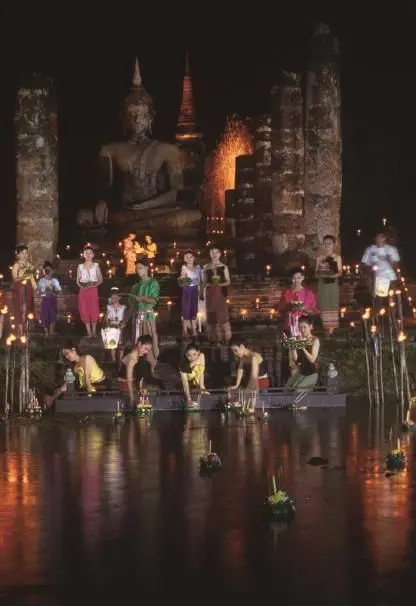
The child is beautiful. ③ Do not pick up the Floating Lanterns. Thais hold the Loy Krathong Festival every year during the full moon of the 12th month of the Thai calendar, which is Thailand's most lively festival. When viewing the Floating Lanterns, be careful not to pick them up, no matter how exquisite or beautiful they are; otherwise, you will be severely punished.
currency
The currency of Thailand is the Thai baht, which includes banknotes and coins. The larger the size of the currency, the higher its denomination; different denominations of currency are also different colors.
1 Chinese Yuan (CNY) = 5.1226 Thai Baht (THB)
1 Thai Baht (THB) = 0.1952 Chinese Yuan (CNY)
Tax Refund Instructions
When shopping, tourists can register for a VAT refund at the tax refund counter after purchase by showing their receipt if they see a "VAT Refund For Tourists" sign. All non-Thai tourists holding foreign passports are entitled to a tax refund. The VAT refund rate is 7% of the purchase price.
Conditions for applying for a tax refund on purchased goods
You must shop at stores that display the "VAT Refund For Tourists" sign.
You must spend more than 2,000 Thai Baht (approximately 410 RMB) in the same shopping mall on the same day.
For a fee of RMB 10,000, you can ask the shop assistant to fill out a "VAT Refund Application for Tourist Form".
When registering at a shopping mall, it's best to use only one person's name to fill out the form to avoid being charged per person and thus consolidating your spending limit. Only items paid for at the checkout counter are considered mall counters; those paid directly at the counter are private counters, and their amounts will not be recorded in your accumulated spending limit.
You can keep your receipts for any items you purchase, except for those from the supermarket and food sections. When you finish shopping at the mall, you can accumulate all your receipts for the day. If the total exceeds 2000 Thai Baht, you can register for a tax refund at the tax refund counter.
When registering, please present your passport and all receipts. After filling out a simple information form, the helpful counter staff will print out a checklist for you; simply sign to confirm. If there aren't many tourists, the process can be completed within 10 minutes.
In Thailand, if you wish to claim a tax refund on purchased goods, the total amount of all goods, including VAT, must be within [amount missing].
The minimum amount is 5,000 Thai Baht (approximately 1,000 RMB); you can accumulate the amount at different shopping malls, but the total amount spent at each mall must not be less than 2,000 Thai Baht. Therefore, you must ensure that the amount on each tax refund application form exceeds 2,000 Thai Baht, and the total amount on all application forms exceeds 5,000 Thai Baht.
Keep all VAT invoices and tax refund application forms together and keep them safe.
Steps to process tax refund at Thai international airport
Within 60 days of purchase, goods must be shipped from an international airport in Thailand (Bangkok, Phuket, Chiang Mai, or Hpakant).
If you depart from Aye or Uttapa, you can apply for a tax refund. Since the tax refund process at Thai airports is relatively complicated, please arrive at the airport 0.5 to 1 hour before your scheduled boarding time.
Get your tax refund form stamped. This is done after entering the airport terminal, before completing departure procedures (i.e., checking your flight ticket).
Before entering (invoice), you should go to the Vat Refund Office for stamping (behind Row H, near Counter G). Please present your passport, tax refund form, and the purchased goods listed on the tax refund form for the officer to inspect (generally, inspection is not required). After verification, the officer will stamp the tax refund application form, and you will need to retrieve the form.
After the stamp is applied, you can proceed with departure procedures and check-in at the airline counter.
Upon entering the departure hall, locate the tax refund office and proceed to the VAT refund counter to collect your refund.
The VAT refund counter is located on the left side of the passageway leading to gates E, F, and G. Simply submit a stamped tax refund application form to collect your money.
If the above order is not followed, and the purchased items are put into the checked baggage without inspection, even if the person has passed the document verification, but the shopping list has not been stamped by customs, then the tax refund will not be possible.
If you purchase valuable items such as jewelry and watches, you will need to present the purchased goods when claiming your tax refund. When checking in for your flight, try to carry the goods for which you wish to claim a tax refund with you, as you may be subject to inspection when receiving your refund.
Generally speaking, unless you need to show watches, jewelry, electrical appliances, or relatively expensive luxury items to officials, other clothing and cosmetics do not need to be checked, so the process is quite efficient.
Precautions
When you receive your tax refund in cash, a processing fee of 100 baht will be deducted from each application.
Tax refunds are capped at 30,000 Thai Baht and can be issued in cash, by bank transfer, or by credit card.
If the total tax amount exceeds 30,000 Thai Baht, you cannot receive cash directly; it must be transferred to your credit card account. However, you will have to pay an additional 100 Thai Baht fee per transaction, as well as relevant bank fees.
The VAT refund information stamp needs to be applied on the day of departure. If you are flying early...
If you are boarding a plane and need to stay overnight at the airport, do not get your passport stamped a day in advance, as the stamp is only valid on the day of issuance. The office responsible for stamping provides 24-hour service.
You can only receive a tax refund if you shop at a merchant displaying the "VAT Refund for Tourists" sign.
(Lee, Levi's, and Topshop offer direct VAT refunds at their counters); purchases made at counters marked "not VAT Refund" are not eligible for a refund (NaRaYa and Bata are not eligible). A processing fee applies to the refund application, charged based on the passport number. If multiple people are traveling together, it's recommended to use the same passport for the refund application to save on processing fees.
Communications and emergency telephones
Thailand boasts a well-developed and convenient communication network. Numerous public telephones and easy-to-use mobile phones, along with widespread internet cafes and wireless networks, are readily available. Post offices are located in all major towns and cities throughout the country. From telephone service to internet connectivity, Thailand's communication network can easily meet the diverse needs of tourists.
Telephone
Thailand boasts a comprehensive and modern telephone network. Not only are convenient and reliable coin-operated public telephones readily available, but the mobile phone network is also robust, providing coverage in most areas, even on remote islands.
If you need to call home from Thailand or call Thailand from abroad, the method is simple. To call Thailand from abroad, you need to dial Thailand's country code 66 before the phone number, such as 66-2-XXXXXXX, where 2 is the Bangkok area code.
To make a call from Thailand to an international country, dial 001 + country code + phone number (China's country code is 86); dialing 110 will connect you to an international operator.
To dial a local number from Thailand, use a code such as 02-XXX-XXXX, where 02 is the area code.
cell phone
Thailand boasts excellent mobile phone coverage, with call quality available throughout the country except for some very remote islands and mountainous regions. The Thai mobile network operates on GSM 900 and 1800 frequencies; any GSM-compatible phone brought from overseas will function normally. While using your original phone number is the most convenient way to make and receive calls in Thailand, it's also very expensive. If your phone has multiple SIM card slots, consider purchasing a local prepaid SIM card for a few dollars at the airport, convenience stores, or IT markets; this will significantly reduce costs.
If your phone doesn't have a spare SIM card slot, you can rent a reasonably priced phone at the airport or buy a good quality new or used phone at a shopping mall like MBK, which will make things much more convenient.
public telephone
Coin-operated public telephones cover the entire country of Thailand, with local rates around 1 baht per minute (approximately 0.2 RMB). Prepaid phone cards are generally used, and a few phone booths in major cities or tourist areas also accept credit cards. Card-operated phones have various rates, some as high as 18 baht per minute. Prepaid phone cards are usually 300 baht in value and are sold in convenience stores (such as 7-Eleven). These public phone booths are typically painted yellow and located near convenience stores. Post offices throughout Thailand generally also have public telephones that charge per minute for domestic and international calls.
Emergency Assistance Units and Practical Telephone Guide
Tourist Police (English, French, German): 1155, 24-hour service. Emergency Call Numbers (Police, Ambulance, Firefighters): 191. Tourism Authority of Thailand Service Center: 1672, Service Hours: 08:00–20:00. Immigration Bureau: 66 2 2873101-10. Thailand Youth Tourism Service Center: 66 2 6941222 ext. 1781-90. Bangkok Directory Assistance: 1133.
Time zone
Thailand's standard time is Greenwich Mean Time plus 7 (GMT+7), and it does not observe daylight saving time. Thailand time is one hour behind Beijing time. Passengers should remember to set their watches back one hour after boarding their flights from China. For example, if it is 12:00 GMT, it is 19:00 in Thailand, and 20:00 in Beijing.
Embassy of the People's Republic of China in the Kingdom of Thailand
66 2 2450088 Fax: 66 2 2468247 57 Rachadaphisek Road, Bangkok, 10400 Thailand




Community
Comments 0
Start the conversation.