Thailand is a country where culture and respect play an important role in everyday life. Whether you're visiting temples, eating with locals, or simply exploring the country, understanding Thai customs will help you connect with people and avoid unintentional conflicts.
Taiguo.Source date 7 min read
Adapted from ThaiEmbassy.com (Siam Legal). Any first-person experiences in this article belong to the original author.
Thailand is a country where culture and respect play an important role in everyday life. Whether you're visiting temples, eating with locals, or simply exploring the country, understanding Thai customs will help you connect with people and avoid unintentional conflicts.
This article covers the most important rules and prohibitions to help you make the most of your time in Thailand.
Dos in Thailand
When visiting Thailand, respecting local customs and traditions will enrich your experience and allow you to immerse yourself more deeply in the culture. From polite gestures to temple etiquette, observing these rules of conduct will help you navigate daily life and leave a positive impression on the locals.
Respect the monarchy: In Thailand, the royal family enjoys high esteem. Disrespect can have serious consequences, including fines or imprisonment. If you are in public and the national anthem is played, stop what you are doing and remain silent until it has finished. Photos of the royal family are widely circulated, so avoid any criticism or jokes about the monarchy.
Taking off your shoes: It is customary to remove your shoes when entering temples, homes, and some shops. Often, you will see a row of shoes placed outside the entrance as a sign to follow suit. When visiting friends, you are expected to remove your shoes unless specifically asked. In Thai culture, wearing shoes indoors is considered unclean. Not removing your shoes can appear disrespectful and careless, especially in homes or places of worship.
Dress appropriately, especially at temples: When visiting temples and other religious sites, appropriate attire is required. Cover your shoulders, wear long trousers or skirts, and avoid clothing that is too tight or revealing. A light scarf or shawl can be helpful for spontaneous temple visits. Appropriate clothing demonstrates respect for Thailand's religious customs. Inappropriate clothing, such as sleeveless tops, crop tops, or ripped jeans, may result in being refused entry, as temples hold significant cultural and spiritual importance.
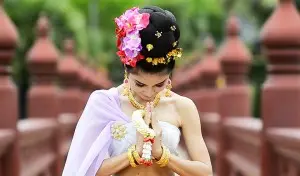
Return the wai: The "wai" is a traditional Thai greeting in which you press your palms together with your fingers pointing vertically upwards (similar to a prayer position) and bow slightly. If someone offers you a wai, return the gesture with equal respect. Hierarchy is highly valued in Thai culture. Usually, the younger person initiates the wai, which the older person then returns by pressing their hands together without bowing. Ignoring or not returning a wai is often considered impolite. As the wai is a central part of Thai etiquette, observing it demonstrates understanding and appreciation for local customs.
Speak calmly and respectfully: Thais generally speak softly and value a calm, respectful tone. Even when expressing frustration or complaints, a controlled tone demonstrates maturity and respect for others. Speaking loudly or outbursts of anger can be unpleasant for locals, as this is often interpreted as a lack of self-control.
Use politeness markers: Adding "krub" (for men) or "ka" (for women) to sentences is a polite gesture that softens the language and expresses respect. Using these words when greeting someone, like saying "thank you" or "hello" in Thai, is a small gesture appreciated by locals. Politeness markers demonstrate an understanding of Thai etiquette and facilitate communication.
Things to avoid in Thailand
Just as there are desirable behaviors in Thailand, there are also those that should be avoided. Thai culture includes certain customs and gestures that can be considered disrespectful. By avoiding these taboos, you show respect for Thai customs and traditions and can fully enjoy your trip to the Kingdom.
Do not point your feet at people or sacred objects: In Thailand, the feet are considered the lowest and most impure part of the body. Therefore, avoid pointing them at other people or sacred objects such as Buddha statues. Pointing your feet at others, especially in temples, can be considered extremely disrespectful. This simple oversight can lead to awkward situations or, in the worst case, insults.
Do not touch other people's heads: Avoid touching other people's heads, even if it's meant in a friendly way, especially children. In Thailand, the head is considered the most sacred part of the body, and touching it is rarely appropriate. Casually touching the head can be perceived as intrusive or disrespectful.
Don't elevate your feet: Avoid putting your feet on chairs, tables, or other elevated surfaces. This also means not showing the soles of your feet in public. Elevating your feet or showing the soles of your feet to other people can be perceived as disrespectful.
Restrict public displays of affection: Thailand is largely conservative regarding public displays of affection. While holding hands is generally accepted, more intimate gestures like kissing may be frowned upon. Displays of affection can even attract negative attention.
Avoid showing anger in public: Even if you are frustrated, you should avoid raising your voice or displaying anger in public. A public outburst of anger is often perceived as a lack of self-control and can unsettle or embarrass others. A calm and respectful demeanor is always appreciated.
Don't step over people or food: In Thailand, it's considered impolite to step over people or objects like food. Therefore, avoid stepping over others, especially in crowded places. Stepping over someone is perceived as disrespectful and can be offensive, as it implies contempt.
Do not touch or sit on Buddha statues: Avoid touching, climbing on, or sitting on Buddha statues or other sacred objects. This applies both in temples and in public spaces where Buddha images are often displayed. Disrespect towards Buddha images is offensive and can lead to arguments or even legal consequences. Treating these sacred objects with respect is essential for a positive experience.
Experience Thai culture with Siam Legal
If you want to experience Thailand's rich culture firsthand, Siam Legal can assist you with your visa preparations. Whether you need a short-term or long-term visa, Siam Legal will guide you through every step of the process. Our experienced visa experts ensure a fast and straightforward visa application, so you can enjoy Thailand without any worries.
Frequently asked questions about Thai customs and traditions
Do you have to take off your shoes when entering a Thai house?
Yes, it is expected that you take off your shoes when entering a Thai house, and this is considered a sign of respect and cleanliness.
Is there a dress code for Thai temples?
Absolutely. Visitors to Thai temples, regardless of gender, should wear appropriate clothing and cover their shoulders and legs to show respect for these sacred sites.
Are public displays of affection accepted in Thailand?
Generally no, but it is advisable to limit physical affection in public in Thailand to avoid causing discomfort to those around you.
Is it okay to speak loudly in Thailand?
In Thailand, it is advisable to maintain a calm and respectful tone of voice, as loud voices can be interpreted as aggressive.
Can one be arrested for disrespecting the Thai monarchy?
Yes, in Thailand you can be arrested for disrespecting the Thai monarchy and face a prison sentence of 3 to 15 years.
What is considered disrespectful in Thai culture?
In Thailand, certain actions are considered disrespectful and can offend locals. For example, touching someone's head is considered impolite, as the head is regarded as the most sacred part of the body. Similarly, pointing at people or moving objects with one's feet is considered offensive, as the feet are seen as the lowest part of the body.
Public outbursts of anger or confrontations are also frowned upon, as Thai culture places great value on harmony and avoiding embarrassment. Ignoring or failing to return the wai—a respectful gesture involving pressing the palms together and a slight bow—can be perceived as dismissive, especially when greeting elders or authority figures. Finally, disrespecting Buddha statues or temple grounds is deeply offensive, as these are highly revered symbols in Thailand's predominantly Buddhist society.
How do you greet someone in Thailand?
In Thailand, people typically greet each other with the wai, a traditional gesture of respect. To perform the wai, one places the palms of the hands in front of the chest in a prayer position and bows the head slightly. Older or higher-ranking people are usually greeted first, out of respect. The wai is often accompanied by a friendly "Sawasdee," which means "hello" in Thai.
SourceThaiEmbassy.com (Siam Legal)
Contact
Let’s talk Thailand.
Tell us a little about what you have in mind. We’ll review your message and get back to you.




Community
Comments 0
Start the conversation.