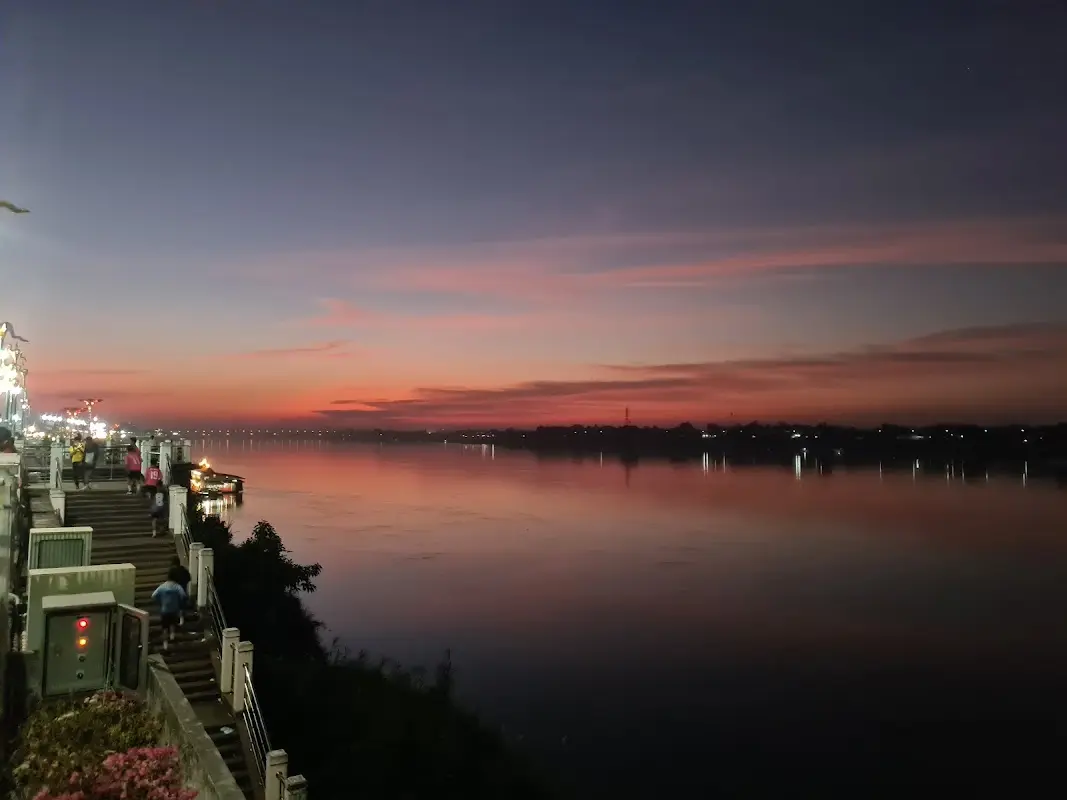
Naga fireballs (Thai: bang fai phaya nak) are bright reddish spheres that rise silently from the Mekong River in Nong Khai Province in the far northeast of Thailand, soar several hundred meters into the night sky, and then disappear again. They appear around October 15, 2027, the full moon marking the end of the Buddhist Lent (Ok Phansa), and are visible in the surrounding area. Local belief holds that the Naga, the serpent spirits of the river, send them into the sky in honor of Buddha.
Scientists suspect it's gas from the riverbed, while a prominent Thai scientist claims it's tracer rounds fired from the Laotian bank. Whatever the cause, tens of thousands line the river to watch, and in the evenings, boat races, processions, and a festival take place along the Mekong. This guidebook tells you when to go, where the best spots are, and how to get there.
Accommodation in Nong Khai
This route ends in Nong Khai. Search for hotels in Nong Khai for your desired travel dates. Filter for hotels with free cancellation if you'd like to book a room and decide later.
Open Booking.com with your travel dates · also on Expedia
Key facts
The night that ends Lent
Ok Phansa, the full moon of the 11th lunar month, usually falls in October. In 2026 it was on October 26th and in 2027 on October 15th.
Phon Phisai and Rattanawapi
The two Nong Khai districts on the Mekong River, where most fireballs are counted, are located about 1.5 to 2 hours by car from Udon Thani.
After nightfall, until about 11:00 PM
The first sightings begin after sunset. Arrive in the afternoon to park and find a spot along the riverbank.
Watch for free
The public viewing platforms along the riverbank are free. Parking, seating, and food are not included in the price.
A Buddhist dry day
Ok Phansa is one of the five Buddhist holidays on which shops and regular restaurants are not allowed to sell alcohol.
Book early
Rooms near the river are fully booked. Many visitors stay overnight in Nong Khai or Udon Thani and then drive to the river for the night.
What the Naga fireballs are
The fireballs are described as reddish, ranging in size from a spark to a basketball, and rising quickly and silently from the water to heights of several hundred meters before disappearing again. They have been sighted along a roughly 250 km stretch of the Mekong River around Phon Phisai, and occasionally from smaller rivers and ponds nearby. Until the mid-1980s, locals called them ghost lights, before the local council renamed them Phaya Nak lights.
Legend connects it to the end of Lent. The Phaya Nak, the great serpent said to live in the Mekong River, spews fireballs into the sky to welcome Buddha back to Earth after he spent Lent in heaven preaching to his mother. Therefore, the night is just as important as the lights. It is primarily a religious festival with merit rites performed in the temples, and the fireballs are the highlight.
Are they real? Science and the debate
The cause of these phenomena is unknown. The most common natural explanation is that marsh gas, usually called phosphine or methane, rises from the riverbed and ignites. Other researchers point to plasma effects. The skeptical author Brian Dunning argues that burning gas bubbles could not ignite spontaneously or remain burning at the speed at which the fireballs rise.
The human explanation is more convincing. An iTV documentary from 2002 filmed Laotian soldiers firing tracer rounds into the air over the river during the festival. Jessada Denduangboripant, a science professor at Chulalongkorn University, explains that the fireballs are tracer rounds fired by villagers on the Laotian bank. He points to long-exposure photographs showing red streaks rising from the ground and notes that the fireballs occur on the night after the full moon, i.e., after the end of Lent, and not on the full moon itself.
Interest has waned as the debate intensified. Nong Khai counted approximately 31,500 visitors in Rattanawapi and Phon Phisai on the night of 2025, compared to 141,381 in 2024, and 287 fireballs, compared to 371 the previous year. You don't have to choose to enjoy the night. Sit by the riverbank, watch the spectacle, and form your own opinion.
Where you can see it and what else there is to see
First the two viewpoints, then the town of Nong Khai, where most visitors stay overnight and spend the days around the festival.
The festival surrounding the fireballs
Ok Phansa is one of the biggest festivals on the Mekong, and Nong Khai hosts a multi-day program. Look forward to longboat races on the river, illuminated fireboats floating downstream after dark, processions, Naga worship ceremonies, Tak Bat Thewo (monks collecting alms), bustling streets, and food markets where there's always room for a barbecue.
Make it a day trip. Spend the afternoon in Phon Phisai or Rattanawapi, eat at the food stalls, watch the sunset ceremonies, and relax by the river before nightfall. Bring water, something to sit on, mosquito repellent, a charged mobile phone, cash, and patience, and fill up your car with gas before you reach the busiest area.
Arrival in Nong Khai
Please refer to the 12Go festival information for times. For Ok Phansa on the evening of the festival, it is best to arrive in the early afternoon.
Accommodation
Phon Phisai and Rattanawapi have limited accommodation options and therefore book up quickly. Most visitors stay in Nong Khai on the Mekong River, for example in guesthouses like the traditional Mut Mee Garden or in riverside hotels. From there, they reach the viewpoints either by car or as part of a tour. Udon Thani, a larger city with an airport, is another option. There are more hotels there, but the drive is a bit longer in the evening. In any case, it's advisable to book as early as possible once your travel dates are confirmed.
Observe respectfully
For many people in your area, this is a religious night, regardless of your personal opinion about the lights. Dress appropriately in the temples, speak quietly during ceremonies, and do not mock the Naga in front of worshippers. Take your trash with you and leave the riverbank as you found it.
More festivals and the northeast.
Frequently Asked Questions
Frequently asked questions about Naga Fireballs (Bang Fai Phaya Nak) on the Mekong.
Bright red orbs of light rise silently from the Mekong River in Nong Khai province and disappear a few hundred meters upstream. They appear around Ok Phansa, the end of the Buddhist Lenten season, and locals believe that the river's Naga serpent sends them up in honor of Buddha.
The moon can be observed on and around Ok Phansa, the full moon of the 11th lunar month, which usually occurs in October. In 2026, it fell on October 26th, and in 2027 on October 15th. The sighting begins after sunset and can last until about 11:00 PM.
Phon Phisai, in front of Wat Thai, is known for its festive atmosphere, and the Rattanawapi district around Ban Tan Chum and Ban Tha Muang is known for having recorded the most fireballs in recent years. Both locations are on the Mekong River in Nong Khai province.
The lights are real, but no one has yet proven their cause. Theories range from the ignition of marsh gas to plasma effects. A scientist from Chulalongkorn University even claims they are tracer rounds fired from the Laotian side of the river – a phenomenon also filmed in a 2002 documentary.
The Naga, or Phaya Nak, is a powerful serpent spirit in Buddhism and folklore. It is said to live in the Mekong River and protect both the river and the faith. Naga depictions can be found on temple steps and roofs throughout Thailand and Laos.
Fly from Bangkok to Udon Thani (approximately 1 hour 10 minutes) and then drive for about 1.5 to 2 hours. Alternatively, you can take the night train to Nong Khai and from there drive approximately 80 km downriver. Due to traffic and parking difficulties, you should aim to arrive in the afternoon if you choose the overnight train.
No, the public viewpoints along the riverbank are free. However, parking, reserved seating, food, and transportation are subject to charges.
Not in shops or regular restaurants. Ok Phansa is one of Thailand's five Buddhist holidays, during which the sale of alcohol is prohibited outside of hotels and licensed entertainment zones.
Accommodation on Nong Khai
Compare current hotel prices in Nong Khai for your desired travel dates. Filter for rooms with free cancellation if you'd like to book a room and decide later.
Compare prices on Booking.com
We may receive a commission for bookings made through these links – this will not incur any additional costs for you. Learn more.
You might also like this
Best time to travel to Thailand
The best time to travel is from November to February; the rest of the year is best on the east coast.
Thailand on a budget
Thailand for less money, without sacrificing the best
Is Thailand safe?
What actually poses risks, what is only mentioned in the news, and what do four government advisories say – destination by destination?
Thailand Visa and Entry Requirements
Who is allowed to enter visa-free, what entry controls are in place, what is the TDAC, and how can you extend your stay?
Ethical elephant sanctuaries in Chiang Mai
No riding, no shows, and the protected areas where you watch rather than wash.
I lived in Bangkok for four years and traveled throughout the country from there. The guidebooks reflect my personal opinion and are written as I would explain things to a friend planning a trip.
Ready to create your travel itinerary?
Use our free trip planner to save places, organize days, and share your trip.




Community
Comments 0
Start the conversation.