A travel guide for Khao Sok
Through a curious twist of fate, a group of rebels hiding in a rainforest may have held the key to its preservation for posterity. These rebels kept the Thai army busy in the late 1970s and early 1980s, unintentionally preventing mining and logging companies from accessing Khao Sok. Once the insurgency ended, Khao Sok was declared a national park by the Royal Forestry Administration in 1980, thus resolving most of its major environmental problems.
Today, visitors can reach Khao Sok National Park in southern Thailand by car and enjoy the park's attractions. The area consists of lush rainforest, limestone landscapes (karst), and a variety of wildlife hiding in the thickets – including tigers, hornbills, elephants, and long-tailed macaques.
In 1987, a 165 square kilometer reservoir was created in Khao Sok, which is now known as Cheow Larn Lake and further enhances the beauty of the region.
Arrival
The entire Khao Sok nature reserve covers 739 square kilometers in the province of Surat Thani.
Surat Thani Airport is the closest airport to Khao Sok. From there, travelers can take a taxi or van to Surat Thani and then continue by taxi, bus, or minivan (e.g., 12go.asia / tickets.co.th) via Highway 401 to the park. A similar bus service from Phuket also takes visitors to Khao Sok; the journey takes approximately four hours.
locomotion
Visitors can enter the park through two separate entrances. The first is located at the park headquarters near the village of Khlong Sok. The second leads to Cheow Larn Lake near Ban Ta Khun.
The two entrances are 50 km apart and divide the park into two worlds – each offering unique accommodation and adventure opportunities.
The best time to travel
The Khao Sok region receives the highest annual rainfall in Thailand, averaging 3,500 mm. During the rainy season from May to November, rainfall peaks in September at 375 mm. During the dry season from December to April, February, the driest month on record, sees only 30 mm of rain.
When planning your visit to Khao Sok National Park, please take the rainy season into account. Certain activities are not possible during the rainy season, including jungle camping and visiting the Nam Talu Cave.
Wildlife sightings also become less frequent during the rainy season, but the lush greenery of the jungle can compensate for the smaller number of animals seen. River trips in inflatable boats or rafting on the Sok River are recommended at this time due to the stronger current caused by the rain.
The cooler, drier months from November to February attract the most tourists to Khao Sok, and presumably the most animals as well. This is the best time to observe elephants, gaur, and other large animals on safari, and with a bit of luck, you might even spot the rare Rafflesia plant.
Things to do in Khao Sok
In Khlong Sok village, located in front of the visitor center (Google Maps) at the main entrance to Khao Sok, you will find various accommodation options. Tours around Khao Sok can be booked with the providers in the village or at the reception of your accommodation.
The visitor center is the main starting point for many jungle adventures in the park, such as the following:
The hiking trails in Khao Sok National Park begin at the visitor center. There you can also obtain maps for self-guided hikes into the park's interior. Alternatively, for approximately 600 baht (US$18), you can hire a local guide who will lead you to the most beautiful waterfalls, wildlife watering holes, and bamboo thickets, and take you on a half-day hike.
Three waterfalls can be visited independently: Wing Hin, Bang Hua Rad, and Sip-Et Chan. Access to two other waterfalls, Than Kloy and Than Sawan, requires a guide. Both are located on the same hiking trail and can usually be visited in a single hike.
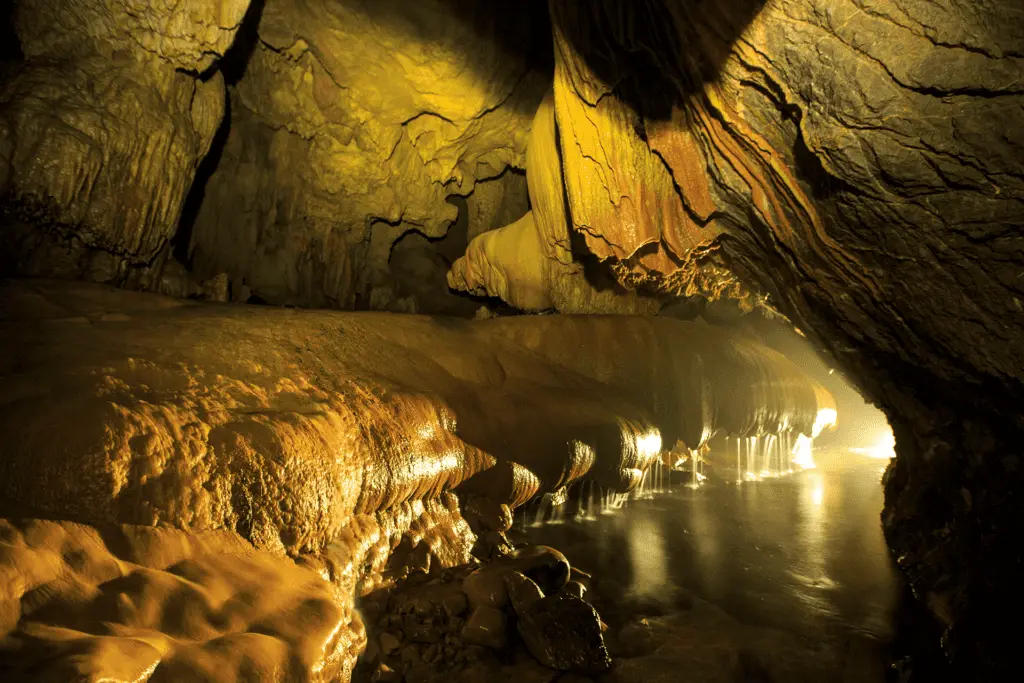
Cave hikes in Khao Sok require varying levels of physical exertion. Easy caves like the Pra Kay Petch cave can be traversed in a maximum of 15 minutes, while the Nam Talu cave requires headlamps and requires wading through an underground stream to complete the 850-meter-long passage.
Those who stay longer than two days and hike deep into the jungle can almost certainly observe wildlife. With a bit of luck, you might see native animals such as Malayan sun bears, Asian elephants, long-tailed macaques, and Oriental hornbills.
Night safaris. Short walks through the park after dark reveal a landscape that never sleeps: the chirping of cicadas and grasshoppers, civets, slow lorises, and deer lurk in the undergrowth. Night safaris begin at 7:30 pm and can be booked at your hotel.
The following activities are best booked through your hotel, an online provider, or a local provider in Khlong Sok village:
– A trip on the Sok River in an inflatable boat or raft is child's play; simply relax on an inflated tire or raft, let yourself drift with the swiftly flowing current and watch the passing jungle!
– Jungle cooking classes show culinary-minded tourists how locals prepare chicken and rice using banana leaves, bamboo cylinders and glowing charcoal.
For activities within the park grounds, an entrance fee of 300 baht (US$9) or 150 baht (US$5) for students is charged before entry. For some activities, the fee is already included in the overall price.
Adventures around Cheow Larn Lake
In the mid-1980s, the Thai government dammed the Pasaeng River for a hydroelectric power project, creating a 165 square kilometer reservoir called Cheow Larn Lake within the borders of Khao Sok.
Tourists now flock to Cheow Larn to kayak, swim, and admire the natural karst rock formations along the lakeshore. The region's limestone landscape contributes to the water's vibrant emerald-green color and the unique rock formations that rise above it.
Cheow Larn Lake is only accessible from the marina next to Ratchapraha Marina (Google Maps). Whether you're taking a day trip or staying overnight in one of the floating bungalows on the water, you can participate in the following adventures on the lake:
The two-hour lake tours cover the entire lake, allowing tourists to fully enjoy the region's unique atmosphere. Guides navigate the boat and share stories about the limestone formations along the way.
On boat safaris along the lakeshore, you can observe wildlife playing in the water. You might see an elephant drinking, long-tailed macaques chasing each other on the shore, or hornbills circling overhead. Boat safaris take place early in the morning (usually no later than 7 a.m.) or just before sunset.
– Stay in a floating bungalow. From any of the floating accommodations around the lake, you can enjoy the lake exactly as you wish – swimming, kayaking, or simply admiring the limestone formations in the sunshine. Accommodations range from basic to four-star luxury with private bathrooms and spa facilities.
Selected articles about Khao Sok
A guide to stargazing in Thailand: The best places for stargazing, national parks and planetariums
In short: Thailand is one of Southeast Asia's best destinations for stargazing, with certified star parks, mountain viewpoints, island paradises,...
Sustainable travel: Ecotourism in Thailand
In tourism, the preservation of a country's natural environment and cultural heritage is essential. In recent years, ecotourism has developed into a significant trend…
The best hiking trails in all of Thailand
When you think of Thailand, golden temples and tropical beaches might come to mind. But beyond that, numerous hiking trails await...
Do you need travel information?
Discover everything you need to know before your trip – from visa requirements and entry guidelines to essential travel tips and frequently asked questions.




Community
Comments 0
Start the conversation.