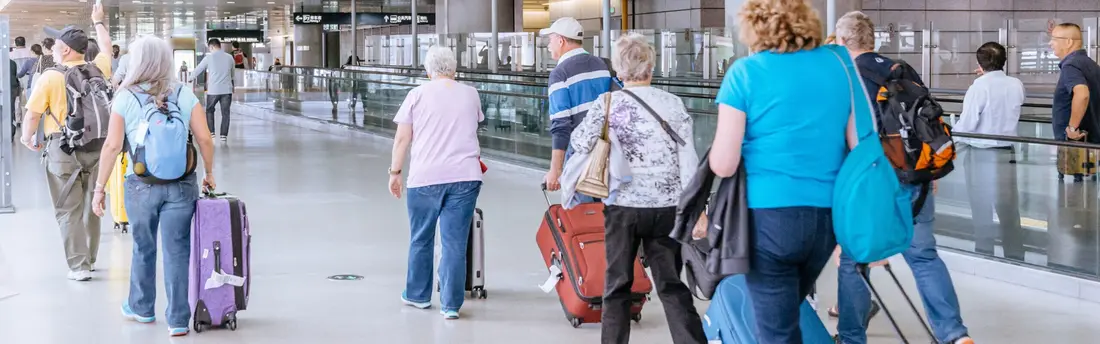
Traveling in Thailand is generally easy. However, finding the best itinerary can be tricky. Even short trips to the islands often require a combination of buses, ferries, and transfers.
The good news: Thailand boasts one of the most flexible transport networks in Southeast Asia. From budget flights and night trains to long-distance buses and ride-hailing apps, it's all there. The challenge lies in choosing the easiest, fastest, or most comfortable option for your journey.
In this guide, we introduce you to the main transport options in Thailand, show you how to travel efficiently between the main destinations, explain what to expect when getting around in cities like Bangkok, Chiang Mai and Phuket, and give you practical tips to save you time, money and unnecessary stress.
How to get around in Thailand: A short guide
Traveling through Thailand by plane – the most comfortable way
Flying is the fastest way to travel in Thailand. Frequent flights connect Bangkok with popular destinations such as Chiang Mai, Phuket, Krabi, and Koh Samui. Most flights take only one to two hours.
Airlines and typical fares
The Thai domestic flight market is highly competitive, which keeps prices relatively affordable.
Typical prices for one-way trips are:
Low-cost airlines such as AirAsia, Nok Air, Thai Lion Air and VietJet often offer special deals with 30–50% discount, so booking early can significantly reduce costs.
However, please note the baggage allowance. Low-cost carriers typically only allow 7 kg of hand luggage. Checked baggage incurs an additional fee. Scheduled airlines such as Thai Airways and Bangkok Airways usually offer 20 kg of free baggage allowance in their standard fare.
Bangkok's two airports (What first-time travelers should know)
Domestic flights in Thailand are generally easy to book. Bangkok is the only city in Thailand with two major airports, which can sometimes be confusing for first-time visitors. Most other Thai cities have only one airport, so you usually don't need to worry about choosing one.
When choosing a flight, you should consider the airports in Bangkok:
Important tip: 1. If possible, book your international arrival flight and your first domestic flight from the same airport. The transfer between Bangkok (BKK) and Madrid (DMK) can take 1.5–2 hours due to traffic, plus time for immigration, baggage claim, check-in, and security.
2. If a change of airport is unavoidable, plan for a layover time of at least 5–6 hours.
3. A free airport shuttle bus operates between the two airports. You can use it by showing a valid boarding pass for a departure from the other airport.
Getting to the islands: Flight and ferry connections
Getting to Thailand's islands often requires combining flights with bus or ferry travel. The easiest way is to buy a combination ticket that includes both the flight and onward travel. Airlines like Bangkok Airways frequently offer such connections.
Insider tip: Flights to Koh Samui (USM) can be expensive, as Bangkok Airways operates most of the flights. A cheaper alternative is to fly to nearby Surat Thani (URT) followed by a bus and ferry crossing – this adds 2–3 hours to the journey time, but saves 50–70%.
Seasonal and practical tips
Domestic flights in Thailand are generally reliable, however, some seasonal factors should be taken into account.
Traveling through Thailand by train – Classic slow travel
Train travel in Thailand is inexpensive and can be a great travel experience. However, it is relatively slow. If you only have 7–10 days in Thailand, flying is usually the more practical way to cover longer distances.
Popular train routes for travelers
Thailand's railway network connects Bangkok to four main directions: north, northeast, east, and south. While trains reach many parts of the country, only a few routes are particularly popular with travelers.
Panoramic and tourist train routes
For a short but unforgettable train experience, consider the Bangkok to Kanchanaburi route. It follows part of the historic Death Railway from World War II and crosses wooden trestle bridges over cliffs above the Kwai Noi River. It is one of Thailand's most scenic and historically significant train journeys.
Another option is the weekend train journey from Bangkok to Hua Hin. It's inexpensive and gives you a few hours to explore Hua Hin before returning the same day.
Night trains: A unique travel experience
The most famous train journey in Thailand is the night train journey from Bangkok to Chiang Mai.
Many travelers appreciate the night train for its comfort. You board in Bangkok in the evening and can explore Chiang Mai refreshed the next morning.
The train journey takes 12–13 hours, while a plane journey takes only about 1 hour. It is best suited for travelers who value the experience more than speed.
Train classes in Thailand
Thai trains offer three travel classes. We recommend 2nd class for a classic travel experience and 1st class for more privacy. 3rd class is best suited for short journeys within the country.
1st Class – Private Sleeping Cabins
Some night trains offer first-class cabins that provide two beds in a private, air-conditioned compartment with a lockable door.
This is the most comfortable option and is well-suited for couples or travelers who value privacy. However, availability is limited, and tickets on popular routes often sell out well in advance.
2nd class – The classic Thailand train experience
For most travelers, an air-conditioned second-class sleeper car is the ideal compromise between comfort and price.
These carriages feature separate sleeping compartments, air conditioning, and train attendants who convert the seats into beds in the evening. They offer sufficient comfort for an overnight stay while conveying the authentic feeling of a train journey in Thailand.
Tip: If possible, choose a lower berth. Although it costs a bit more, it is usually more comfortable and wider.
3rd grade – simple, but very local
Third-class carriages offer the most basic amenities, including simple seats and no air conditioning. They are extremely inexpensive and are mainly used for short day trips.
For journeys of one to three hours, third class can be an entertaining experience – vendors often walk through the carriages selling snacks, drinks, and fruit. However, don't expect much comfort, and this class is not suitable for overnight stays.
CNR train for a more comfortable journey
For a more comfortable experience on the night train journey, it is recommended to book one of the newer red carriages of the Thai CNR.
These modern trains are noticeably better equipped, with amenities such as USB charging ports, cleaner interiors and modern toilets.
They are usually found on express trains, especially on popular routes such as Bangkok–Chiang Mai and Bangkok–Hat Yai.
Ticket prices and booking tips
Train travel in Thailand is generally very inexpensive. Typical starting prices are:
Tickets are usually available 30 to 90 days in advance, depending on the route.
For popular sleeper trains such as Bangkok–Chiang Mai, it is recommended to book 2–3 weeks in advance, especially during the high season.
Tickets can be purchased:
Practical tips for train travel in Thailand
Traveling through Thailand by bus and minivan
Buses and minivans are the cheapest and most widespread way to travel in Thailand. They are suitable for short to medium distances (approximately 3–6 hours) or for reaching places without an airport or train station, such as Kanchanaburi or Hua Hin.
For long distances such as from Bangkok to Chiang Mai, however, we do not recommend buses; trains or flights are usually faster and more comfortable.
Popular bus routes for travelers
Bus types in Thailand
In Thailand there are various types of buses, from simple local transport connections to comfortable long-distance buses.
1) Nakhonchai Air (NCA) – Comfortable and reliable
In terms of comfort and safety, NCA is my first choice. Their buses offer spacious 1-2-1 seating arrangements, massage chairs, entertainment screens, and meal service – almost like business class on an airplane.
In First Class and Gold Class, seats are reserved for women only (row 3 is usually reserved for women). The main routes include Bangkok → Chiang Mai/Chiang Rai, Bangkok → Northeast Isan, and Chiang Mai → Rayong/Pattaya.
The prices are reasonable: A Gold Class trip from Bangkok to Chiang Mai costs approximately 740 THB – about 100 THB more than a normal long-distance bus.
Booking tip: Use the NCA app, BusX, or even pay with a QR code at 7-Eleven.
2) VIP and first-class buses
If you are traveling to southern destinations such as Phuket, Krabi, or Koh Samui, the NCA offers only limited services. Instead, companies like Sombat Tour or VIP-24 buses, operated by the state-run 999 Buses and reputable private companies, are among the best alternatives.
Depending on your needs, you can search for specific bus types:
If you have a smaller budget or are making short journeys (under about 3 hours) – such as from Bangkok to Ayutthaya or from Bangkok to Nakhon Pathom – second-class buses can be a good alternative.
The fares are usually 30–40% cheaper than VIP buses, and departures are frequent.
However, they are not recommended for overnight journeys. The seats only recline slightly, many buses do not have onboard toilets, and frequent stops can make long journeys uncomfortable.
These are non-air-conditioned public buses, which we do not recommend to most travelers unless you simply want to experience everyday local life.
The buses usually have fully open windows, making them one of the best ways to observe daily life in Thailand – from rural landscapes to local passengers transporting food, market goods, or sometimes even livestock.
In Bangkok, many of the traditional red buses will be gradually replaced by blue electric buses from Thai Smile Bus (TSB) by 2026. These newer buses are quieter, more environmentally friendly, and allow cashless payment.
Minivans: Common, but cramped
For destinations not directly accessible by large buses, minivans are a good option. Common routes include Bangkok → Pattaya (1.5 hours), Bangkok → Hua Hin (3 hours), or transfers to attractions such as the Maeklong Railway Market.
They're fast for short distances, but safety can be an issue. If you opt for a minivan, you should stick to familiar routes and drive during the day.
Bus ticket prices and booking tips
Travel tips for bus trips
1. Beware of tourist bus scams on Khao San Road: Never buy tickets for tourist buses from agencies on Khao San Road or from street vendors. These buses sometimes steal luggage or force passengers to change buses mid-journey. Instead, use official bus stations, the bus company websites, or trusted platforms like BusX and 12Go.
2. Pay at 7-Eleven if necessary: If your credit card doesn't work in a Thai app, don't panic. Select "Cash Payment," show the barcode at any 7-Eleven, and pay in cash. Even in 2026, this is still one of the safest ways to get your ticket.
3. E-tickets are usually sufficient. Most companies, such as Sombat Tour, allow boarding with a QR code e-ticket. However, Nakhonchai Air (NCA) sometimes still requires exchanging the e-ticket for a paper ticket at the counter – so it's best to arrive about 20 minutes before departure, just to be safe.
Getting around in Thailand by ferry
A sea voyage through Thailand is one of the most scenic, but also one of the most unpredictable experiences. Knowing which boats depart when and how to obtain tickets saves stress and time.
Large ferries versus speedboats
If you simply want to relax and avoid seasickness, take a large ferry. They are stable, comfortable, and ideal for enjoying the scenery. While fast catamarans or motorboats are faster and more fun in calm seas, they can be quite choppy. Therefore, they are not the best choice for those with sensitive stomachs.
Clever ways to get tickets
The easiest way to travel is with combination tickets for bus and ferry (or train and ferry). This is especially convenient for routes like Surat Thani or Chumphon to Koh Samui, Koh Phangan, or Koh Tao. In case of bus delays, the ferry usually waits for passengers with combination tickets.
I usually use 12Go or the official Lomprayah website. Don't fall for any agents on the pier – they often charge way too much.
Renting a car or motorcycle in Thailand – Not recommended
Driving yourself might sound like freedom – but in Thailand it's usually more trouble than it's worth.
Traffic can be chaotic. The city streets are hectic, motorcycle accidents are frequent, and parking rules are strict. This apparent freedom can quickly turn into stress.
Legal catch: With a foreign driver's license, you are only allowed to drive for 60 days after entering the country. Even after that, fines starting at 2,000 THB are possible with an international driving permit – and traffic stops are ubiquitous.
Insurance nightmare: Most rental car insurance policies won't cover you without the appropriate IDP add-on. A single accident can cost you hundreds of thousands of baht.
Better to do it this way: Save yourself the stress. Use Grab or Bolt, or book a private car with a local driver. This will save you time and money.
How to choose the best means of transport for popular routes
Travel times in Thailand can vary greatly depending on whether you fly, take the train or the bus.
Here is a brief overview of typical distances and travel times for some of the most common travel routes.
Bangkok to Chiang Mai
The most recommended option is flying. The flight takes about 1.5 hours, and if you book 2–4 weeks in advance, ticket prices often drop to around US$25–60.
I generally recommend Thai Airways or Bangkok Airways. They are $10–20 more expensive than budget airlines, but include 20 kg of free baggage allowance and meals.
A scenic alternative: For a classic Thailand travel experience, a journey by night train is highly recommended. Ideally, book one of the new red CNR trains (train number 9 or 10). The berths in second class are surprisingly spacious and equipped with power outlets. During peak season, tickets are available 90 days in advance and can sell out within minutes.
From Bangkok to Phuket (and Krabi)
Flying is the most convenient option. The journey takes about 1.5 hours, and tickets typically cost between $30 and $70. There are numerous departures daily.
Alternative bus (12+ hours): Frankly, I wouldn't recommend this option unless you want to save on hotel costs. If you do decide to take the bus, try to book a 24-seat VIP bus. These buses offer significantly more legroom and reclining seats, making the 800 km journey much more comfortable.
Chiang Mai to Chiang Rai
The cheapest option is the bus from GreenBus Thailand. The journey takes about 3 hours.
The V-Class (VIP) seats cost around US$12 and usually operate without stops, making the journey about 30 minutes faster than regular connections.
For small groups, a private car is a good option. A transfer usually costs between 2,500 and 3,500 baht. This is quite reasonable for three or four travelers and allows you to stop at sights along the way, such as Wat Rong Khun (White Temple) or Wat Rong Suea Ten (Blue Temple).
From Phuket to the islands (Koh Phi Phi, Koh Samui, Koh Phangan, Koh Tao)
The easiest way to travel between Phuket and the nearby islands is with a combination ticket that includes both land transport and ferry.
Companies like Lomprayah High Speed Ferries offer reliable ferry services between Phuket and islands such as Koh Phi Phi, Koh Samui, Koh Phangan and Koh Tao.
A special tip for Koh Samui: Don't forget that you can save a lot of money when traveling to Koh Samui by flying to Surat Thani and then taking a bus or ferry.
Getting around in large cities
Getting around in Bangkok
In Bangkok, the BTS Skytrain and the MRT Bangkok efficiently cover most tourist areas, with fares typically around US$1–2 per trip.
For evenings or late returns, Grab or Bolt are convenient alternatives. If possible, avoid peak hours (7–9 a.m. and 5–7 p.m.). If you take a taxi, ask the driver to turn on the meter. This usually saves trouble and ensures a fair fare.
For a more authentic experience, you can also try a tuk-tuk for short trips – a pleasure for a quick jaunt through the busy streets, however, prices should always be agreed upon in advance.
Another unforgettable way to explore the city is by taking a longboat ride on the Chao Phraya River or its canals (klongs). It's not just a means of transport, but also one of the most atmospheric ways to experience old Bangkok from the water.
Getting around in Chiang Mai
In Chiang Mai, the iconic red songthaews remain the easiest means of transport for short distances and usually cost around US$1–2. For longer journeys, Bolt is often cheaper than Grab.
If it's your first time in Thailand, you're better off not renting a scooter. Traffic is often unpredictable, and insurance problems are not uncommon. Instead, you can use the new electric buses (20 THB) or a private car to safely reach temples, markets, and other sights.
Getting around in Phuket/Krabi/Koh Samui
On islands like Phuket, Krabi, and Koh Samui, ride-hailing apps such as Grab or inDrive are generally safer and more transparent than negotiating with street taxis. Typical rides cost around US$10–20, depending on the distance.
In Phuket, the Phuket Smart Bus is a good and affordable option that connects the main beaches along the coast for about 170 THB.
When traveling between the islands, you should always look out for combination tickets for the ferry, which combine transfers and boat trips in one booking and thus make the journey much more pleasant.
Further details on the layout of these islands can be found on our maps of Phuket, Krabi and Koh Samui.
Do you want the most flexible option?
If you desire maximum comfort and flexibility, you can also book private city tours with a driver through us. With a private car, you can comfortably explore several sights in one day without having to worry about transportation, heat, or luggage.
Frequently asked questions for first-time visitors
Question 1: Is public transport in Thailand safe for first-time travelers?
Absolutely – as long as you stick to major airports, official train and bus stations, and use ride-hailing apps like Grab, you're safe. Frankly, it's much safer than the headlines would have you believe.
Traffic in Bangkok can seem chaotic, but the BTS and MRT are clean, easy to use, and reliable – comparable to the London Underground or the Paris Metro. Outside the city, you'll see more "local" transport: red songthaews and motorcycle taxis instead of large trains. It might look chaotic, but locals manage it every day, and you'll quickly get the hang of it too.
Question 2: How far in advance should I book the transport?
It depends on how you travel. With budget airlines, you generally get the best prices (US$25–40) if you book 2–4 weeks in advance.
For the new CNR night train on the Bangkok–Chiang Mai route, you should book exactly 90 days in advance via the official D-Ticket website or 12Go, as tickets often sell out within minutes during the high season.
Buses and ferries are more flexible and can usually be booked 1-3 days before departure.
Question 3: Is using public transport suitable for large suitcases?
Trains and large buses are best suited for luggage. Bangkok's BTS Skytrain and MRT stations have elevators, and VIP buses offer plenty of luggage storage space.
Avoid minivans with large suitcases – they offer limited space, and you may have to pay for an extra seat. For city transfers with heavy luggage, an SUV from Grab or Bolt is usually more practical.
Question 4: Which apps are indispensable in Thailand?
These three apps make traveling in Thailand much easier:
Question 5: How can I avoid being overcharged by drivers?
Simple rule: If it's not available in an app, agree on the price before getting in.
In Bangkok, you should always insist on a taxi with a meter. If a driver claims it's broken, simply take another taxi.
On islands like Phuket or Koh Samui, where taxi meters are rare, you should first check Grab or Bolt to find out the usual fare before negotiating.

Community
Comments 0
Start the conversation.