Bangkok, Thailand, May 4, 2026 / TRAVELINDEX / The TDM Global Summit 2026 opened in Bangkok with a distinct sense of urgency and purpose. Hosted at the Amari Bangkok, the summit brought together over 500 senior executives from the travel and tourism industry, solidifying its status as one of the region's most influential – and deliberately exclusive – industry gatherings.
The TDM Global Summit is not a conventional conference, but an exclusive forum for invited guests only, prioritizing quality over quantity. Attendees are high-level executives: CEOs, managing directors, general managers, investors, and decision-makers from the aviation, hospitality, tourism, travel technology, and distribution sectors. This targeted approach creates an environment focused not on broad attendance, but on substantive, peer-to-peer exchange and strategic alignment. Among the participants was Bernard Metzger, founder of the Travelindex Group, who contributed to the high-caliber industry network.
Against a backdrop of geopolitical uncertainties, particularly the ongoing tensions in the Gulf, the summit was characterized by a pragmatic and forward-looking atmosphere. In a program of keynote speeches, panel discussions, and internal conversations, participants explored how the industry must adapt to rapid technological change, evolving customer expectations, and increasing pressure for sustainable growth. Artificial intelligence, digital sales, and customer experience innovations played a central role—as did leadership, collaboration, and resilience.
A highlight of the event was the presentation by James Hogan, Chairman of Knighthood Global and former CEO of Etihad Airways. His keynote address on destination branding in times of crisis served as a powerful reminder that while external shocks can damage a destination's image, they do not erase its fundamental strengths. Using the Gulf region as an example, Hogan argued that infrastructure, connectivity, and service culture remain crucial drivers of recovery. He emphasized the role of aviation not only as a means of transport but also as a strategic signal of confidence, and called for greater regional cooperation. He suggested that a unified positioning, rather than internal competition, will accelerate the recovery.
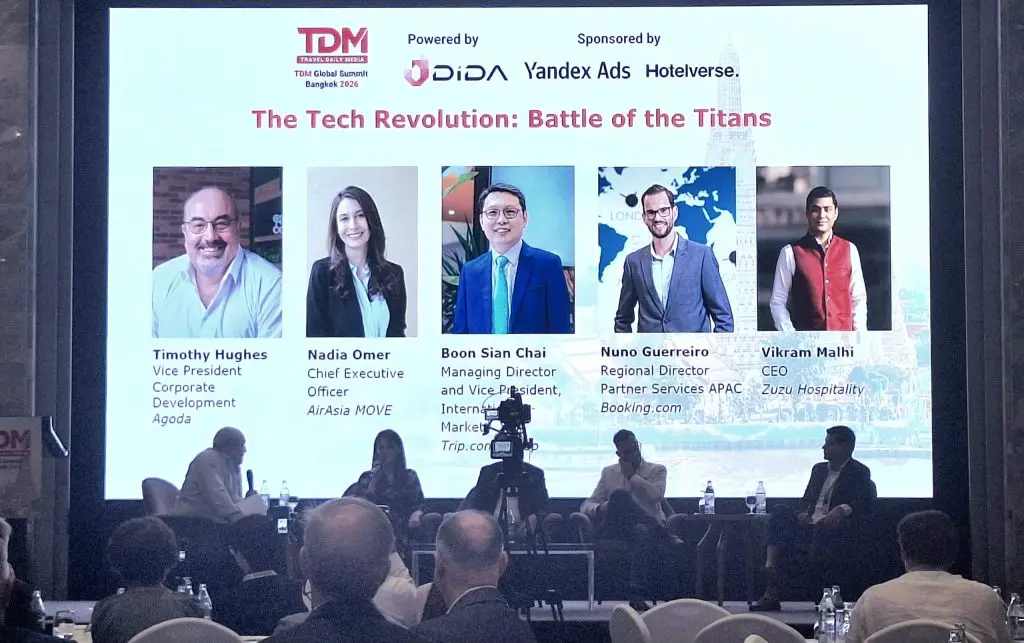
The disruptive power of technology was further explored in the panel "The Tech Revolution – Clash of the Giants," with Nadia Omer, CEO of AirAsia MOVE, making a particularly impactful contribution. Her insights illustrated how digital ecosystems, super-apps, and data-driven platforms are redefining competition and forcing traditional companies to rethink both sales strategies and customer retention models.
Beyond the stage, the summit's true value lay in its structure: Selected, exclusive networking sessions facilitated open dialogue among high-level decision-makers. This focus on executives – including owners, operators, and investors – ensured that discussions were based on real challenges and actionable solutions.
What sets the TDM Global Summit apart is its ability to foster open and impactful discussions. The format supports collaboration among industry leaders, enabling them to move beyond superficial trends and address practical solutions. It is precisely in these confidential conversations – away from exhibition halls and sensational keynotes – that the summit unfolds its true value.
As the event in Bangkok drew to a close, one central theme emerged: the future of travel will be shaped by those who can translate insights into concrete action. For the participants, the summit was not only about understanding the future development of the industry, but also about leaving equipped with the strategies and partnerships they need to actively shape the next phase of its evolution.
The message from Bangkok was unequivocal: the global travel industry is no longer in recovery, but undergoing a transformation. And as the TDM Global Summit demonstrated, those best positioned for the next phase will be those who can translate insights into decisive action and harmonize technological advancements with human-centered, collaborative strategies.




Community
Comments 0
Start the conversation.