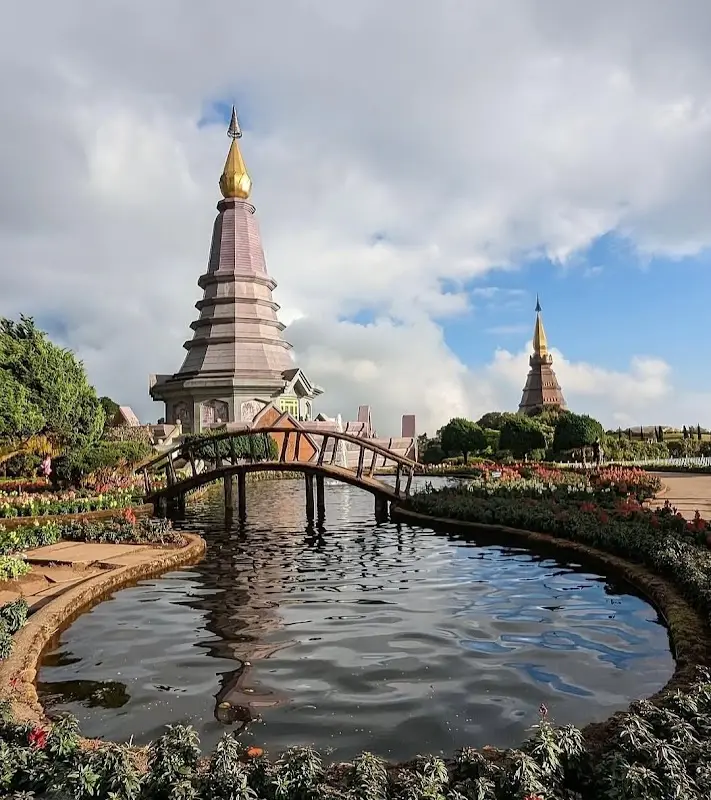
Doi Inthanon, at 2,565 meters, is Thailand's highest mountain, and the surrounding national park makes an ideal day trip from Chiang Mai. It lies approximately 100 km southwest of the city, with the journey taking about two hours each way. The final 48 km stretch from Chom Thong to the summit is along Route 1009. All the attractions are located directly on or near this road: impressive waterfalls on the lower slopes, a Hmong market and Karen coffee-growing villages in the middle, and near the summit, the two royal pagodas, the Kew Mae Pan ridge walk, and a boardwalk through the cloud forest.
Foreign adults pay an entrance fee of 300 baht. There is no public transportation within the park, so you will need a tour, a driver, or your own vehicle. The best time to visit is between November and February on a clear day. Bring a jacket, as average high temperatures in January are around 6°C.
Where to stay in Chiang Mai
This route ends in Chiang Mai. Search for hotels in Chiang Mai for your travel dates or narrow your search to the region you wish to visit. Filter for hotels with free cancellation if you'd like to book a room and decide later.
Open Booking.com with your travel dates · also on Expedia · Trip.com
My recommendations in every price category in Chiang Mai
Key facts
Foreign adults pay 300 baht, cars 30 baht.
Children aged 3 to 14 pay 150 Baht and motorcycles 20 Baht, payable in cash at the checkpoint at kilometer 8. The two royal pagodas are not operated by the park and cost a separate 100 Baht entrance fee.
The gates are open from 5:00 AM to 6:00 PM.
Most waterfalls and hiking trails close around 4:00 to 5:00 pm, the visitor center is staffed from 8:00 am to 4:00 pm.
Kew Mae Pan is open from November 1st to May 31st.
The ridge trail is the recommended hiking route. A local Hmong guide is mandatory and costs approximately 200 baht per group. They can be booked at the trailhead.
The summit is cold
In January, average temperatures are around 6°C and have already dropped below freezing. Even on hot days in Chiang Mai, you should dress warmly.
You need wheels for the mountain.
Songthaews run from Chiang Mai to Chom Thong at the bottom of the road, but there is no public transport between the stops within the park.
Bring cash and fill up your tank.
There are no ATMs in the park, and fees, guides, and food vendors only accept cash. Fill up your tank before you begin the climb.
Is a visit to Doi Inthanon worthwhile?
Yes, on a clear day. It's the only trip from Chiang Mai that feels like a journey to another country: pine and cloud forests instead of rice paddies, cool air, and views across mountain ridges all the way to Myanmar. Three large waterfalls are located right by the road leading up to it, and the Kew Mae Pan Trail offers more views per hour of walking than any short hike near Chiang Mai.
Two things determine whether you enjoy your visit. The weather, because clouds often hang over the summit, shrouding the pagodas and the peak in mist. So be sure to check the forecast and visit on a clear morning. And the time of year, because Kew Mae Pan is closed from June to October, and the view is obscured by bushfire smoke from March to April. The climb itself is very easy. You drive all the way to the top, and the summit marker is just a short walk from the car park.
How to get from Chiang Mai to Doi Inthanon
The tour prices are taken from our day trip guide and tour operator offers; private taxi rides with Thai National Parks (from 3,200 ฿) and The Stupid Bear (from 2,700 ฿ round trip); the mountain tour with The Blond Travels. Please check before booking whether the 300 ฿ park fee and the 100 ฿ pagoda entrance fee are included in the price.
Tour, driver or scooter.
The drive is approximately 100 km long and takes two hours. Follow Highway 108 south for 58 km to the Chom Thong junction and turn onto Route 1009, which leads 48 km up to the summit. The parking checkpoint is located at kilometer 8.
For one or two people, I'd recommend a tour. It's the cheapest way to get up there per person, the guide takes care of the tickets, and you don't have to drive the 48 km mountain road twice. The catch is the order. Tours usually start at Wachirathan Waterfall and reach the summit midday along with everyone else, and most don't include Kew Mae Pan.
For three or four people, a driver for the day costs less than four seats on a tour and allows you to go directly to the summit. A scooter is the cheapest and most fun option if you're a skilled rider. However, the climb is long and steep, the police in Chiang Mai check driver's licenses, and most travel insurance policies exclude motorcycles. Therefore, this isn't the right route for practicing. Without a car or tour, yellow songthaews run from Chiang Mai Gate and Chang Phueak to Chom Thong. From there, you can charter a 4x4 for the mountain journey.
Entrance fees and prices for Doi Inthanon
The park fees correspond to the information provided by the Thai National Parks Administration (valid since June 2022) and our park and waterfall records; the prices for campsites and bungalows are also from the Thai National Parks Administration (as of May 2026); please refer to our hiking records for the fees for hiking guides. Older blog posts mention 40 baht for the pagodas and 50 baht for a car, but the Thai National Parks Administration lists 220 baht for the Kew Mae Pan guidebook, so we recommend budgeting a little more.
Activities on Doi Inthanon, from Chom Thong to the summit
In the order you encounter them on the road. If you're driving yourself, I would first go all the way up while it's still quiet and before clouds form, and then back down. If you only have one day, you should definitely include the pagodas, Kew Mae Pan, the Ang Ka Promenade, Wachirathan, and a coffee stop.
Doi Inthanon in one day
Leave Chiang Mai by 7:00 AM and drive directly to the summit and the Ang Ka Bridge. Hike to Kew Mae Pan, provided the ridge is snow-free (November to May), and then visit the pagodas. On the way back, stop for lunch and coffee at the Hmong market or the Wachirathan stalls. Visit Wachirathan and Sirithan, and if there is still daylight, finish your hike at Mae Ya or Mae Klang. Stop at Wat Phra That Si Chom Thong on the return journey. The drive takes approximately two hours each way, and the hike on the mountain takes five to six hours.
On a tour, you will visit roughly the same stops in reverse order, starting with the waterfalls.
The best-rated hotels in Chiang Mai
Here is my ranking of the 10 best hotels in Chiang Mai. Each button will take you directly to the hotel's page on Booking.com, where you can enter your travel dates.
Weather on Doi Inthanon and what to wear
The mountain's summit is significantly colder than Chiang Mai. In January, the average temperature there is around 6°C, while nights in the city average 16°C. Mornings in December and January drop to almost zero degrees, with the record low being -5°C, measured on December 21, 2017, at kilometer 44.4. Even during the hottest months, it remains cool and often foggy up there.
The best time to visit is from November to February: cool and dry, with the clearest visibility and Kew Mae Pan open. March and April are hot and hazy, as smoke from the bushfire season obscures the view. From May to October, the rains fill the waterfalls and make everything vibrant green. July to September is the wettest period, and Kew Mae Pan is closed from June onwards.
Dress in layers. A fleece jacket or a light down jacket is ideal, along with long trousers and shoes with good tread for wet paths and steps. Protect your shoulders and knees from the pagodas. During the rainy season, a rain jacket and a protective case for your camera are recommended in Wachirathan.
Sunrise on Doi Inthanon
The summit is the most obvious spot, but it's often shrouded in clouds. The most beautiful sunrise can be experienced from the viewpoint on the main road next to the Kew Mae Pan car park. This viewpoint faces east and offers a breathtaking view over a sea of clouds on clear mornings. The pagodas, on the other hand, face west, so it's best to save them for sunset.
The gates open at 5:00 AM, and the summit is about a two-hour hike from Chiang Mai. Anyone wanting to experience the sunrise must therefore set off in the middle of the night or spend the night on the mountain. December and January are the months with the highest probability of cloud cover and the coldest temperatures.
Camping and overnight stay
Spending a night in the mountains is the best way to experience the sunrise and Kew Mae Pan before the tourist crowds arrive. The campsite is located less than a kilometer north of the park headquarters, around kilometer 31, and is only open during the cooler season, from October 1st to February 15th (corresponding to the regular park opening times). Camping costs 30 baht per person per night, a tent for up to three people costs 225 baht, and a sleeping bag, sleeping mat, and pillow cost 60 baht. There is no restaurant at the campsite, so it's best to eat at the park headquarters or the Hmong market and bring your warmest clothing.
The park also rents bungalows from 1,000 to 6,500 baht per night, with a 30% discount from Monday to Thursday. The national parks' online booking system was out of service until the end of the 2026 season, so book by phone at +27 53 286 729, ideally through a Thai-speaking representative. The mountain is very crowded on weekends, New Year's Day, and Songkran, and the road into the park is heavily trafficked. Around 12,000 people visit the mountain on New Year's Day alone, so avoid these days if possible. Alternatively, consider staying with host families in Karen villages or in guesthouses near the park entrance.
DOI Inthanon Tours
The standard group tour lasts nine to ten hours and starts in Chiang Mai. Including hotel pick-up, lunch, and a tour guide, it costs approximately 1,200 to 1,800 baht. The tour includes a visit to Wachirathan Peak, Ang Ka with its pagodas, and a coffee stop in a Karen or Hmong village. Before booking, you should clarify two things: Are the 300 baht parking fee and the 100 baht pagoda entrance fee included in the price? And does the tour include an actual hike – from November to May to Kew Mae Pan or the rest of the year to Pha Dok Siew? The cheapest tours only offer transfers between viewpoints.
Private tours with car and guide cost from about 1,950 Baht per person and are suitable for families or anyone who wants to start at the very top.
What I would skip
It's not possible in fog or smoke, as the pagodas and the summit primarily offer breathtaking views. It's a hike where you don't actually walk anywhere – provided you're fit enough for Kew Mae Pan. The hike is recommended on weekends, New Year's Day, and Songkran, as it tends to get crowded. And the summit is ideal for sunrise, unless you're camping and it's on the way.
Plan the rest of your time in and around Chiang Mai.
Frequently Asked Questions
Frequently asked questions about the Doi Inthanon National Park travel guide.
Yes, on a clear day. It's Thailand's highest mountain, two hours from Chiang Mai, with impressive waterfalls, the two royal pagodas, cloud forest at the summit, and, from November to May, the Kew Mae Pan ridge walk. Visibility is limited by cloud cover or smoke during the forest fire season, so choose your day carefully.
Yes. You can drive the 100 km yourself or hire a driver for the day for about 2,700–3,200 baht. Yellow songthaews run from Chiang Mai to Chom Thong at the foot of the mountain, but there are no buses or shared taxis within the park, so you would need to charter a truck from there.
300 baht for foreign adults and 150 baht for children aged 3 to 14, plus 30 baht for a car or 20 baht for a motorbike (payable in cash). The two royal pagodas each cost 100 baht to enter, and a guide is required for the Kew Mae Pan walking trail, costing approximately 200 baht per group.
No. A road leads to the summit, and the summit marker is just a short walk from the car park. The actual hike takes place on the trails. The Kew Mae Pan Circular Trail is 2.5 to 3 km long and takes two to three hours. It includes some steep steps. The Ang Ka Boardwalk is a 30-minute circular route.
Drive 58 km south on Highway 108 to Chom Thong, then continue 48 km on Route 1009 to the summit. The journey takes approximately two hours. Alternatively, you can join a group tour (1,200–1,800 baht), hire a driver, or take a songthaew to Chom Thong and charter a truck from there to the summit.
The hiking trail is open every year from November 1st to May 31st and closed from June to October due to the rainy season. It also remains closed during heavy rain. A Hmong guide is mandatory and can be booked at the trailhead.
The average temperature at the summit in January is around 6°C, while in December and January it is almost frosty in the mornings, with a record low of -5°C in December 2017. Bring a fleece jacket or light jacket every month.
Dress in layers: a warm jacket for the summit, long trousers and shoes with good tread for wet paths and steps. Protect your shoulders and knees from the pagodas and pack a rain jacket from May to October.
From November to February, when it's cool and dry, the visibility is clearest and Kew Mae Pan is open. In March and April, it's smoky. From May to October, the waterfalls are at their most impressive, but the ridge walk is closed.
Yes, at the campsite near headquarters, which is open during the cooler months, usually from October 1st to February 15th. Overnight stays cost 30 baht per person. Tents can be rented for 225 baht and bedding for 60 baht. Park bungalows cost between 1,000 and 6,500 baht per night and are booked by phone.
Compare prices on the major booking portals and filter for rooms with free cancellation if you want to book now and decide later.
Compare prices on Booking.com
Compare prices on Trip.com
We may receive a commission for bookings made through these links – this will not incur any additional costs for you. Learn more.
You might also like this
Bangkok travel guide
A city with three zones and a river – once you understand the structure, everything else falls into place.
Chiang Mai City Guide
A walled square, a mountain, and the best value for money for good living in Thailand – if you know the calendar.
Things to do in Bangkok
Ten experiences worth traveling to – sorted by rank, price and time, so you can experience each one at the best time.
Things to do in Chiang Mai
Twenty-five things worth a trip to the north, ranked by rank, price and time of year to visit, centered around the mountain, the markets and the smoke-free months.
Best time to travel to Thailand
The best time to travel is from November to February; the rest of the year is best on the east coast.
I lived in Bangkok for four years and traveled throughout the country from there. The guidebooks reflect my personal opinion and are written as I would explain things to a friend planning a trip.
Ready to create your travel itinerary?
Use our free trip planner to save places, organize days, and share your trip.

Community
Comments 0
Start the conversation.