a guide to Chumphon
Chumphon does attract some tourists, but those who do often stay for a long time. This southern Thai province is an important starting point for beachgoers heading to Koh Tao, as it offers a shorter route from Bangkok compared to the alternative route via Surat Thani. Although Chumphon isn't as well-known as some other provinces, adventurous visitors will love its secluded beaches, pristine dive sites, and numerous fruit plantations.
Chumphon translates to "place of blessings" and offers tourists more than just an overnight stay – there is much to experience there.
Arrival
There are two daily flights from Bangkok-Don Mueang Airport, which take up to one and a half hours to travel from the capital to Chumphon Airport.
Buses to Chumphon depart from the southern bus station (Sai Tai Mai) in Bangkok and take approximately nine hours for the journey. There are also bus connections from Chumphon to Phuket and Krabi.
Chumphon railway station is located on Thailand's southern rail line. Ten direct trains connect the capital with Chumphon; the journey takes six to nine hours. Sleeper cars are available, but not on all trains on this route. Families are advised to book a first-class sleeper car with a private compartment.
Try to plan your trip around Chumphon's festival calendar. In mid-June, the Lang Suan Mini-Marathon takes place, crossing an underwater sandbar and connecting Lang Suan with the island of Ko Phithak. In August, the Lang Suan Fruit Festival promotes the province's agricultural products, especially fruits and vegetables. From March to April, the Chumphon Marine Festival celebrates the province's maritime treasures – from sand sculptures on the beach to local fish dishes.
locomotion
Many tourists staying for a short time typically stay in the guesthouses and hotels on Saladaeng Road in Chumphon, which is just a short walk from Chumphon Railway Station. However, if you plan to stay longer, you should look for more comfortable accommodations along Thung Wua Laen Beach.
Those who want to experience the local flair even better can try the host families on Ko Phithak, where you live like the local fishermen; or the campsites in the national parks of Chumphon, such as Mu Ko Chumphon and Klong Plao National Park.
Activities in Chumphon
Located on the coast of the Gulf of Thailand, Chumphon boasts a 200 km coastline characterized by white sandy beaches and fishing villages. Part of Chumphon's coast has been declared a national park; inland, the fertile soil yields rich harvests of rubber, rambutan, durian, mangosteen, and coffee.
Chumphon remains a hidden gem for foreign tourists. Even Chumphon's most famous beaches feel a world away from the hustle and bustle of Koh Tao and Koh Samui. Thung Wua Laen beach stretches for three kilometers of white sand and, apart from the occasional tourist or fishing boat crew, is virtually deserted.
Thung Wua Laen may lag behind other Thai beaches in terms of infrastructure, but that's precisely what makes it so charming. The restaurants and resorts that have sprung up here feel more intimate and create the illusion of truly escaping everyday life.
Another beach, Hat Sai Ri, is a tree-lined, white sand beach opposite Ko Maphrao Island. The view is magnificent, but don't expect a peaceful atmosphere. Worshippers at the nearby shrine of the Prince of Chumphon, dedicated to the modernizer of the Royal Thai Navy, believe their prayers will be answered if they set off loud fireworks!
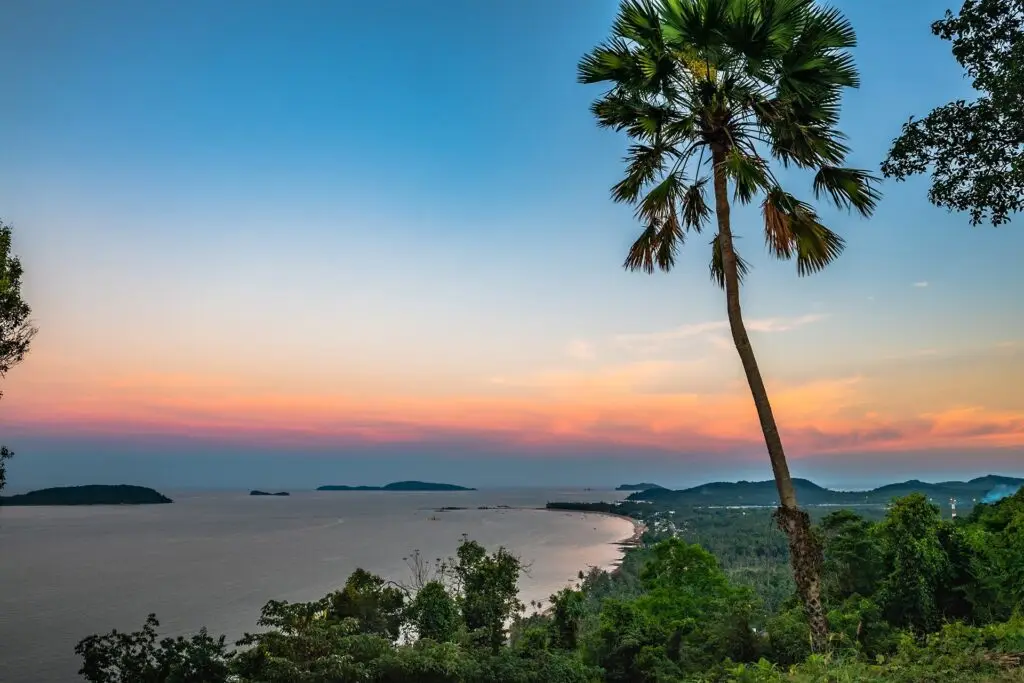
For a panoramic view of Hat Sai Ri and the surrounding islands, the Khao Matsee viewpoint is recommended. From there, you can visit a statue of the Bodhisattva Avalokiteshvara and enjoy the view over the Chumphon estuary, the fishing villages, and the Chumphon Sea beyond.
Diving. Many diving excursions in Chumphon depart from Thung Wua Laen. Diving schools and other equipment rentals on the beach have made this part of Chumphon a major hotspot for water sports and adventures.
The waters off the islands of Ko Ngam Yai and Ko Ngam Noi offer some of the best dive sites in the Gulf of Thailand, with an abundance of soft corals and sea urchins. Here you can swim alongside turtles, sea snakes, and with a bit of luck, even a whale shark.
The best time for diving in Chumphon is between February and October.
Kitesurfing. The kitesurfing season in Chumphon lasts from October to January. In Thung Wua Laen, you can rent a kite or take lessons at one of the kitesurfing schools on the beach – and all at surprisingly affordable prices.
Whitewater rafting. Further inland, the Phato district offers whitewater rafting tours on bamboo rafts on the Langsuan River, passing durian plantations and ancient forests. A rafting festival opens the season each February, which lasts until April.
Chumphon consists largely of fishing villages and farms. To experience the province in its wildest form, one should visit Mu Ko Chumphon National Park, a 317-square-kilometer protected area encompassing part of the mainland coast and 41 islands covered with rainforest, mangroves, and karst cliffs.
The mainland part of the national park encompasses the Thung Kha Bay Mangrove Forest Park, a network of boardwalks and bridges winding through pristine mangrove forests. Some of the islands in the park are home to colonies of sea salamanders, whose edible nests are harvested for trade.
Here's how to snorkel on Koh Surin: Snorkeling tours are offered, including hotel pickup, lunch, and snorkeling equipment. The tour allows you to swim in the sea, take beach walks, and snorkel around Koh Surin. Here's how to dive: Many dive centers offer a wide selection of diving excursions – day trips or night dives – for diving enthusiasts.
Tourists who only stay for a short time often miss out on the hospitality of the locals in Chumphon – an experience that visitors with a longer stay can enjoy for themselves. Chumphon's fishing villages invite you to soak up the local atmosphere, for example in the village of Baan Pak Nam in Chumphon's port or in the fishing village on the island of Ko Phithak.
In Baan Pak Nam, you can spend a few hours strolling through the village's narrow streets and watching the fishermen and their families at their daily work. On Ko Phithak, you can find a host family and accompany the fishermen as they work.
The Chumphon Night Market on Wangma Road in Chumphon City offers a truly unique experience. Stroll through the stalls and buy fresh fruit, local souvenirs, and Thai street food. During durian season, from June to October, you can enjoy super-fresh durian fruit at the stalls.
Selected articles about Chumphon
Off the beaten track: Hidden treasures in Bangkok
Like any capital city, Bangkok attracts many visitors to its famous historical sights, and it's no exception! Bangkok is...
4 Thai coffee companies you absolutely must try
Attention, coffee lovers! We have an exciting read for you to enjoy with your morning cup of coffee. It's about…
Where in Thailand you should travel depending on your zodiac sign
With so many destinations to choose from in Thailand, deciding on a specific one can be overwhelming. But wouldn't it be...
Do you need travel information?
Discover everything you need to know before your trip – from visa requirements and entry guidelines to essential travel tips and frequently asked questions.




Community
Comments 0
Start the conversation.