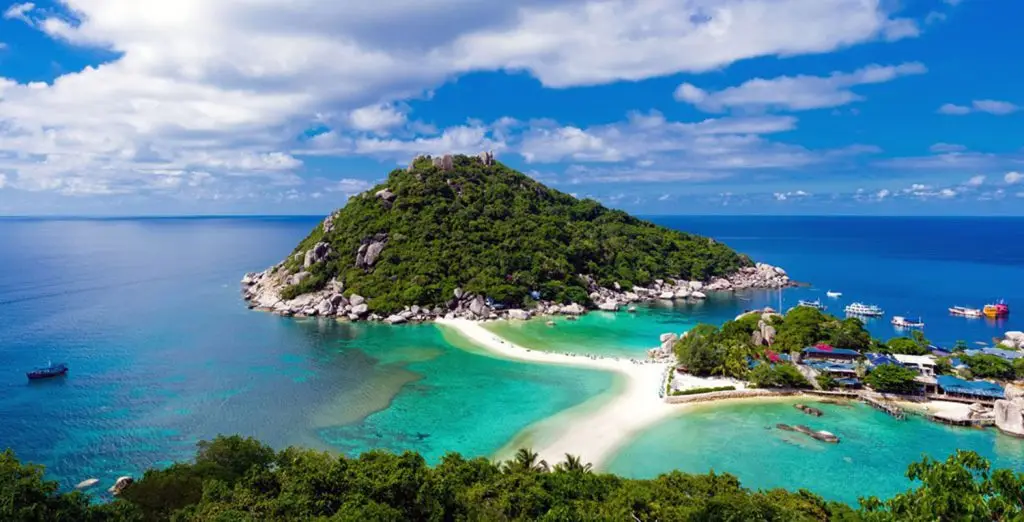
Thailand is rapidly becoming a leader in responsible tourism, offering visitors a wide range of sustainable attractions, activities and accommodations.
Visitors to popular holiday destinations such as Koh Samui, Koh Phangan and Koh Tao can choose between climate-neutral hotels, participate in local nature conservation projects, enjoy fine dining directly from the producer to the plate and support the local population.
Koh Samui
The tourism operators and local communities of Koh Samui are committed to environmentally friendly travel experiences and offer travelers many opportunities to experience the natural beauty of this region sustainably.
An excellent example of this is the Samui Elephant Sanctuary. Opened in Bophut in 2018, the sanctuary has become so popular that a second location has since been established in Chaweng Noi. Both facilities are nestled in forests and offer elephants that have worked in the timber and tourism industries a safe and peaceful retirement. Visitors can feed the elephants and walk with them – or simply watch them enjoy their freedom, playing together and wallowing in the mud pools.
Koh Tao
Koh Tao has cultivated a sustainable lifestyle for many years by actively reducing waste and investing significant energy in research and sustainability projects. Community gardens, composting, solar power, and natural biogas production are just some of the strategies local businesses are using to reduce their consumption and implement more sustainable practices.
The island celebrates its world-renowned marine environment with the annual "Spotlight Koh Tao" festival, which focuses on marine conservation. Visitors can choose from a range of revitalization activities, from beach cleanups to Thai cooking classes with a zero-waste concept.
The island's diving community was among the first to witness the impact of overtourism, pollution, and climate change on the local reefs and has banded together to monitor the reef's condition, conduct regular underwater cleanups, and promote coral restoration projects. Some, like Black Turtle Dive, go even further, offering marine conservation courses, internships, and workshops for visiting divers.
Another sustainable activity for visitors is a batik workshop with Coco Tie Dye. Batik is a zero-waste craft that provides an income for locals. The workshop teaches guests about the island's natural resources and combines education with a fun and focused artistic activity.
Koh Phangan
Nestled between Koh Samui and Koh Tai, Koh Phangan is famous for its exuberant full moon parties, but is also developing into a center for alternative thinking and environmentally conscious travelers.
An excellent example of this is the Indigo Coral House. Run by the passionate duo Fatimah and Matteo, the workshop and accommodation was built from sustainable bamboo, with construction methods optimized to minimize the consumption of non-renewable resources.
The house also serves as a refuge for Burmese refugees, providing them with a safe place to live. There, they can learn traditional crafts such as leaf printing and weaving to create their own items, which they can then sell at markets to earn an income. Tourists are also invited to these workshops, where they can learn more about leaf printing, composting, and bamboo construction.




Community
Comments 0
Start the conversation.