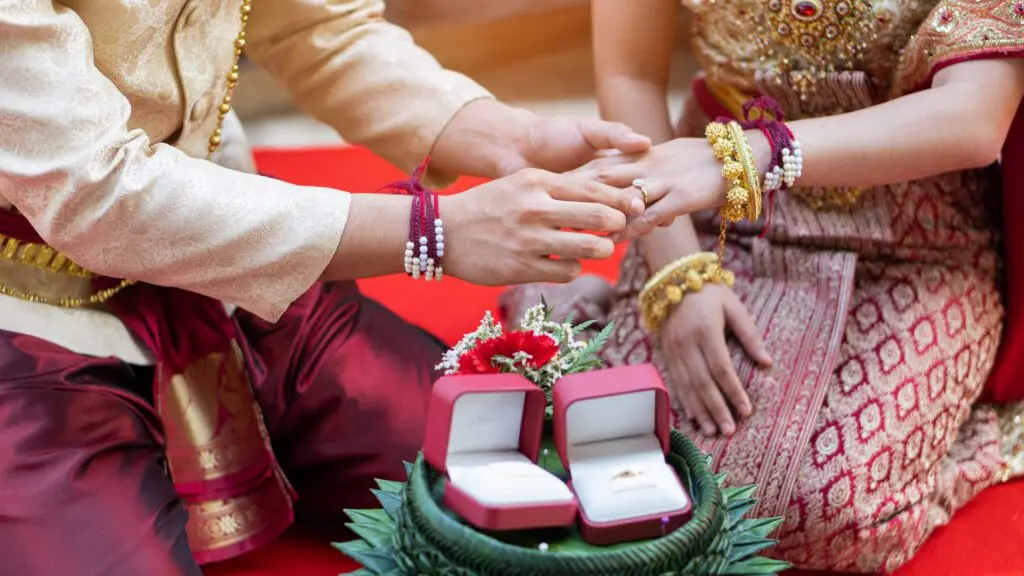
With the warmth of summer comes the wedding season and countless other significant life events.
Sufficient time is allocated for all the details; from the venue and catering to the entertainment and the wedding dress. The wedding dress is often one of the most important elements of any wedding, and this certainly applies to Thai weddings as well.
Thai weddings are among the most elegant and beautiful celebrations in the world. This is especially true for the wedding dresses, which are elaborately decorated and intricately designed, and differ significantly in the four regions of Thailand.
Today we will explain the differences in the dresses of the four regions of the country and examine the influences of neighboring countries and cultures that have affected the designs of the various regional wedding dresses.
Wedding dresses in Central Thailand exhibit perhaps the greatest variety. Traditional Sabai wedding dresses are typically white and red, adorned with gold sequins and floral embroidery. A long Sabai shawl covers the floor, and a sarong skirt drapes the bride. Another style is the traditional Thai wedding dress, in which the bride wears a lace-trimmed bodice with puffed sleeves and a white silk skirt. This type of dress has been widespread since the reign of King Rama VI at the beginning of the 20th century and combines elements of Thai and Western fashion.
The groom wears a white shirt with a cylindrical collar and long sleeves. He can wear either black suit trousers or a Jong Kraben, a wrap whose twisted ends are pulled between the legs and tucked into the waistband at the back.
Northern Thai wedding fashion, also known as "Lanna wedding dress," is influenced by the culture of Xishuangbanna, a region in China and Myanmar. The wedding dress consists of the colorful sabai gown, which can feature various elements. Unlike in Central Thailand, the sequins are usually not sewn directly onto the fabric, but rather incorporated into a hidden striped pattern. The dress is worn with a sarong, the shoulders of which are decorated with sangwan ornaments that contrast with the sarong's distinctive pattern. At a Northern Thai wedding, the groom wears a dark, double jong kraben.
Southern Thai wedding dresses are culturally influenced by Malaysia and China, which is clearly reflected in the patterns. At a southern Thai "Baba" (wedding), the bride wears a light-colored lace blouse with long sleeves and a high collar in the Chinese style. She wears a matching batik fabric over which a ruffled dress is fastened with three "gosang" pins. The groom wears a suit with flowers or a brooch with pink tassels on the chest.
Wedding dresses from Northeast Thailand
Wedding dresses in northeastern Thailand are influenced by and share similarities with those of neighboring Laos. Both the bride and groom wear long-sleeved white shirts and a sabai khit or a silk sabai draped over their shoulders. The difference lies in the sarongs, which the bride and groom wear in different colors during the ceremony. These sarongs from northeastern Thailand are woven on enormous looms and are the work of a community. This is true for most textiles in the region: several women work together on a single piece, giving the finished wedding garment a high level of detail and intricate patterns.
Although fashion trends in Thailand have changed over the years, traditional Thai dresses are still a common sight at festive occasions like weddings. Thanks to their intricate weaving techniques, Thailand's various ethnic groups create beautiful dresses with diverse colors, patterns, and designs. Each handmade wedding dress is truly unique and absolutely breathtaking.
And don't forget to plan after the wedding! Thailand is internationally renowned as a honeymoon destination that truly has something for everyone; from mountains to beaches, from cities to remote islands – Thailand is sure to delight you, whether you're planning a relaxing, adventurous, culinary, or wellness honeymoon for two.




Community
Comments 0
Start the conversation.