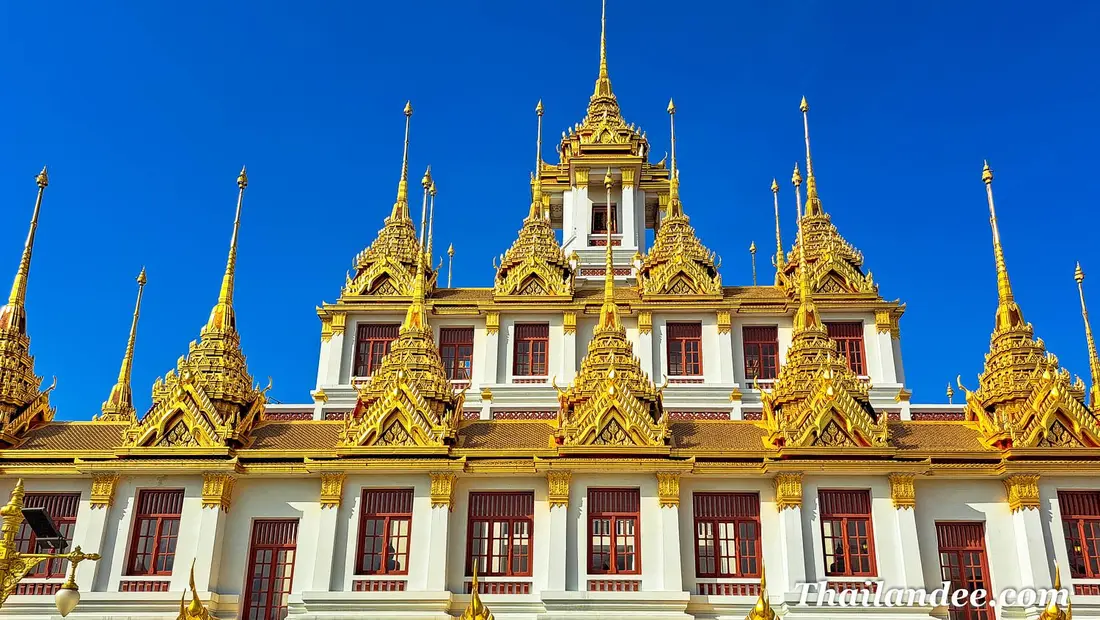
Wat Ratchanatdaram Worawihan was commissioned in 1846 by King Rama III for his niece, Princess Somanass Waddhanawathy, but was not completed until 2007. It was intended to be a monument to the royal family and Buddhism. Its most remarkable feature is the Loha Prasat, literally "Metal Castle," whose design was inspired by two similar structures in India and Sri Lanka that no longer exist. This architectural element can also be found in other temples in Thailand, notably Wat Tha Sung in Uthai Thani. The Loha Prasat is a Sri Lankan-style metal structure with 37 black, now gilded, spikes symbolizing the 37 virtues that lead to enlightenment in Buddhism. It rises seven stories high, reaching a height of 36 meters. Its interior is labyrinthine, with a spiral staircase leading to each level. At the top is a sacred chamber containing a Buddha relic. From up there you also have an interesting view of the surroundings, although it is by no means as impressive as the view from Wat Saket, which is perched a little further away on a hill.
Open daily from 9:00 AM to 5:00 PM (often actually from 8:00 AM). Admission: 20 THB donation.
Wat Ratchanatdaram Worawihan is less than a 10-minute walk from the Golden Mountain Temple or the Panfa Leelard Pier, the terminus of the Khlong Saen Saep waterbus line.
Wat Ratchanatdaram Worawihan & Loha Prasat is a temple. When visiting a temple in Thailand, there are some rules to observe: appropriate clothing (knees and shoulders should be covered), remove shoes upon entering the building, remain quiet, avoid hugs and kisses, do not point your feet at the Buddha statue, and smoking is prohibited.
How to get there
How do I get to Wat Ratchanatdaram Worawihan & Loha Prasat? Wat Ratchanatdaram Worawihan is less than a 10-minute walk from the Golden Mountain Temple or the Panfa Leelard Pier, the terminus of the Khlong Saen Saep waterbus line.




Community
Comments 0
Start the conversation.