Wat Pho (the Temple of the Reclining Buddha)
From here, it's just a ten-minute walk to the Grand Palace. We recommend visiting Wat Pho second, because although the golden Buddha is equally popular, many visitors don't have time to explore the rest of the complex. This way, you can enjoy your visit in a more relaxed manner. Wat Pho is also an excellent place for a traditional Thai massage. The facility is considered one of Thailand's leading massage schools, so you'll be in very good hands.
Wat Pho Bangkok, Wat Pho is one of the most famous sights in Bangkok.
Wat Pho Thai Traditional Massage School
Traditional Thai medicine is found throughout Thai society and includes certain remedies made from herbs and other ingredients.
In the past, there were two types of doctors: a royal doctor and a local doctor. At the beginning of the Rattanakosin era, King Rama III appointed the royal physician Phraya Bamroer Rajaphat as head of the department to spread the knowledge of traditional Thai medicine in the Phra Maha Chedis and Sala Rai monasteries.
In 1856, King Rama V commissioned his royal physicians to translate the great Pali-Sanskrit edition into a Thai version; the books were indexed as the Medical Handbook Royal Edition.
As a center for Thai medicine, the Wat Pho School of Traditional Thai Medicine and Massage was opened in 1955 at Wat Pho Temple. It is the first Thai medical school to be recognized by the Thai Ministry of Education. The school currently offers four basic courses in Thai medicine: Thai Pharmacy, Thai Medical Practice, Thai Midwifery, and Thai Massage.
Other highlights of Wat Pho
It's really worth exploring the rest of the temple. Wat Pho also has good English-speaking guides who will give you interesting information for around 200 to 400 baht – depending on the group size and your bargaining skills. If you prefer, you can also explore the temple on your own.
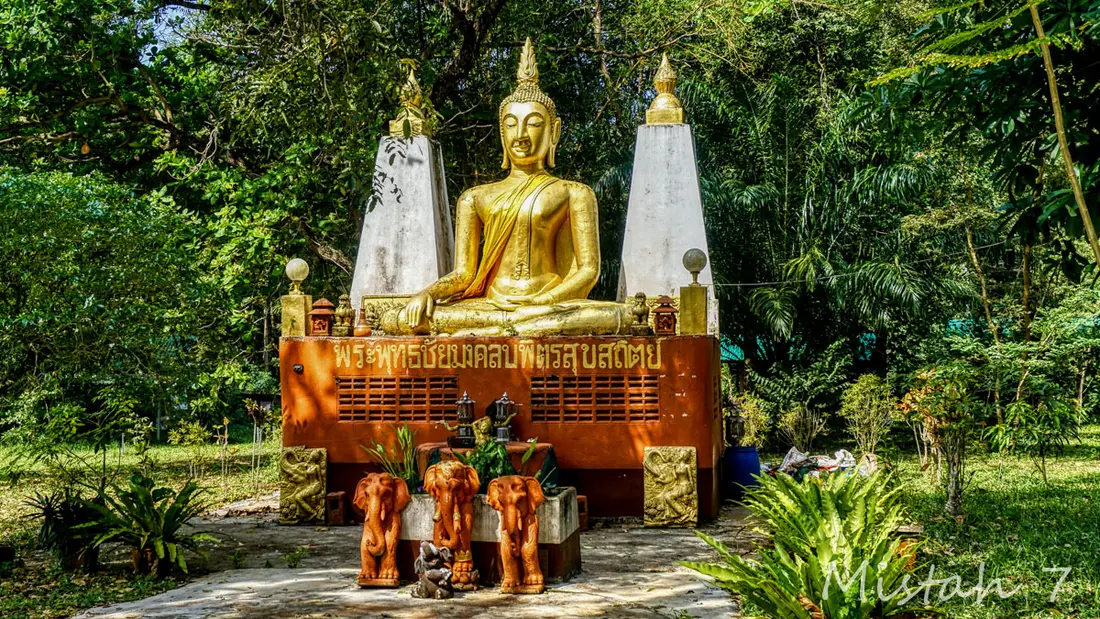
Among the recommended sights are four chapels containing 394 gilded Buddha statues and long rows of golden statues from various parts of Thailand, all seated in the lotus position. The intricate murals along the paths around Wat Pho, while requiring a book or guide to decipher, are so exquisite and intricate that they can be admired even without understanding all the motifs.
Finally, in the courtyards of Wat Pho Temple there are some strange-looking Chinese statues that were once used as ballast on ships, and 91 chedis (stupas) decorated with ceramic flowers and colorful tiles.
Community
Comments 0
Start the conversation.