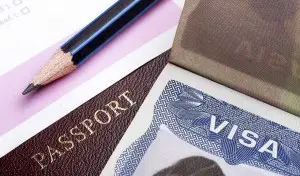
The spouse visa is one of the most popular types of visas to the United States. With this type of visa, Thai spouses can be assured of their entry into the United States. The K-3 visa is one of the most popular types of spouse visas. Other spouse visas in this category include the IR1 visa and the CR1 visa. With these visas, Thai citizens can easily live with their spouses in the United States.
The U.S. K-3 visa is the same as the IR1 and CR1 visas, and the process can be complicated due to the strong similarities between the three spouse visas. The type of visa best suited to your needs will depend on your individual requirements. This article provides in-depth information on the U.S. K-3 visa in Thailand.
Who is the “spouse” under a US K-3 visa?
The U.S. Nationality and Immigration Office (USCIS) defines 'spouse' as a legally married husband or wife. Therefore, cohabitation or ordinary marriage does not qualify as a spouse.
Spouses who have been previously married must provide proof that their marriage has legally ended. In the case of polygamy, only the first spouse qualifies as a spouse for the purpose of immigration.
The difference between the US K-3 visa and other spouse visas.
It has been mentioned that the K-3 visa is one of the spouse visas for Thai citizens and their American spouses. However, there are other visas as well.
What is a US K-3 visa?
The process of applying for a U.S. CR1 or IR1 visa is generally long and tedious. The K-3 visa was specifically created to reduce the separation between U.S. citizens and their foreign spouses.
This method allows foreign spouses to apply for a non-immigrant K3 visa to reside in the United States while their CRR1 visa is being processed. K-3 visa holders can later apply for adjustment of status to permanent resident (LPR) with the U.S. Citizenship and Immigration (USCIS) once their application is approved.
The U.S. K-3 visa is valid for two years, during which time an immigrant visa is expected to be granted. The K-3 visa may be renewed for another two years; however, the K-3 visa may be revoked if the application for legal permanent residency (Form I-130) is rejected or if the marriage ends.
Eligibility requirements for the U.S. K-3 spouse visa in Thailand.
As a Thai citizen, there are three basic eligibility requirements you must meet before being eligible for a K-3 visa:
Can my spouse bring our children to the United States on a K3 visa?
Children of foreign spouses can benefit from a marriage visa. This is possible under the K-4 visa application process. A K-4 visa allows children to reside in the United States.
Eligibility requirements for a child to receive a visa:
The K-4 visa not only gives children the opportunity to live in the United States, but they can also attend school and apply for citizenship if they qualify.
The process involved in applying for a K-3 visa.
There are two basic steps involved in applying for a K-3 visa in Thailand. These steps are strictly vetted here.
Step 1: Filing a petition in the United States.
The K-3 US visa process in Thailand begins with a US spouse filing Form I-129F with USCIS. Form I-129F is a “Petition for an Alien Fiancé” which can be used for spouses of US citizens.
The documents that must be attached to Form I-129F include:
One advantage of the K-3 visa is that there is no fee for filing the I-129F petition for spouses. A receipt is usually sent to the applicant within 30 days of application.
Once USCIS approves your petition, it will be forwarded to the National Visa Center. The National Visa Center will then process your K3 marriage visa application and forward it to the U.S. Embassy in Bangkok.
Step 2: Submit your application at the U.S. Embassy.
After USCIS approves Form I-129F, an email from the U.S. Embassy in Bangkok will be sent to the Thai spouse. The next step is to file the DS-160, the online temporary visa application form for temporary travel to the United States, and pay the embassy fee.
After submitting the DS-160 and paying the embassy fee, applicants can then submit Packet 3 and request a visa interview. This interview is typically scheduled approximately 4 to 6 weeks from the date of contact from the U.S. Embassy in Thailand.
Along with the confirmation page after completing the DS-160 form, the other documents required for the interview (Packet 4) include:
Let professionals handle your K-3 visa application.
Applying for any type of spouse visa can be very stressful. Even deciding which spouse visa is right for you isn't easy. The requirements of different spouse visa types vary, and you may need the services of an expert to guide you correctly.
The experienced team of lawyers and experts at Siam Legal International specializes in U.S. immigration matters, particularly K-1 fiancé visas and K-3 spouse visas in Thailand. Over the years, our expert attorneys have assisted numerous Thai citizens and their American partners in processing their visa applications.
Our team members consist of legal experts fluent in both English and Thai, and specialists with expertise in the US visa application process in Thailand.
Contact Siam Legal
[column size='1/2']
LIVE SUPPORT
CALL
CHAT
Chat with our representative
From Thailand: Monday – Friday 4:00 AM – 6:00 PM (Bangkok time)
LEAVE US A MESSAGE
If you have a question related to US Visa Application in Thailand, please use this form to contact us.
Community
Comments 0
Start the conversation.