Do you need travel insurance for Thailand?
Travel insurance will no longer be mandatory for tourists in Thailand from 2026. The mandatory tourist insurance system proposed by the Ministry of Health in April remains only a proposal and is not yet law. However, it is still advisable to purchase insurance. There is no free healthcare for visitors in Thailand. Private clinics charge prices comparable to those in the West and require insurance or a deposit before treatment. Reasonable insurance costs between US$1.50 and US$4 per day for a 34-year-old, roughly double that for a 58-year-old, and online travel agencies no longer offer insurance for those over 70.
Concrete figures: Food poisoning requiring IV fluids and an overnight stay costs 15,000–40,000 baht, a scooter accident requiring surgery and two nights' accommodation costs 150,000–500,000 baht, and medical repatriation can cost over 3,000,000 baht. The scooter accident clause is more important than the price; it is the most frequently denied claim in the country. Below you will find information on the insurance requirement, which services are actually claimed, what your policy must cover, current cost estimates for three age groups from the US and UK, coverage for those over 70 and people with pre-existing conditions, which policies are sold in Thailand and which visas are required, and how Thai hospitals handle claims.
Enter your details before creating your account by clicking the pink camera on the SafetyWing Nomad insurance page. This offer is for new customers only; the supplemental insurance will remain in place as a paid policy after the initial 8 weeks unless you cancel it. Terms and conditions apply.
Sponsored calculator – we may receive a commission at no extra cost to you. Learn more.
Plan your accommodation.
Compare hotel prices across Thailand for your desired travel dates. Filter for hotels with free cancellation if you'd like to book a room and decide later.
Open Booking.com with your travel dates · also on Expedia
Key Facts (2026)
Is entry into Thailand required? No. This is a proposal, not a law.
There is no entry insurance requirement for tourists. The Ministry of Public Health proposed introducing mandatory health insurance for all arrivals starting in April 2026 (unpaid hospital bills for foreign nationals amount to over 100 million baht per year). A cabinet review is expected later this year; however, no decision has yet been made. Different regulations apply to long-term visas: OA (Old Age Retirement) visas require health insurance coverage of US$100,000, while LTR (Long-Term Traveller) visas require only US$50,000.
At 34 it costs $1.50–$4 per day, at 58 about twice as much, and at 70 it's a completely different market.
According to live data from September 25, 2026, the same two-week trip cost $42.79 per month (up to age 79) with HeyMondo Medical, $62.72 per month (from age 34) but $161.28 (from age 58) with SafetyWing Essential, and $113 (from age 34), $160 (from age 58), and $353 (from age 70) with Tin Leg Gold. Squaremouth forecasts an average price of $216 for a 28-day trip, or $2.75 per day for health insurance alone, for US buyers in 2026.
Be aware of $100,000 in medical costs, $250,000 in evacuation costs, and direct billing.
Evacuations from the island to Bangkok or from home represent the largest cost factor in Thai health insurance claims. Direct billing with Thai private clinics means you don't have to front 200,000 baht with your credit card.
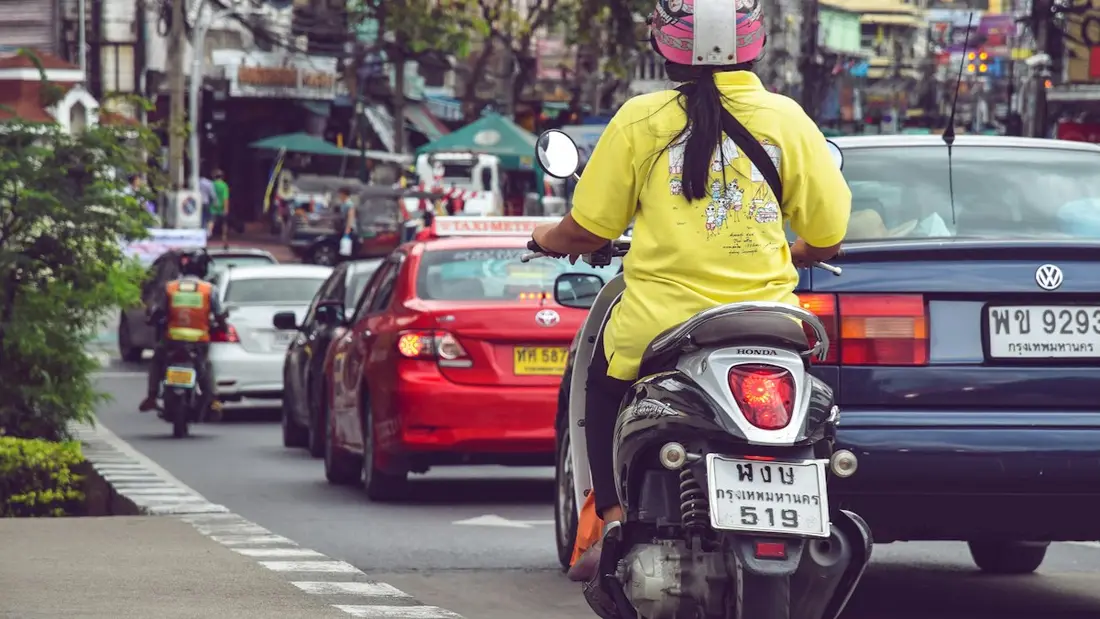
Scooter accidents are the most frequently rejected type of damage claim in Thailand.
Most insurance policies only cover motorcycles if you have a motorcycle license (usually plus an international driving permit), wore a helmet, and were sober. Genki covers motorcycles up to 125cc even without a motorcycle license. HeyMondo categorically excludes motorcycles over 75cc.
Nomad subscriptions will no longer be sold to people aged 70 and over.
The US insurance policies SafetyWing Essential, Genki Traveler, and World Nomads all end at age 69. From age 70 onward, options include HeyMondo Medical ($42.79, coverage up to age 79), comprehensive US insurance through Squaremouth (Generali Standard $131.25, Tin Leg Gold $353 for a trip valued at $3,000), or AXA Sawasdee Thailand, which provides coverage up to age 79.
Without health insurance, a hospital stay costs between 8,000 Baht for an emergency room visit and 3,000,000 Baht for an evacuation.
A visit to the emergency room with tests costs 8,000–25,000 baht, an overnight stay 15,000–40,000 baht, surgery requiring several days costs 150,000–500,000 baht or more, and evacuation home costs 1,500,000–3,000,000 baht or more. At an exchange rate of 33.5 baht per US dollar, this equates to approximately US$240 to US$90,000.
A purchase after arrival only provides subscription coverage.
SafetyWing and Genki offer travel insurance (Genki with a 14-day waiting period, only for emergencies). Traditional individual travel insurance policies must be purchased before departure.
Will Thailand introduce mandatory travel insurance?
It is a proposal, not a law.
On April 1, 2026, the Thai Ministry of Public Health announced it was considering legislation mandating health insurance for all travelers entering Thailand. On May 1, Health Minister Pattana Promphat confirmed that the ministry was working on a draft bill, citing unpaid medical bills as the reason. The ministry estimates that foreign patients' outstanding medical bills annually exceed 100 million baht, with Vachira Phuket Hospital alone having to write off approximately 10 million baht. The minister stated that premiums would "not be set so high as to impose an undue burden." Officials were considering integrating the insurance into the entry process or ticket purchase. A separate 300 baht entry fee remains under consideration by the cabinet and has not yet been levied.
This means that nothing has changed at the border today. Neither premiums nor minimum coverage amounts nor a start date have been published, and a cabinet review is not expected until the end of 2026 at the earliest. Should the regulation be adopted, a model similar to the Schengen model is expected, where proof of insurance is checked upon entry or integrated into the visa or ticket. Any policy of the type described on this page would then guarantee a plausible minimum level of coverage. I will update this section as soon as a cabinet decision is reached. Until then, the statement on one website that insurance is "now mandatory" for tourists is incorrect.
What really goes wrong in Thailand – the true list of incidents
Insurance decisions become easier once you see what people are claiming for.
Motorcycle and scooter accidents top the list of claims for all insurers in Thailand – by a wide margin. Thailand's traffic fatality rate is among the highest in the world, and emergency rooms in the tourist areas of Phuket, Samui, and Pai treat injuries caused by rental scooters daily. What most travelers only realize too late is that standard insurance policies only cover rides if you have a valid motorcycle license from your home country, an international driving permit, and were wearing a helmet and sober. Those who rent a scooter with only a car license – which is common for tourists – risk having many insurers refuse to cover their claim altogether.
Medical care in the mid-range is neither glamorous nor cheap. Dengue fever is prevalent year-round in the south, peaking during the rainy season. A hospital stay in a private clinic costs between 50,000 and 150,000 baht. Add to that severe food poisoning and dehydration, infected coral injuries, animal bites (rabies vaccination after exposure requires several visits and costs several thousand baht), and falls due to alcohol consumption. None of this is exotic. All of this results in a bill in the four- to six-figure baht range at a private hospital.
And then there are the non-medical consequences. Mobile phones stolen on Khao San Road, luggage disappearing from buses, flight cancellations during storm season, ferry delays affecting all onward bookings. Individually, these are minor issues, but insurance against theft and delays turns a wasted week into nothing but paperwork, and I wouldn't take out a policy without it.
What travel insurance do you need for Thailand?
Five checkboxes separate the actual insurance coverage from an additional sales offer at the checkout.
First, the minimum medical requirements. You need at least US$100,000 for emergency medical treatment, as surgery in a private hospital plus a week of aftercare often costs less. You also need medical evacuation and repatriation for at least US$250,000. The latter is non-negotiable. Critically ill patients on the islands will first be stabilized on-site and then flown to Bangkok or their home country. This air amenity is the single largest expense in any Thai disaster relief claim.
Second, be honest about your activities. If you have even the slightest opportunity to ride a scooter, get written confirmation of your two-wheeled vehicle insurance and the corresponding licensing requirements, rather than relying on assumptions. For diving, you'll need coverage that specifies the diving depth, usually up to 30 meters with the appropriate certification. Rock climbing in Railay, Muay Thai training, and jungle trekking are more frequently on exclusion lists for "adventure activities" than you might think. A policy that's $20 cheaper but excludes your specific trip is worthless.
Third, the claims handling procedures, which are relevant at 2 a.m., are crucial: direct billing with Thai private clinics so you don't have to front 200,000 baht with your credit card; a 24-hour emergency hotline; and clear documentation requirements (police reports within 24 hours in case of theft, receipts for all expenses). Long-term travelers should also be aware of the maximum trip duration. Traditional single-trip travel insurance policies cover a maximum of 30–90 days, while subscription-based nomad insurance like SafetyWing renews monthly and can even start after your departure. This last point is more important than you might think, as "We've decided to stay another month" is the most common reason why travelers in Thailand find themselves uninsured.
If you only remember one thing, make it this: $100,000 for medical care, $250,000 for evacuation, scooter insurance verified using your driver's license information, and direct billing with private Thai clinics. My advice: Only compare prices after these points are clarified, not before.
How much does travel insurance for Thailand cost? (2026)
The price ranges reflect the rates published by major insurers for 2026 for travelers in their thirties. Age has a greater impact on the price than the destination; the next table shows the same trip for 34-, 58-, and 70-year-olds.
US exchange rates at 34, 58 and 70 (September 2026)
All quotes were calculated on September 25, 2026, either directly with the insurer or – for the plans marked with an asterisk – through Squaremouth for one US citizen (New York) and one person for a trip to Thailand from October 15 to 28, 2026. The plans marked with an asterisk include trip cancellation insurance for trips up to US$3,000 and are therefore more expensive than the plans without medical coverage. A cheaper version without medical coverage is available for each plan. SafetyWing calculates prices based on age groups (10–39, 40–49, 50–59, 60–69) and bills every four weeks, so the full amount is due for a two-week trip. HeyMondo does not ask for age for its US plans; the maximum age limit is 79.
Which travel insurance is the best for Thailand? Four plans compared.
Current offers for the same traveler, the same two-week Thailand trip
To illustrate this, I obtained identical quotes (for a 34-year-old US citizen, two weeks in Thailand) from the respective insurers' online quote calculators in August 2026 and again on September 25th. The prices were all identical, so the table below remains valid. However, please note that the most affordable adequate insurance coverage depends less on the overall price than on the scooter clause, as claims related to this clause are frequently rejected in Thailand.
The four insurance providers differ significantly when it comes to two-wheelers. Genki is the simplest, as motorcycles up to 125cc are insured without a motorcycle license (though a helmet is still mandatory). This also applies to the Honda Click scooters that most tourists rent. SafetyWing only covers riding if you have a valid driver's license, wear a helmet, and are sober. For anything over 50cc, the Adventure Sports add-on insurance is required for US$10. World Nomads requires a valid Thai motorcycle license, which in practice means a national motorcycle license plus an international driving permit with motorcycle authorization. HeyMondo categorically excludes two-wheelers over 75cc, making almost all rental scooters in Thailand non-refundable. The insurance is adequate for non-riders, but unsuitable if you have even the slightest chance of riding a motorcycle.
The structure is also important. SafetyWing and Genki are subscription plans that can be purchased even mid-trip. SafetyWing's Essential plan starts practically immediately, while Genki, if you sign up abroad without prior insurance, has a 14-day waiting period for emergencies only. HeyMondo's international insurance has a 72-hour waiting period if purchased after your trip has started. For activities off the beach, Muay Thai training is covered by default with Genki, requires additional coverage with SafetyWing, and the mid-range Explorer plan with World Nomads. Diving up to recreational depths is covered with certification by all four providers. A special note for the USA: HeyMondo's American plans are distributed through Gallagher and insured by Starr Indemnity. Therefore, the terms and conditions differ from the international HeyMondo products mentioned in other travel guides.
According to Khao San, SafetyWing offers mobile phone and laptop theft coverage as an add-on for $10 per four-week period, in addition to the $62.72 premium. The insurance reimburses up to $1,000 per device and $3,000 per policy period, based on a 2% monthly depreciation. A police report within 24 hours and a proof of purchase are required. SafetyWing has provided this website with the reader code THAILAND8, which grants new customers free access to this add-on, valued at $20, for the first eight weeks of their Essential plan. The catch is how you enter the code: On the Nomad insurance page, click on the small pink camera icon on the table in the train illustration, enter the code, and only then create your account, as the add-on cannot be applied retroactively. After the eight weeks, the add-on will continue to be charged at $10 unless you deactivate it.
In short: For a fixed two-week vacation without scooter riding, HeyMondo Medical was the most affordable and suitable option for every age group. Planning to ride a scooter? Then Genki (no motorcycle license required for motorcycles under 125cc) or SafetyWing with additional coverage (if you have a motorcycle license) are the right choices. Already in Thailand or flexible with your travel dates? Then I recommend SafetyWing or Genki, as both are also available during your trip. Over 70? Then HeyMondo Medical is the only plan on this page still available at the same price; after that, only Squaremouth's comprehensive US plan is a viable option.
Medical limits and scooter rules, plan by plan
The quotes were generated on August 5, 2026, and again on September 25, 2026, using the respective insurers' online calculators. The calculations were identical in both cases and were based on a 34-year-old resident of the USA spending two weeks in Thailand. Subscription plans (SafetyWing, Genki) are billed monthly or in four-week blocks, meaning the full block price applies for a two-week trip. Genki bills in euros and covers only medical expenses; baggage and trip cancellation are not included. IMG will take over distribution of World Nomads' US plans on September 30, 2026 (the acquisition was announced in February; existing policies are not affected). Therefore, the brand identity may change. Please obtain a new quote before relying on the figures provided here.
The best travel insurance for Thailand, from Traveler
You don't ride a scooter? HeyMondo Medical
The most affordable reasonable offer for all ages is $42.79 for two weeks with $100,000 medical coverage and $250,000 evacuation coverage; the price remains the same up to age 79. Motorcycles over 75cc are not included, so this offer is only suitable for travelers who do not ride motorcycles.
Rent a scooter without a motorcycle license? Genki Traveler
This is the only tariff available, covering motorcycles up to 125cc without a motorcycle license, as long as a helmet is worn. €63.90 per month for individuals aged 34 and over, health insurance only, including Muay Thai training. Not available for individuals aged 69 and over.
Already in Thailand or no return date yet? SafetyWing Essential
$62.72 for 4 weeks for ages 34 and up. The trip can begin mid-vacation with almost no waiting time. Motorcycle license and helmet are included. For vehicles over 50cc, the Adventure Sports package is required for $10. Sale only to those 69 years and older.
Over 70? HeyMondo Medical, then a comprehensive US plan
HeyMondo Medical is the only provider on this page that maintains a constant price of 70. Generali Standard, through Squaremouth, also offers travel cancellation insurance at a premium of $131.25 for a $3,000 trip. AXA Sawasdee Thailand offers coverage up to $79 if the policy is purchased before departure.
Do you need travel cancellation insurance for the USA? Squaremouth offers comprehensive plans.
For a trip worth $3,000 at the age of 34, IMG iTravelInsured Choice charged a price of $95.02, Generali Standard $101.25, and Tin Leg Gold $113, with the latter offering the highest coverage limits of $500,000 for medical services and $500,000 for evacuation.
Are you buying from the UK? Check if Thailand is included in your chosen category.
Most insurers classify Thailand as "worldwide, excluding the USA," while Post Office places it in a more expensive category along with the USA. For two weeks in January 2027, Columbus Direct Bronze offered a premium of £31.00, while Post Office Economy charged £75.46. A UK motorcycle license is required for moped insurance.
Do you need insurance for a Thai visa? AXA Sawasdee or Tune iPass
AXA Sawasdee from 999 ฿ (750,000 ฿ medical care, age 6 months to 79 years) and Tune iPass from 2,250 ฿ are sold at exactly this price, but first check the minimum visa requirements, as the OA retirement visa requires US$100,000.
Travel insurance for Thailand from Great Britain
What British buyers receive, what it costs, and what pitfalls British policy holds.
British travel insurance policies differ from the aforementioned US offerings and are the better choice for Thailand. Prices are based on age and trip length, not travel costs. Cancellation and baggage insurance are included, and medical coverage amounts reach into the millions. The two policies I mentioned started with £5,000,000 in coverage for medical expenses and repatriation in the most affordable plan and went up to £15,000,000 in the most expensive. For comparison, in the US, I consider the coverage amount for medical expenses and repatriation to be the minimum.
Start with the coverage area, as this is where UK buyers most often go wrong. Comparison websites and most insurers categorize Thailand in the cheaper "Worldwide excluding USA, Canada, and Caribbean" category, and Admiral states that this category covers Thailand. Post Office, however, does not. On their quote form, Thailand is listed alongside the USA, Canada, Bermuda, Greenland, the Caribbean, and Mexico as a country with high medical costs. Therefore, Thailand requires the more expensive "Worldwide inclusive" category with Post Office. Columbus Direct avoids this issue by calculating the price for the country you specify. If the policy you purchase doesn't mention Thailand or doesn't include it in your chosen category, the cheap offer is invalid for this trip.
Your GHIC (Global Health Insurance Card) is not valid here. The NHS (National Health Service) explains that the British GHIC covers state healthcare in the EEA and some other countries and does not replace travel insurance. Thailand does not have a corresponding agreement with the UK. The FCDO (Foreign Conciliation Office) adds that every Thai hospital requires a payment guarantee before treatment. This can be arranged through your insurance company's assistance hotline. The emergency number for an ambulance is 1669.
Two rules from the UK Foreign and Commonwealth Office (FCDO) determine whether an insurance claim will be paid out. If you travel contrary to the FCDO's recommendations, your insurance coverage may be voided. Since the October 2026 update, this applies to Pattani, Yala, and Narathiwat, four districts of Songkhla (Chana, Thepa, Na Thawi, and Saba Yoi), the Hat Yai–Padang Besar railway line, and all areas within 20 km of the Cambodian border. The usual tourist islands and towns are not affected, but the southern routes to Malaysia are. According to the FCDO, insurers require a UK driving licence, the same one you would need in the UK for the same motorcycle. A standard car licence is not sufficient for the 125cc Honda Click motorcycles offered by most rental companies. You also need an International Driving Permit (IDP) issued in 1968, which can only be obtained in the UK before your flight. A helmet is also mandatory in Thailand. Admiral requires additional insurance for motorcycles over 125cc, and the Post Office warns that an accident under the influence of alcohol can void the insurance coverage.
On average, MoneySuperMarket customers paid £14.15 for a one-week and £28.57 for a two-week trip to Thailand per person in the three months prior to the June 2026 update. The average price for all Thailand travel insurance policies was £51.19. These figures are based on customer purchases and are not tailored to your age. The age table below is therefore intended as a guide to your individual price. If you travel more than once a year, you should also consider annual travel insurance. At age 30, the Post Office's Economy annual multi-trip travel insurance cost £73.76, less than the £75.46 for a single trip. However, this price ratio changes with age.
My checklist for Great Britain: Thailand must be listed in the chosen insurance area, medical and repatriation insurance with a coverage amount of at least £5 million, disclosure of all pre-existing medical conditions, a motorcycle license suitable for the motorcycle, and travel outside the areas recommended by the Foreign Office. After that, I would focus more on the excess and cancellation limit than on the travel price.
Exchange rates for Great Britain at 30, 58 and 72 (October 2026)
All quotes were calculated on the insurer's calculator on October 27, 2026, for a single traveler residing in the UK. The trip to Thailand (January 15–28, 2027) does not include a cruise or winter sports activities, and the birthdates are June 10, 1996, 1968, and 1954. The Post Office website asked about pre-existing medical conditions, but the user indicated they had none. Thailand is listed in their "Worldwide including USA" category, so the prices for that category apply. Columbus Direct calculated the prices for Thailand as the destination and did not ask about health on the quote page. Medical coverage includes repatriation; cancellation fees range from £500 to £5,000 depending on the policy. Neither calculator asked for a postcode, name, or email address before displaying the price. Staysure, Admiral, Saga, and InsureandGo do ask for a name, address, or email address before providing a price, so they are not listed here.
Travel insurance for Thailand for people over 60, over 70 and with pre-existing medical conditions
Age has a greater impact on the market than price, and illness affects who will sell you something.
Coming from the UK, while age increases the price, it doesn't preclude insurance. Both providers offered a 72-year-old a quote for this trip with no extra charge, and Admiral and Staysure offer special policies for those over 80. Price increases aren't uniform, so it's worth getting quotes from both providers. Columbus Direct was cheaper for 30- and 58-year-olds (Bronze fare: £31.00 and £51.40 respectively) and more expensive for 72-year-olds, where the Bronze fare cost £194.58, compared to £138.30 for the Post Office's Economy fare. For 72-year-olds, a single trip was also cheaper than the Post Office's annual policy (£138.30 versus £243.46), so the annual policy trick is no longer worthwhile for those around 60.
The situation is even clearer in the US. SafetyWing Essential, Genki Traveler, and World Nomads' US policies all end at age 69. In September, HeyMondo Medical's price remained at $42.79 up to age 79, and Squaremouth's comprehensive policies were still available up to age 70 (Generali Standard $131.25, Tin Leg Gold $353 for a $3,000 trip). AXA Sawasdee Thailand's travel insurance offers coverage up to age 79 if purchased before arrival.
A pre-existing condition is more important than age. With UK insurers, you must disclose any pre-existing condition when requesting a quote, and Admiral's wording is typical. A condition is only covered if you have disclosed it, received written confirmation of coverage, and paid any additional premium. Failing to disclose a pre-existing condition can result in the loss of coverage. Post Office and Staysure state that they cover most pre-existing conditions if disclosed, and AllClear specializes in these. If your application is declined or you are quoted an inflated price, the government-funded travel insurance directory MoneyHelper lists insurers specializing in precisely these situations (0800 138 7777). From the US, Route is an option: it's a comprehensive policy purchased within the pre-existing condition waiver period after the initial trip payment. Squaremouth points this out in every quote. Nomad policies exclude pre-existing conditions altogether.
For those over 70 years old or with pre-existing conditions, I would first obtain quotes from the major insurance companies, then from a specialist, and only then from a comparison portal, because the cheapest comparison result is usually the one with the medical exclusion that cannot be seen in the main price.
What changes if you buy from Australia or the USA?
The product, price anchors, and traps differ depending on the home market.
The insurance coverage checklist above applies regardless of your place of residence. The only differences lie in the policy pricing and the most common errors. There is a separate section above with live offers for Great Britain; here you will find the versions for Australia and the USA.
Australia
Australia has no mutual health care agreement with Thailand, so Medicare will not cover any costs. Smartraveller's advice is therefore clear: get insurance and don't drive any vehicles not covered by your Australian driver's license. Australian policies (Cover-More, Freely, Allianz, and bank-branded products) generally offer unlimited medical care and evacuation abroad—a better arrangement than the US $100,000 coverage limit. However, scooters require additional coverage. Freely, for example, requires supplemental motorcycle and moped insurance for each day of use, a valid driver's license, a helmet, and a blood alcohol level below 0.19. I haven't obtained Australian quotes for this page, so please compare directly on the respective insurer's website. The checklist above remains valid.
United States
US buyers are the only ones who pay the pure travel cost price, as US travel insurance policies include trip cancellation coverage. According to Forbes Advisor, insurance costs $59 for a $2,026 trip, $110 for a $1,000 trip, and $203 for a $5,000 trip. Squaremouth lists an average price of $216 for a 28-day trip to Thailand. Medical-only insurance is significantly cheaper. Therefore, HeyMondo Medical, at $42.79, is the most affordable option for travelers with reimbursable flights and no prepaid tours. Medicare and most corporate health plans do not cover costs in Thailand, and Thai hospitals do not bill them. Therefore, medical-only insurance is the right choice.
Insurance policies sold in Thailand and which visas are required for them
The entry requirements for Thai citizens meet a checklist; they do not replace a $100,000 plan.
A quarter of the visitors to this site are searching from Thailand, India, the Philippines, or the Gulf region. They typically need insurance purchased in Thailand that is accepted by employers, visa officers, or schools. Thai insurers offer special "incoming" insurance policies. AXA Sawasdee Thailand is available from 999 baht, covers medical treatment up to 750,000 baht and accidental death up to 1,000,000 baht, offers coverage for individuals from 6 months to 79 years of age for up to 180 days, allows direct billing with Thai hospitals, and must be purchased outside of Thailand. Tune Protects Tune iPass is available from 2,250 baht for 14 to 180 days with coverage up to 700,000 baht. LMG, Viriyah, Pacific Cross, and Thaivivat offer similar products.
Carefully review the coverage limits before relying on such insurance. 750,000 baht is roughly equivalent to US$22,400 – enough for hospitalization for dengue fever or a broken wrist, but far from covering the cost of surgery followed by intensive care, and certainly not evacuation. For Western tourists, these policies serve as protection or visa documentation, not as a substitute for the aforementioned minimum coverage of US$100,000 for medical expenses and US$250,000 for evacuation. If you are from a country whose insurers do not offer Thailand coverage, these policies are the most practical solution.
The visa requirements are listed in the table below and have been verified with Thai sources. Two points can frequently cause problems. The official DTV checklist does not mention health insurance, but individual embassies may require it (usually US$50,000 for medical services). Therefore, check with the embassy where you are submitting your application. The requirement of US$100,000 (or 3,000,000 baht) for the OA retirement visa is the current one. Older documents still list the values from before 2021: 40,000 baht for outpatient and 400,000 baht for inpatient treatment.
Which Thai visas require insurance?
The information is taken from Thai e-visa checklists, the BOI's LTR page, and the guidelines of the Thai embassy. Embassy requirements may vary; this table serves as a starting point and does not replace the checklist on the respective embassy's website.
If you end up in a Thai hospital
How the system works when politics meets reality
The good news: Thailand's private clinics are excellent. Bumrungrad Hospital and Bangkok Hospital are among the best in Asia, English is standard, and hospitals in tourist areas process insurance claims 24/7. Upon arrival, you will need your passport and one of three documents: a payment guarantee from your insurance company, an insurance document that can be verified at the billing office, or a deposit, usually 20,000–50,000 baht, for admission. Call your insurance company's hotline as early as possible, ideally before treatment begins, to ensure direct billing and that nothing you sign contradicts your insurance coverage.
Public hospitals cost only a fraction of what private hospitals do and are well-equipped to handle even serious illnesses. However, you should expect long waiting times, less fluent English speakers, and simpler wards. Most insured travelers are referred to private clinics, which is in line with the standard of care included in the insurance premium anyway. Minor ailments can be treated inexpensively at pharmacies. For more serious illnesses on the islands, the following procedure applies: Stabilize your condition on-site first and then travel to Bangkok. This is precisely why the evacuation option in your insurance policy is so important.
Proper documentation pays off. Photograph every receipt, prescription, and report as soon as you receive it. File a police report within 24 hours. Keep your boarding passes if you plan to claim delays. Thai hospitals generate English-language documents daily for insurance claims, so ask at the billing department. They'll know more than you do.
How much an uninsured visit to a private hospital in Thailand costs
That's roughly equivalent to 33.5 baht per dollar. Public hospitals charge only a fraction of these amounts; Bumrungrad Hospital and Bangkok Hospital are among the most expensive private clinics.
Complete the remaining travel preparations.
Frequently Asked Questions
Frequently asked questions about travel insurance for Thailand.
No. Thailand will no longer require travel insurance for regular tourists starting in 2026. The mandatory insurance policy in place during the COVID-19 pandemic has expired, and the mandatory system proposed by the Ministry of Public Health in April 2026 is still under review. A cabinet decision is expected later this year; neither the premium, minimum amount, nor start date has been released yet. However, travel insurance is required for some long-term visas. The OA (Old Age Retirement) visa requires health insurance coverage of US$100,000 (3,000,000 baht), and the LTR (Long-Term Traveler) visa requires US$50,000. The official DTV (Department of Tourism) checklist does not include insurance, although some embassies request it. For all other travelers, travel insurance is more of a practical necessity than a legal requirement.
This is a proposal, not yet a decision. The Ministry of Public Health announced on April 1, 2026, that it was drafting a regulation requiring all foreign nationals to have accident or health insurance. The reason given was the over 100 million baht in unpaid hospital bills from foreign patients annually. The minister reaffirmed the plan on May 1. Since nothing has yet been submitted to the Cabinet, there are no premiums, minimum coverage amounts, or a date for its adoption. If the regulation is passed, any insurance policy that meets the criteria on the checklist on this page (US$100,000 for medical services / US$250,000 for evacuation) would fulfill the requirements.
Mostly no. Most US health insurance plans, including Medicare, offer little to no coverage outside the US, and Thai hospitals don't bill them directly. You would have to pay upfront and claim reimbursement later, assuming your plan even covers this. The same applies to most national health systems, from the NHS and Canadian provincial programs to Medicare in Australia. A UK GHIC card is not valid in Thailand. Filling this gap is the primary reason travel health insurance exists.
The cost for a traveler in their 30s ranges from about $1.50 to $4 per day, depending on the plan. Subscription travel insurance costs approximately $1.50 to $2.50 per day, comprehensive single-trip insurance for a two-week trip costs $40 to $120, and annual multi-trip insurance costs $150 to $350. Age has the greatest impact on cost. For the same two-week trip (as of September 2026), the cost of SafetyWing Essential increased from $62.72 (age 34) to $161.28 (age 58), Tin Leg Gold from $113 to $160 to $353 (age 70), while HeyMondo Medical remained at $42.79 up to age 79. US buyers who add trip cancellation insurance pay more. Squaremouth forecasts an average price of US$216 for a 28-day trip to Thailand in 2026 (approximately US$8 per day) compared to US$2.75 per day for health insurance only.
For two weeks in January 2027 (as of October 27, 2026), the cheapest insurance from Columbus Direct for a single person traveling alone and residing in the UK cost £31.00 (age 30), £51.40 (age 58), and £194.58 (age 72). Post Office's economy policies cost £75.46, £94.16, and £138.30, respectively. The most expensive policies, with £15 million medical coverage, ranged from £67.64 to £284.33. MoneySuperMarket customers paid an average of £28.57 per person for two weeks. This figure is based on customer purchases and is not a price per person of a specific age.
No. The UK's GHIC covers state-run healthcare in the EEA and a few other countries. Thailand is not included, and the NHS (National Health Service) points out that it does not replace travel insurance. In Thailand, every hospital requires a payment guarantee before treatment, so the coverage amount specified in your passport for emergency medical treatment and repatriation covers the entire risk.
This is the case with most British insurers. Admiral and the major comparison websites categorize Thailand as "worldwide, excluding the USA, Canada, and the Caribbean." The Post Office is the only exception I found, as it lists Thailand, along with the USA, Canada, and the Caribbean, as a high-cost country. Therefore, Thailand requires the "worldwide, including" category. Check whether your policy explicitly mentions Thailand or covers the country within your chosen category.
Yes. Both the Post Office and Columbus Direct offered a 72-year-old a quote for a two-week trip to Thailand without asking any further questions: from £138.30 (Post Office Economy) and £194.58 (Columbus Direct Bronze), respectively. Admiral and Staysure also offer insurance for people over 80. Be sure to disclose any pre-existing medical conditions. If your application is declined, you can find specialized insurers in the MoneyHelper directory. The US online travel insurance providers SafetyWing, Genki, and World Nomads differ, as their rates for US travelers end at age 69.
The following exclusions apply in Thailand: driving a scooter or motorcycle without a valid UK driving licence or helmet, accidents under the influence of alcohol, undisclosed medical conditions, and travel to areas warned against by the UK Foreign and Commonwealth Office (FCDO). In Thailand, this includes the southern border provinces and areas within 20 km of the Cambodian border. For motorcycles with an engine capacity exceeding 125cc, some insurance companies, including Admiral's, require additional coverage.
Yes, but not the cheap online travel insurance policies. SafetyWing Essential, Genki Traveler, and World Nomads' US plans all end at age 69 (World Nomads refers older travelers to TripAssure). For travelers 70 and older, there's HeyMondo Medical, which charges $42.79 for two weeks at any age and covers up to age 79; Squaremouth's comprehensive US plans, where Generali Standard cost $131.25 and Tin Leg Gold $353 for a $3,000 trip; and AXA Sawasdee Thailand, a Thailand travel insurance policy that covers up to age 79. Expect questions about your medical history and provide all relevant information.
Only under certain conditions, and this is the most frequently rejected type of claim in the country. Most insurers require a valid motorcycle license from the home country, as well as an international driving permit, a helmet, and proof of sobriety. Those who only drive with a car license, which most tourists do, often have grounds for denying their claim. Motorcycles under 125cc are an exception. Check the two-wheeler clause before renting, not after.
In private clinics, a visit to the emergency room, including examinations, costs approximately 8,000–25,000 baht (about US$240–750), an overnight stay 15,000–40,000 baht (US$450–1,190), surgery requiring several days costs from 150,000–500,000 baht (US$4,500–14,900), and medical repatriation costs from 1,500,000–3,000,000 baht (US$45,000–90,000). Public hospitals are significantly cheaper, but long waiting times and basic wards are common.
At least US$100,000 for emergency medical care, over US$250,000 for medical evacuation, direct billing with private Thai clinics, theft and travel delay protection, and explicit inclusion of all your planned activities (e.g., scooter riding, diving, climbing, or Muay Thai). For longer stays, you should clarify the maximum trip duration or alternatively purchase a digital nomad insurance policy that can be renewed monthly.
While not required for entry, it is especially crucial for US travelers, as US health insurance and Medicare offer little to no coverage abroad, Thai hospitals do not bill them, and the US State Department strongly recommends insurance with medical evacuation coverage for Thailand. A two-week health insurance policy from a US insurer costs from approximately $40–45 (HeyMondo Medical charged $42.79). Comprehensive policies with trip cancellation coverage average around $8 per day.
In our identical two-week comparison, HeyMondo Medical, at $42.79, was the cheapest adequate plan for non-motorcyclists. This price remained the same for 58 and 70 weeks. SafetyWing's Essential plan, at $1.50–$2.50 per day, is the cheapest for anyone under 40 staying for a month or longer, or whose stay is indefinite. However, the cheapest plan is only relevant if the insurance covers the activities you actually plan to do. So, if you're riding a scooter, Genki (no motorcycle license required for 125cc and under) is the cheapest plan that actually covers costs in the event of an accident.
This is not the case with most traditional insurers. Policies must be purchased before departure. An exception is digital nomad insurance on a subscription basis, such as SafetyWing. With these, you can start or extend your coverage even during your trip. Genki also offers this option, but with a 14-day waiting period, and only for emergencies. Therefore, these policies have become the standard solution for travelers coming to Thailand who want to extend their stay by a month. However, the Thai entry insurance AXA Sawasdee Thailand must be purchased before your arrival.
Credit cards sometimes cover delays and lost luggage, but rarely actual expenses incurred in Thailand. Premium credit cards from the US and UK typically offer coverage for trip cancellation, delays, and lost luggage, provided the card was used for payment. However, emergency medical coverage is often limited or nonexistent, evacuation costs are frequently severely restricted, and scooter rentals are almost never covered. Therefore, consider card protection only as a safeguard against non-medical expenses and purchase additional health insurance.
Not by default. SafetyWing, Genki, and pure health insurance policies categorically exclude these conditions. US comprehensive travel insurance policies waive this exclusion if you purchase within a certain timeframe after your initial travel deposit (Squaremouth specifies the timeframe in each quote, usually 14 to 21 days). UK insurers cover declared conditions for a higher premium, but only if you have disclosed all conditions and the insurer has confirmed this in writing. Failing to disclose a condition may result in the loss of coverage. If UK insurers reject your application or quote a price that is unaffordable, you can find specialist insurers that cover serious illnesses in the MoneyHelper travel insurance directory (0800 138 7777).
For inpatient stays, all plans listed on this page guarantee coverage by the hospital, provided you contact the hotline beforehand. SafetyWing, Genki, HeyMondo, and World Nomads offer this service, with Genki billing the hospital directly for inpatient stays. Outpatient treatments almost always operate on a self-pay and billing basis. AXA Sawasdee Thailand has its own Thai hospital network with direct billing. Regardless of your insurance, the hospital's billing department will require your insurance number and the hotline's fax or email address before treatment begins. Therefore, save both on your smartphone.
For the OA (Old Age Pension) visa, health insurance with a minimum coverage of US$100,000 (3,000,000 Baht) with a Thai or recognized foreign insurer is required. The LTR (Long Term Traveler) visa requires health insurance with US$50,000 coverage, or alternatively, Thai social security coverage or a deposit of US$100,000. The official DTV checklist does not list insurance, but some embassies may, at their discretion, require health insurance with approximately US$50,000 coverage. Therefore, check with the embassy where you are applying. Travel insurance to Thailand, such as that offered by AXA Sawasdee Thailand, is primarily designed to help meet these checklist requirements.
Only if the insurance covers theft or baggage loss and the online subscription providers offer this as an add-on. SafetyWing's electronics theft insurance costs $10 every four weeks and covers up to $1,000 per item and $3,000 per policy period. The value decreases by 2% monthly from the date of purchase. You need to file a police report and provide proof of ownership within 24 hours. With our reader code THAILAND8, new customers get the first eight weeks of this add-on free with their first Essential plan. On the SafetyWing online travel page, click the pink camera in the train image, enter the code, and then create your account. Genki only covers medical expenses; a stolen laptop is not reimbursable.
Where to stay in Thailand
Compare prices on different trusted booking sites for the destinations listed in this travel guide.
Compare prices on Booking.com
We may receive a commission for bookings made through these links – this will not incur any additional costs for you. Learn more.
You might also like this
Best time to travel to Thailand
The best time to travel is from November to February; the rest of the year is best on the east coast.
Thailand on a budget
Thailand for less money, without sacrificing the best
Is Thailand safe?
What actually poses risks, what is only mentioned in the news, and what do four government advisories say – destination by destination?
Thailand Visa and Entry Requirements
Who is allowed to enter visa-free, what entry controls are in place, what is the TDAC, and how can you extend your stay?
Ethical elephant sanctuaries in Chiang Mai
No riding, no shows, and the protected areas where you watch rather than wash.
I lived in Bangkok for four years and traveled throughout the country from there. The guidebooks reflect my personal opinion and are written as I would explain things to a friend planning a trip.
Ready to create your travel itinerary?
Use our free trip planner to save places, organize days, and share your trip.




Community
Comments 0
Start the conversation.