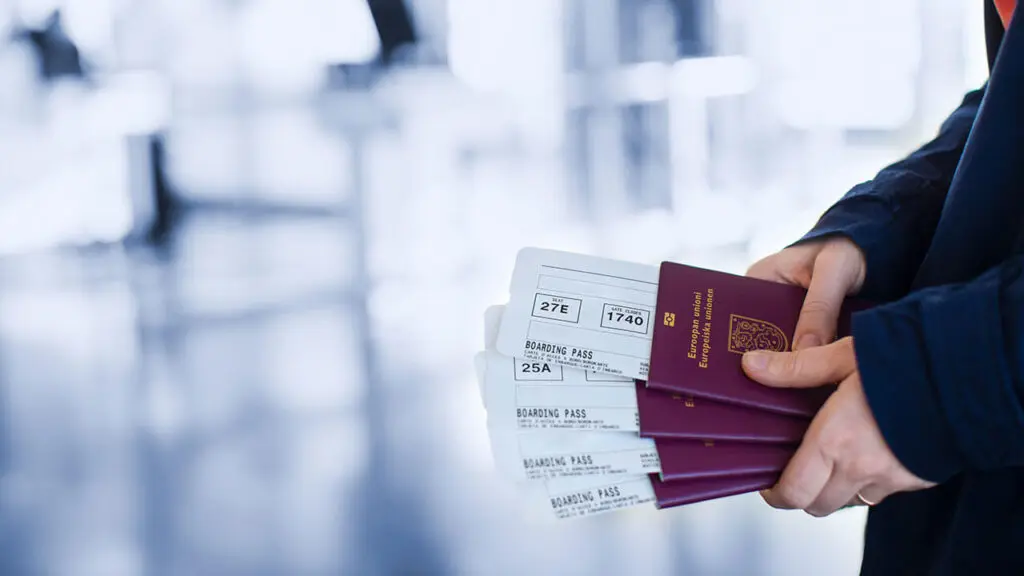
If you're planning a trip from the UK to Thailand, now is the perfect time to book your ticket to the Land of Smiles and enjoy a holiday on warm beaches, exploring lush jungles and majestic mountain ranges. Thailand has eased entry requirements and travel restrictions for British travelers and tourists – take advantage of this opportunity!
Travel restrictions for British citizens entering Thailand
Thailand has completely lifted travel restrictions from the COVID-19 era. As of June 2025, the following entry requirements apply to travelers from the UK:
Airlines and immigration officials may still conduct random checks. Carry important documents such as your TDAC confirmation, passport, and travel insurance to expedite any checks.
A visa is required to enter Thailand from the United Kingdom.
Visa exemption program
British citizens can now enter and stay in Thailand visa-free for 60 days thanks to an agreement between the UK and Thailand. This is part of the visa waiver scheme. There is no fixed length of stay for those arriving by air. However, for those entering by land or sea, the visa waiver is only available twice a year.
Thailand Tourist Visa
You can apply for a Thai tourist visa at the Thai Embassy in London. It entitles you to a stay of 60 days, which can be extended by a further 30 days at the immigration office in Bangkok, so that your total trip to Thailand will be 90 days.
Thailand Elite Visa
If you want to easily access Thailand for many years, or perhaps even consider moving there permanently, the Thailand Elite Visa is worth considering.
The Thailand Elite Visa is available through the Thailand Privilege program and allows you to stay in Thailand continuously for up to 5, 10, 15, or even over 20 years. It has significantly fewer requirements than other long-term visas and offers numerous exclusive benefits, making it the easiest and most rewarding way to live in Thailand long-term.
Thai non-immigrant visa
Depending on your planned length of stay and activities in Thailand, you can apply for various non-immigrant visas. The following non-immigrant visas are available to British citizens:
You can apply for a visa at the Thai Embassy or Consulate in the UK. The paperwork can be quite extensive, but support is available, for example from Siam Legal, a reputable law firm in Thailand with English-speaking specialists in Thai immigration law. We have been assisting British citizens with travel to Thailand for over 22 years and have in-depth knowledge of the laws of both countries. So, if you would like to simplify your path to a long-term stay in Thailand, contact us. We will ensure your entry into the Kingdom is quick and successful.
How to get to Thailand
Book flight
Travelers from the UK can fly to all of Thailand's international airports, including Bangkok, Phuket, and Chiang Mai, and continue their journeys from there without restrictions. There are no longer any "segregated" flights or COVID-related travel controls on domestic flights.
Airlines offering domestic flights no longer require proof of vaccination or test results, but may request standard identification or travel documents if necessary. If you have a layover in another country on your way to Thailand, it is still advisable to check with your airline about the entry or testing requirements of that country.
Find accommodation in Thailand
There are no quarantine or testing requirements for booking accommodation in Thailand. Whether you prefer a hotel, guesthouse, or private apartment, you have the freedom to choose the option that best suits your travel preferences and budget. Online platforms like Agoda remain popular for comparing hotels, offering convenient booking tools, flexible cancellation policies, and up-to-date availability for Thailand's most popular destinations.
Arrival in Thailand – Best practices
So you've booked your hotel and flight and are covered by travel insurance. But what awaits you after your arrival in Thailand? Here are a few tips to help you enjoy your trip and show respect to the locals.
Wear masks
While wearing masks is no longer mandatory, it is still recommended in public. Many Thais (and visitors) wear masks when out and about. You won't encounter any problems if you don't wear one, but the rule is: "Be as the locals do." It's about respect and consideration.
Documents that should be readily available
If you are traveling to Thailand in 2025, you should definitely have the following documents with you, ideally both in digital and printed form:
Thai immigration authorities and airlines may randomly check documents such as your TDAC QR code, insurance certificate, hotel booking, proof of funds, or return flight ticket. Carrying both digital and printed copies will ensure a smoother and faster arrival.
Royal Thai Embassy, London
The Royal Thai Embassy in London, United Kingdom, is located at 29-30 Queen's Gate, London, SW7 5JB. For any inquiries, please contact the Royal Thai Embassy nearest you, email [email protected], or call the embassy on +44 (0) 207 589 2944.




Community
Comments 0
Start the conversation.