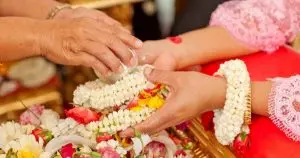
A Thai wedding is a very traditional and culturally rich celebration, both exciting and joyful. Before the wedding day, a Buddhist ceremony takes place, during which the couple pays tribute to the bride's ancestors. Usually, nine monks are present, seated with water before them. The first monk sits beside the altar, and the sacred thread is twisted around the bride and groom and placed in the monk's hand. The holy water for the wedding, containing a candle, is placed before the first monk. Afterward, the monks pray several times and return to their temple.
On the morning of the Thai wedding, the nine monks sprinkle the wedding guests with holy water, while a sacred thread is once again tied around the bride and groom as a symbol of their union. Afterward, trays with small bowls are placed before each monk, from which prayers are recited. Each monk also receives money in an envelope, as the monks are not permitted to touch the money.
Traditionally, Thai weddings included a "door ceremony" where the groom opened the gates to the bride's house. At each gate, he had to present a gift, which became more elaborate with each one opened. Nowadays, a girl wearing a necklace takes on the role of the gatekeeper and receives an envelope containing money from the groom.
After the "door ceremony," the "foot washing ceremony" takes place. The groom stands on a chair while his bride bows and washes his feet as a sign of respect. Meanwhile, the dowry is presented to the guests to demonstrate the groom's financial security. Traditionally, the dowry is later returned to the couple.
The final ceremony of a traditional Thai wedding is the "conch shell ceremony." The couple kneels hand in hand before an elder on a platform. The wedding guests sprinkle the couple's hands with holy water from a conch shell, recite their vows, and present them with an envelope containing money. In return, each guest receives a small memento of the wedding.




Community
Comments 0
Start the conversation.