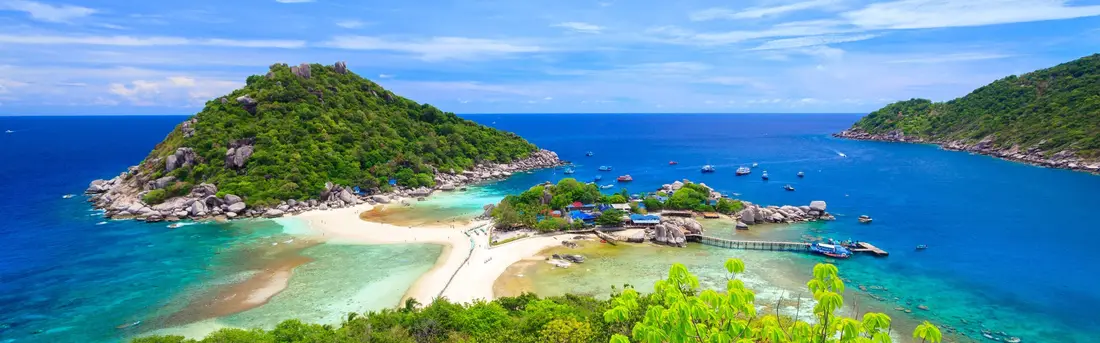
After countless trips to Thailand, I've finally put together the ultimate 10-day itinerary so you can experience the very best of this incredible country. From the vibrant streets of Bangkok to the peaceful charm and culture of Chiang Mai, and on to the sparkling coastline of the southern beaches, this Thailand travel guide offers you a detailed plan.
Thailand is a country I fall in love with again and again. I still vividly remember sitting on the train at Maeklong Market, waving to the people on the street below as we passed, and the sweet scent of mango sticky rice on a street corner in Chiang Mai that I simply couldn't resist – even after I was full.
That's why I've compiled all my favorite experiences into a single, easy-to-understand itinerary – practical, flexible and full of highlights.
Yes – if you plan it properly.
With a well-planned itinerary, 10 days are enough to discover three of Thailand's most popular destinations: vibrant Bangkok in the center, cultural Chiang Mai in the north, and a relaxing beach in the south. You'll gain an authentic impression of Thailand's incredible diversity – from bustling city streets and rich cultural heritage to lush nature and breathtaking coastlines.
If your schedule allows, I highly recommend spending two weeks in Thailand. The extra time will allow you to immerse yourself more deeply in local life, perhaps by taking a Thai cooking class with a family or staying overnight at an ethically run elephant sanctuary. You could also visit unforgettable places like Khao Sok National Park or even add an extra island stay.
Recommended reading: How long should you spend in Thailand? 7- to 21-day itineraries with expert tips.
This classic Bangkok - Chiang Mai - beach route is just the starting point, and you can easily adapt it to your interests.
Here are three example routes for inspiration:
In the next step, I will present the classic travel route in detail and give you tips as well as unique experience options that you can customize along the way.
Stop 1: Bangkok (Days 1–3)
Normally, you should travel to Bangkok first, as most international flights land there. The city is vibrant and full of contrasts – ancient temples, lively street markets, world-class cuisine, and rooftop bars with breathtaking views.
How to spend your time in Bangkok
If you only have one full day, I recommend focusing on the cultural highlights – the temples are a must-see.
However, if you have two or three full days, I would recommend a day trip out of the city to explore either Ayutthaya or the floating markets and the railway market.
Our private Bangkok tours usually include guided visits to the temples and private transfers to places like the markets or Ayutthaya that are otherwise difficult to reach.
Things to do in Bangkok (and how to make the right choice)
There's plenty to see and do, but we'll tailor the program to your style and pace. Here are a few ideas based on different interests:
My favorite things to do in Bangkok (off the beaten tourist track)
Over the years, I've discovered some hidden gems in Bangkok that I'm happy to share with guests looking for something special. These can be incorporated into your itinerary or explored independently after a day of sightseeing:
For further suggestions, see our travel guide: The Top Things to Do in Bangkok (The Top Attractions and More).
Here's a simple way to structure your stay and combine sightseeing with optional extras:
Bangkok offers a wide variety of fantastic hotels. We've compiled a comprehensive travel guide for first-time visitors, showcasing the best neighborhoods and hotels in Bangkok.
In short, we generally recommend two areas to most travelers: the riverfront if you want a peaceful view and easy access to temples; or Sukhumvit if you are interested in restaurants, shopping, and nightlife.
Tips for a smoother trip to Bangkok
1. Start your sightseeing tour early. The Grand Palace, Wat Pho, and Wat Arun are among Thailand's most visited attractions. Arriving before 9:00 AM will help you avoid both the crowds and the worst of the heat.
2. Be aware of rush hour traffic. Traffic in Bangkok can be extreme – I once spent over two hours driving from the airport to the city center (only 30 km). If possible, avoid arrivals and departures during peak hours and always allow plenty of time for transfers.
2nd stop: Chiang Mai (days 4–6)
Next stop: Chiang Mai. (It's one of my favorite cities in Thailand!) It's relaxed, charming, and offers countless activities away from the hustle and bustle of the big city.
After the hustle and bustle of Bangkok, arriving in Chiang Mai feels like taking a deep breath – a more leisurely pace, cooler air, and lush greenery. Nestled in the mountains of the north, it's a place where you can explore temples in the morning, watch elephants in the afternoon, and still find time for dinner by the river or a stroll through the night market.
How to spend your time in Chiang Mai
Two to three nights in Chiang Mai will give you a small taste of this region. I myself have spent several weeks here over the years and have never gotten enough. So if you have more time, you should definitely plan a few extra nights.
If this is your first time here, I would recommend spending a full day exploring the temples of the old city and another day for an ethically sourced elephant experience.
On a third day you could go hiking in Doi Inthanon, take part in a Thai cooking class or, for families and active travelers, visit the Sticky Waterfall or go on a zipline tour.
Getting from Bangkok to Chiang Mai
The easiest way to travel is by plane – the flight takes about 1.5 hours and there are dozens of departures daily.
There are trains available, but the journey takes about 11–13 hours and is not comfortable, so we do not recommend them.
Things to do in Chiang Mai (and how to make the right choice)
Chiang Mai is one of Thailand's most vibrant cities. Whatever your interests, there's something for everyone here:
Begin your tour with temples in the old city, such as Wat Chedi Luang and Wat Phra Singh. Then head up to Doi Suthep – the views are most spectacular at sunrise or sunset. We are also happy to arrange special experiences, such as giving alms at dawn or participating in an evening chanting ceremony with monks.
If you are visiting in November, you should not miss the Yi Peng Lantern Festival – it is one of the most magical times to be in Chiang Mai.
A day spent in an ethically managed elephant sanctuary is often an absolute highlight. We work exclusively with trusted facilities where you can feed, bathe, and walk with the elephants – without riding and without crowds.
If you have more time, you should consider spending one or two nights at The Bush Camp, where you can stay closer to nature in beautifully designed tents and with warm, personal service.
Chiang Mai is one of the best places in Thailand to take a Thai cooking class – affordable, entertaining and full of variety.
We can take you to a cooking class with a local family in a beautiful Lanna-style house, nestled in a tranquil garden with a herb patch. It's a cozy, personal atmosphere that most travelers would otherwise never experience.
Or you can take a trip to a farm in the countryside, where children can walk through rice fields, pick papayas and learn about Thai spices and herbs.
For a change of pace, we can also organize practical umbrella painting or other local crafts.
Go for a hike in Doi Inthanon, visit the Sticky Waterfall, or take a trip to the hill tribe villages. These are great options if you want to escape the city and explore the mountains.
My favorite activities in Chiang Mai (off the beaten tourist track)
Chiang Mai is full of little treasures – and if you have some time to spare, I highly recommend trying some of my favorite experiences in addition to the usual tourist attractions.
Sample itinerary for Chiang Mai
Accommodation in Chiang Mai
For first-time visitors, we generally recommend staying either in the old town or along the Ping River.
The old town is right in the heart of the action – most temples, cafes, and night markets are within easy walking distance. It's a charming area, ideal for those who enjoy exploring on foot.
If you prefer something a little quieter, the riverbank offers charming boutique hotels with a relaxed atmosphere and gardens, yet you are only a short tuk-tuk ride from the center.
We've personally selected some great options in both areas for you, depending on your budget and style. Simply let us know what kind of atmosphere you prefer – modern comfort, peace and relaxation, or something in between – and we'll recommend the perfect accommodation. For detailed information, see our Chiang Mai Accommodation Guide.
Tips for a smoother trip to Chiang Mai
3rd stop: Time for the beach
After exploring cities and mountains, it's time to relax and soak up the sun. Southern Thailand boasts some of the country's most beautiful beaches, but choosing the right one depends on your travel style.
The three top islands we usually recommend are Phuket, Krabi and Koh Samui – each has its own charm and is surrounded by smaller islands that are perfect for day trips.
Phuket – Ideal for first-time visitors and families. The island offers a wide selection of resorts, from family-friendly accommodations to luxury hotels. Patong boasts a vibrant nightlife, while the north offers tranquil, peaceful beaches. Phuket is a perfect base for island-hopping tours to Phi Phi, Coral Island, and Phang Nga Bay. Best time to travel: November to April.
Krabi (Ao Nang, Railay) – Known for its breathtaking limestone cliffs and relaxed atmosphere. Ideal for kayaking, climbing, or simply enjoying the peace and quiet. Railay feels like an island, even though it's on the mainland – no roads, only longtail boats. A great blend of scenery and relaxation.
Koh Samui – A tropical paradise with a romantic and exclusive flair. Look forward to beach villas, lush jungle, and peaceful bays. Compared to Phuket/Krabi, Koh Samui has a different rainy season and is therefore the better choice from May to September.
For more information, please visit our page: “How to choose an island in Thailand”. Or tell us your travel preferences and we will help you find the ideal beach for you – including islands off the beaten track.
Some unique experiences you can book with us
Here are a few exclusive offers that go beyond the usual island tours:
If you have more time or would like to add something special to your trip, there are some simple extensions you can incorporate into your Thailand itinerary – without complicated logistics.
A few more days in the north?
You might want to extend your trip to Chiang Rai, a quieter city known for its impressive temples – the White Temple, the Blue Temple, and the thought-provoking Black House.
From Chiang Rai, you can take a day trip or spend a night in the Golden Triangle, where Thailand, Laos, and Myanmar meet. It's a peaceful region with lush scenery, a rich history, and fascinating insights into the opium trade. You can take a boat trip on the Mekong River, visit the Opium Museum, or simply soak up the relaxed atmosphere and mountain views.
Another island?
Those wishing to explore further along the coast might consider a quieter beach like Koh Yao Yai, Koh Lanta, or Koh Tao. Each of these beaches offers a different atmosphere – from popular diving spots to tranquil villages.
Want to experience more nature?
Visit Khao Sok – an unexpected but unforgettable place. Stay in a floating bungalow, paddle a canoe on the lake, and drift off to sleep surrounded by jungle sounds. It's perfect if you want to unwind and reconnect with nature.
Traveling in Thailand can be surprisingly affordable, especially if you value comfort and a personalized experience. One of Thailand's biggest advantages is that you can enjoy a private, well-organized trip at a significantly lower cost than in most Western countries.
A 10-day private tour with comfortable 4-star hotels, private guides, airport transfers, and some special activities (such as an ethical elephant experience or a cooking class) typically costs around US$1,500–2,500 per person based on two people traveling together. For families or small groups, the cost per person decreases even further.
Here's a rough overview:
Estimated total cost for 2 people
When you book with us, you get the most for your budget. Thanks to our local contacts, we can secure better hotel deals and activities – often offering you a more comfortable and personalized experience for the same price you would pay elsewhere.
The best time to travel to Thailand is during the cool, dry season from November to February. The weather is pleasant with low humidity, making it perfect for sightseeing and beach holidays. However, this is also the peak tourist season, so expect larger crowds and higher prices.
From March to May it's hot season with temperatures often exceeding 35°C. Ideal for beach holidays, but it can be unpleasant for outdoor activities.
The rainy season (June to October) brings short, heavy downpours, but also fewer tourists and lower prices. The Gulf islands, such as Koh Samui, are generally drier during this time.
If you're planning a once-in-a-lifetime trip to Thailand, I highly recommend visiting in November for the Yi Peng Lantern Festival. You'll be amazed by the sight of thousands of sky lanterns rising into the sky – an unforgettable experience that truly captures the magic and charm of Thailand.
You can find more tips on the best and worst time to travel to Thailand for each season.
Let us make your Thailand trip possible!
Don't know where to start? Just tell us about your dream trip – we'll take care of the rest. With insider tips, flexible itineraries, and better value for money, we'll help you experience Thailand exactly the way you want.
Write to us anytime – we're happy to help.




Community
Comments 0
Start the conversation.