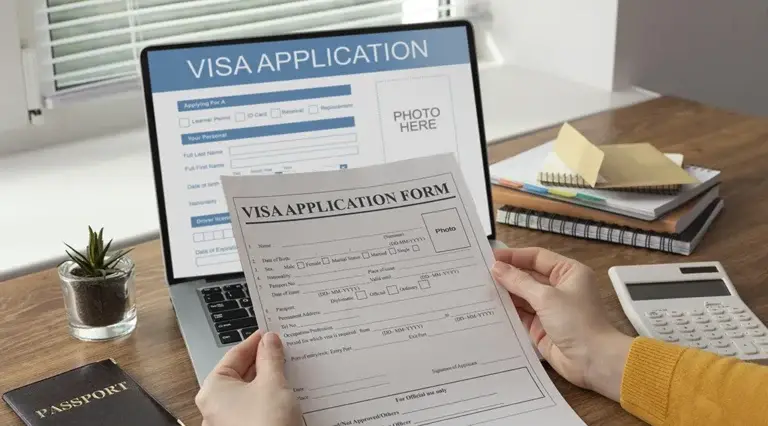
If you work online and spend time in Thailand, choosing the right visa is more important than you might think. While many remote workers enter on a tourist visa, regulations change, and relying on short-term options carries risks. This article will show you which Thai visa you should apply for as a digital nomad and which ones you should avoid.
Which visa is best for digital nomads in Thailand?
Not all visas are suitable for everyone, and the best choice depends on your income, the desired length of stay, and your profession.
Thailand now offers three long-term visas: the Destination Thailand Visa (DTV), the Long-Term Resident Visa (LTR), and the Thailand Privilege Visa. Each visa has its own regulations, costs, and benefits. If you are seriously interested in living and working online here, you should focus on these options.
This guide will walk you through the individual visa requirements so that you can choose the one that best suits your situation and meets your immigration goals.
Why shouldn't digital nomads be dependent on tourist visas or visa-free entry?
Thai tourist visas and visa-free entries were never intended for remote work. Anyone attempting to stay in Thailand long-term using these visas is taking a risk, as they are time-limited, unpredictable, and unreliable.
Immigration authorities are paying closer attention and can deny you entry if they suspect you are working or living here without a valid visa. Repeated visits and frequent border crossings raise suspicion.
The visa-free stay is expected to be reduced to 30 days, further restricting the scope for legal stays. For budget travelers, the Destination Thailand Visa offers a safer alternative without the need for constant travel and uncertainty.
Who is the Destination Thailand Visa (DTV) suitable for?
If you work freelance or remotely for clients outside of Thailand, the Destination Thailand Visa (DTV) entitles you to an extended stay. It is valid for five years and allows a stay of up to 180 days at a time. You can extend your stay once per entry, allowing you to remain in Thailand for up to one year without leaving the country.
To qualify, you must demonstrate 500,000 baht in liquid assets. This means cash in a bank account, not real estate or cryptocurrencies. However, there are no income requirements, making this investment more accessible than other long-term options.
This visa does not allow you to work locally. However, you can run your own business or accept contract work for clients abroad. You can also bring your spouse and children, making this visa a good option if you are not traveling alone. However, if your stay exceeds 180 days, you will be subject to income tax.
Who is eligible to receive a long-term residence visa (LTR visa)?
The Long Term Travel Visa (LTR) includes the "Work from Thailand" option for remote workers with secure, well-paid jobs at foreign companies. The visa itself also covers other groups, such as high-net-worth retirees, skilled professionals, and investors. To qualify for the LTR visa in this category, you must have earned at least USD 80,000 per year for the past two years. If your income is between USD 40,000 and USD 80,000, you can still apply if you hold a master's degree or higher, own intellectual property, or have received Series A funding.
You also need five years of professional experience in your field within the last ten years. Your employer must be a publicly traded company, a private company with at least $150 million in revenue over the last three years, or a qualifying subsidiary (non-profit organizations and government agencies do not count). However, changes have been proposed, and it is expected that the minimum professional experience requirement will be removed and the revenue requirement lowered to $50 million later this year.
This visa grants a ten-year stay in Thailand, divided into two five-year periods, and entitles you to legal employment. One of the biggest advantages is that your income earned abroad is not taxed.
Although it requires more paperwork compared to the DTV, the LTR visa offers better long-term stability and is therefore ideal for high earners who want to stay in Thailand for many years.
Who is the Thailand Privilege Visa suitable for?
The Thailand Privilege Visa is straightforward and requires no proof of income or financial resources. Anyone who can pay the one-time membership fee is eligible. Packages start at 650,000 baht for 5 years and go up to 5 million baht for 20 years.
While you will have the right to work locally in Thailand, you can also use this to work from home. If your income comes from clients or companies outside of Thailand, you do not need a work permit. You can also avoid border controls and long queues and receive professional assistance with preparing your 90-day reports.
The visa includes numerous premium benefits such as airport transfers, lounge access, medical examinations, and much more. If you're planning an extended stay without the hassle of red tape, this visa is the ideal solution – provided you can afford it. Siam Legal is an authorized Sales and Service Agency (GSSA) for the Thailand Privilege Visa and will gladly assist you throughout the entire application process.
Which visa is best suited for digital nomads?
Each visa is suitable for different types of remote workers. The Thailand visa is ideal for freelancers, the self-employed, or those currently between assignments. It's affordable, requires no proof of income, and allows for legal residence without constant border checks. You simply need to demonstrate that you have savings of 500,000 baht.
The long-term residence visa is best suited for employees of large companies with a regular income. While it requires more paperwork and a higher income, it allows you to work legally in Thailand, offers tax advantages on foreign income, and provides long-term stability.
The Thailand Privilege Visa is the easiest option if you want to avoid contact with immigration authorities and don't want to provide proof of income or company details. As long as you can pay the membership fee, you'll receive VIP services for years with minimal effort. While it's not cheap and doesn't allow you to work in Thailand, it's very convenient.
If you're unsure, first ask yourself what's more important to you: lower costs, legal employment status, or comfort. The answer will make your decision easier.
Applying for a Thai visa as a digital nomad
Each visa has its own application process. For the DTV visa, you apply at a Thai embassy and need proof of savings, a clean criminal record, and the usual documents. The LTR visa requires more documentation, including details of income and employer, but allows legal employment once approved. The Thailand Privilege Visa is the easiest to apply for, as an agent handles most of the process for you after you submit your documents and payment, at no extra cost.
You can apply for any of these visas yourself, but a single mistake can set you back. Missing information, using incorrect documents, or filling out forms incorrectly can lead to delays or even the rejection of your application. If you plan to live and work in Thailand, a correct application from the outset will protect you from problems and give you peace of mind.
To avoid problems and save time, contact Siam Legal. Their immigration consultants will carefully review your documents and guide you step-by-step through the visa process. You can ask questions, receive clear answers, and avoid mistakes that could delay your approval. With their help, you can focus entirely on preparing for your move to Thailand without having to worry about the paperwork.


Community
Comments 0
Start the conversation.