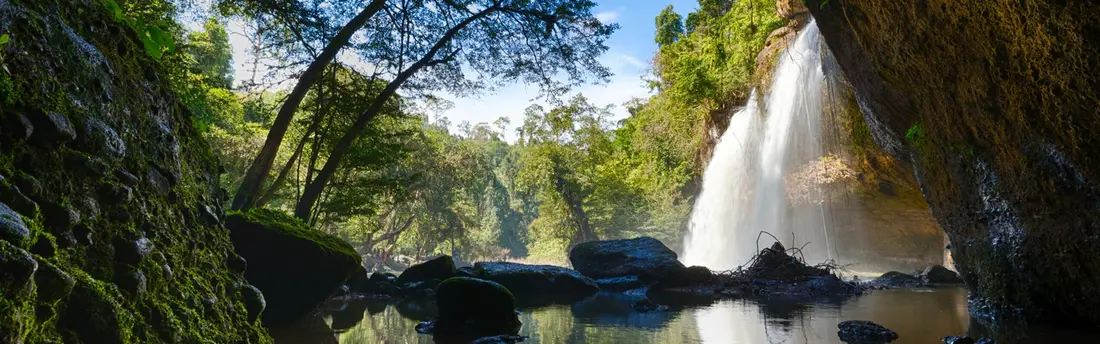
Many people planning a summer holiday keep asking me the same question: "July is the rainy season in Thailand. Should I still go?"
I've been to Thailand myself in July. And honestly, July isn't a bad time to travel at all. The important thing is to choose the right places and plan your days well.
More importantly, however, July is an ideal time to travel. It falls just before the peak of the summer holidays, so you can experience Thailand from a quieter and more relaxed perspective – a situation that changes rapidly at the end of July and in August.
If you do everything right, it can be a wonderful experience. Famous sights like the Grand Palace are significantly less crowded, and you can stay in top resorts for half the price of the high season.
In this travel guide, I'll show you where you should travel, which places to avoid, and how to best plan your trip in July. This way, your trip is guaranteed to be a success, instead of a gamble.
Weather in Thailand in July – What you need to know first
Before you decide on a travel destination, you should definitely understand one thing: The rainy season in Thailand does not have the same effect in every region.
In the south, it's almost like two different worlds. The Andaman coast (Phuket, Krabi side) is often characterized by rough seas and heavy rainfall, while the Gulf of Thailand (Koh Samui side) is generally much calmer.
Furthermore, "rainy season" doesn't mean it rains all day. Most showers are short and often occur in the afternoon or evening (30–60 minutes). There's still plenty of sunshine during the day.
Recommended reading: A guide to Thai weather in July
The best travel destinations in Thailand in July
A classic Thailand trip of about 10 days includes Bangkok, Chiang Mai, and Koh Samui. If you have more time, a side trip to Khao Sok or Kanchanaburi is recommended to enjoy nature and a more relaxed pace.
1. Koh Samui: The best island to visit in July
For those who want a reliable beach holiday in July, Koh Samui is the best choice.
The island typically experiences many warm, sunny days with short tropical showers, and the sea remains calm.
July is the perfect time to travel before the summer rush begins in August. You can enjoy luxurious resorts without the usual hustle and bustle of the high season.
Mornings and late afternoons are ideal for relaxed beach walks or quiet boat trips around the nearby islands, while the short afternoon thunderstorms offer a natural break to unwind, have a coffee or retreat to the villa.
For families, the calm waters and short boat trips to Koh Tao or nearby bays are ideal, while adventure seekers can make a detour to the Na Muang Waterfall after the rain. At that time, it carries a particularly large amount of water, and the surrounding jungle is ablaze with color.
Tip: If your schedule allows, I usually recommend visiting before the end of the month to take advantage of this quieter, more private time slot.
2. Chiang Mai – Lush jungles and cultural charm
July is the green season in Chiang Mai and one of the most beautiful months to visit. Everything is lush and green, the waterfalls are full of water, and the mountains are significantly cooler than in the south.
Temperatures in the city range from 24 to 31°C, but it can get surprisingly cool higher up in the mountains. When I hiked on Doi Inthanon in July, it was only 13°C at the top. I was dressed too lightly and, to be honest, I was freezing! If you want to experience a cool summer in Thailand, Doi Inthanon is the perfect place. A light jacket is definitely recommended.
The rain usually starts in the afternoon. I like to use this time to relax – to have a coffee or stay in the hotel. After the rain, the sky is clearer, and the colors of the city, the temples, and the jungle are particularly vibrant. I still vividly remember how breathtaking the sunset from Doi Suthep was.
Elephant encounters in July are also more playful. I once watched elephants splashing each other with mud right after a downpour – so lively and cute! The cooler, green jungle keeps them more active.
Night markets are also ideal. The air after the rain is refreshing, and since it's less crowded than in the high season, a stroll is a real pleasure.
3. Bangkok – Food, Culture and Indoor Activities
July in Bangkok is hot and humid, with temperatures around 26°C–33°C. Short, sudden showers often provide some relief from the heat.
Even when it rains, Bangkok offers plenty of indoor activities. I usually go to ICONSIAM – there you can explore the SookSiam floating market, visit the Siam Museum, or the Bangkok Museum of Contemporary Art. A massage or a Muay Thai fight are also perfect for a rainy afternoon.
After the rain, a late afternoon boat trip on the Chao Phraya River is an absolute must. The air feels cooler, and the temples along the river appear sharper and more vibrant.
Evenings in July are lively. Light rain can't dampen the spirits. You can stroll through Chinatown and sample street food or enjoy a drink at a rooftop bar. One evening, I was caught in a downpour while sitting with a bowl of hot noodles at a Michelin-starred street food stall. As I watched the neon-lit streets glitter in the rain, I realized this had become one of my most memorable experiences in Bangkok.
Recommended reading: 3 days in Bangkok: The perfect itinerary for first-time visitors
4. Khao Sok National Park – A paradise for nature lovers
For nature lovers, Khao Sok National Park is an absolute must-see. Although it does rain there, it's precisely then that the rainforest reveals its most beautiful side. The landscape appears more lush, greener, and much more vibrant than during the dry season. Around Cheow Lan Lake, the limestone cliffs are often shrouded in a gentle mist after a rain shower, lending the experience a truly unique atmosphere.
Wildlife is also more active at this time of year. In the mornings, you're more likely to hear gibbons or observe hornbills in the trees.
Even in the rain, it's a wonderful place to be. You can relax and spend the night in a floating bungalow or a well-run jungle camp like Elephant Hills.
We generally recommend spending a few days here and then traveling on to Koh Samui.
5. Kanchanaburi – Nature, waterfalls and a more leisurely pace
Those who want to escape the heat of Bangkok will find a great escape opportunity in Kanchanaburi.
In July, nature bursts into lush green after the rain, and the air feels noticeably cooler. It was even my favorite place on my last summer trip.
Erawan National Park is an absolute highlight. In July, the cascading waterfalls reach their peak, and a dip in the pools is wonderfully refreshing after a hot day. Even the small fish that nibble at your feet are surprisingly entertaining.
A houseboat on the river is ideal for accommodation. After an afternoon rain shower, the whole valley feels refreshing and peaceful. The evenings are wonderfully cool – on my last visit, I didn't need air conditioning at all. I stayed on a houseboat without electricity or Wi-Fi, and it was rare that we could simply put our phones away and talk undisturbed with my family.
If you would like to see how these destinations fit into a complete trip, take a look at our 2-week Thailand tour for couples.
Places not recommended in July
If you want a smooth and pleasant trip (especially with family), we recommend that you skip the following places for now and come back during the dry season.
1. The Andaman Coast (Phuket, Krabi, Phi Phi Islands)
This includes Phuket, Krabi and the Phi Phi Islands.
The sea is often rough (waves can reach 2–3 meters high), making boat trips unpleasant and sometimes dangerous, especially with children. Island hopping is frequently delayed or canceled, and the water is usually murky due to stirred-up sand.
2. Eastern Gulf Islands (Koh Chang, Koh Kood)
Places like Koh Chang and Koh Kood experience some of the heaviest rainfall in Thailand in July.
The rain can last for days, ferry services may be affected, and activities in the jungle will become muddy and difficult.
3. Remote northern mountain ranges
The situation is good in Chiang Mai, but more remote areas like Mae Hong Son are less reliable in July. Heavy rains can lead to landslides, road closures, and limited access to services.
Recommended reading: Practical tips for traveling during the Thai rainy season
Frequently Asked Questions – Thailand in July
Is July a good time to travel to Thailand? Yes, if you choose the right places. While July is the rainy season, in places like Koh Samui and Chiang Mai the rain showers are usually short and predictable. You'll also find fewer tourists and hotels offering better value for money than during the peak season.
2. Where is the best beach destination in Thailand in July? Koh Samui is a safe choice. The sea is usually calm, and rain rarely disrupts your plans and doesn't last long. Nearby islands like Koh Tao are also excellent for snorkeling and diving.
3. Should I avoid Phuket and Krabi in July? Not necessarily – but expectations do play a role. Places like Phuket and Krabi often have rough seas, boat trips are canceled, and island hopping is limited. Those who prefer a quiet beach holiday are usually better off with Koh Samui.
4. Is Thailand suitable for families with children in July? Yes, with good planning. Koh Samui (calm beaches) and Chiang Mai (nature and elephants) are both very family-friendly. I generally recommend avoiding areas with rough seas or difficult logistics.
5. Will rain significantly affect my trip? Not really in most of the recommended destinations. Rain showers are usually short (often in the afternoon), so you can plan your trip accordingly. Many travelers even enjoy the cooler air and greener scenery after a rain shower.
6. Are there any festivals or special events in Thailand in July? Yes, but these are usually local and seasonal festivals rather than large tourist festivals.
One of the most famous is the Candle Festival in Ubon Ratchathani, where you can admire beautifully carved wax figures and traditional processions. It's culturally interesting, but I usually only recommend it if you're already in the area.




Community
Comments 0
Start the conversation.