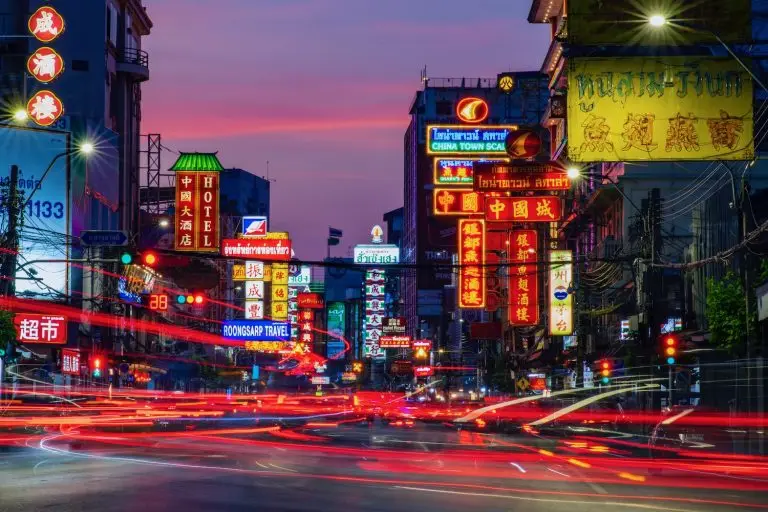
Bangkok is unmistakably a Thai city, but in many ways it's also quite Chinese. And that's not just because of its popularity with Chinese tourists, although that certainly contributes to it.
Indeed, the fact that a significant proportion of Thais are of Chinese descent is something you can observe everywhere in the capital – in temples, restaurants, and shops. And, to return to the point of this article, in Yaowarat, also known as Bangkok's Chinatown.
Follow my tour through Bangkok's Chinatown exactly, or use it as a starting point for your own explorations. Whichever path you choose, I'm sure you'll soon be eager to explore the district.
How to get to Bangkok's Chinatown
Before I go into more detail about my itinerary through Bangkok's Chinatown, I should explain how to get there. Chinatown is easy to reach, no matter where you're coming from:
TIP: If all else fails, you can enter "Yaowarat Road" into the Grab app to get to Chinatown from anywhere in Bangkok.
Where to go in Bangkok's Chinatown
Wat Traimit
Wat Traimit, also known as the "Marble Temple," is located on the way from Hua Lamphong Station to Chinatown, or south of the main strip if you are already there. Although the temple towers over most of the surrounding buildings, you can also orient yourself by the Chinatown Gate.
Yaowarat and Song Wat streets
Whether you're taking a guided tour of Yaowarat, exploring by bicycle, or discovering the area on your own, the neon-lit Yaowarat Road is right in the heart of the action. Here you'll find the district's famous street food, whether you're enjoying Pa Tong Go donuts in the morning or sampling stir-fries and seafood in the evening. The nearby Song Wat Road has recently been named one of Bangkok's trendiest streets – a neighborhood that has become a hipster hotspot almost by accident.
the back alleys of Chinatown
The bad news? It's easy to get lost off the beaten track in Chinatown. The good news? That's exactly how you find the "real" Chinatown, even if it can sometimes be difficult to recognize – there aren't many "sights" here. Unless you're coming as part of a culinary tour of Bangkok, you should travel without a fixed plan.
Chao Phraya Riverbank
Any worthwhile trip to Yaowarat will take you along the riverbank, whether you arrive on the Chao Phraya Express boat from Sathorn Pier or enjoy an active stay by the river, be it during Loy Krathong or simply at sunset. The river is inextricably linked to Chinatown – and not just during the frequent floods!
Pak Khlong Talat Flower Market
Although the Pak Khlong Talat flower market is located on the northern edge of Chinatown—some even claim it doesn't really belong there—I try to include it in the Chinatown sections of the tours I plan for my clients. The fact that it's open 24/7 certainly makes it more appealing to visit.
Accommodation in Bangkok's Chinatown
While Chinatown isn't a particularly popular place to stay in Bangkok, I think it's definitely worth considering. Besides the various Airbnbs I've stayed in over the years, there are also several hotels of different categories in the Chinatown area. The Hualamphong Quarter, as the name suggests, is closer to Hua Lamphong Station than to Chinatown itself, but it's still only a few minutes from Wat Traimit and Yaowarat Road.
As for hotels in Bangkok's Chinatown, the selection is somewhat limited. The ASAI Bangkok, for example, is one of the more stylish options. However, there are also many older hotels and hostels that, while better than the accommodations on Khao San Avenue, are almost 40 years old and no longer quite suit my taste. As mentioned earlier, some Airbnbs in Chinatown can certainly be appealing. However, I recommend reading the reviews carefully.
More frequently asked questions about visiting Bangkok's Chinatown
How much time should you plan to spend in Chinatown, Bangkok?
Some travelers are content to explore Bangkok's Chinatown in an afternoon (or, in the case of foodies, with a street food dinner), but in reality, Chinatown can easily take up a whole day (or more) of your Bangkok sightseeing. This is especially true if you're staying overnight – be sure to try Pa Tong Go, the Thai-Chinese doughnuts.
Is Chinatown in Bangkok worth a visit?
Bangkok's Chinatown is absolutely worth a visit! In fact, it's one of my favorite neighborhoods in the city for many reasons. What I love about it is that it exudes an incredibly Chinese flair without losing the Thai atmosphere you otherwise experience in the capital.
Is Chinatown a good area to stay in Bangkok?
Chinatown is an authentic part of Bangkok and not as crowded as Silom, Sukhumvit, or Khao San Road. However, the hotel selection leaves something to be desired, although Airbnbs and hostels offer significantly more options.
Conclusion
My walk through Bangkok's Chinatown isn't comprehensive, but it's absolutely fascinating. As soon as you reach Yaowarat Road, you'll quickly realize that this vibrant district is just as much about the famous sights as it is about simply wandering around and discovering the atmosphere for yourself. (And of course, the food – I could write a whole post about that!). I love ending a day in Bangkok's old city with an evening in Chinatown, but you could easily spend your entire stay in Thailand's capital here. Need help planning your itinerary? Then book me!
Community
Comments 0
Start the conversation.