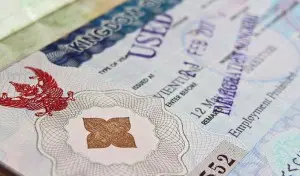
Are you planning a trip to Thailand or even considering a longer stay? One of the first steps is choosing the right visa. Thailand offers various visa types for different types of travelers – from short-term tourists and retirees to digital nomads and business travelers.
Choosing the right Thailand visa is important – it affects the length of stay, permitted activities, and the ability to freely leave and re-enter the country. With the right visa, you can avoid unexpected entry problems and enjoy your time in Thailand without any issues.
This guide covers the most common types of Thailand visas and provides an overview of the respective requirements, application steps, and potential consequences of non-compliance. Whether you're traveling for just a few weeks, starting a business, or planning to settle permanently, understanding the different types of Thailand visas is essential. Let's get started!
Thailand Tourist Visa
Are you planning a trip to Thailand? Then you should find out about the different tourist visas for Thailand that will allow you to explore the country. Whether it's a short trip or a longer vacation – take care of your visa in good time to avoid problems.
What types of tourist visas are available for Thailand?
What are the requirements for a tourist visa for Thailand?
To apply for a Thai tourist visa, you will need the following:
Documents not written in Thai or English must be officially translated and certified. Missing or incorrect documents may lead to delays or the refusal of your visa, which in turn can cause further complications.
First-class services from Siam Legal International, Thailand's largest network for legal services.
How to apply for a tourist visa for Thailand
To apply for a tourist visa for Thailand, you must submit your documents to the nearest Thai embassy or consulate. In some cases, you can apply for the Thai e-visa, a faster online option that allows you to apply without having to visit the embassy in person.
If you do not meet the visa requirements, you may be refused entry or face serious problems during your stay in Thailand. Make sure you have all the necessary documents ready before submitting your application.
Thailand visa on arrival
If you are from one of the 31 eligible countries or territories, you can apply for a visa on arrival at immigration upon entering Thailand for tourist purposes. This visa allows you to stay in Thailand for up to 15 days. To apply, you will need a valid passport, proof of onward travel, and the visa fee, which must be paid in cash (in Thai Baht) upon arrival.
Thai visa exemption
Nationals of 93 eligible countries can stay in Thailand for up to 60 days under the visa waiver program for tourism, business trips, urgent matters, or short-term work. An extension of 30 days is possible but is at the discretion of the immigration officer. For a longer stay, you will need a different visa before reaching the maximum stay of 90 days.
Thai 90-day non-immigrant visa
The 90-day non-immigrant visa is an excellent option if you wish to stay in Thailand for reasons other than tourism, such as business, education, or retirement. This visa allows for a stay of up to 90 days. For certain occasions, such as retirement or marriage, an extension can be requested from the Thai Immigration Bureau and converted into a one-year visa. You can apply by mail, in person at a Thai embassy or consulate, or through the Thai e-visa portal. This makes the application process flexible.
Thailand Retirement Visa
If you are 50 or older and want to spend your retirement in paradise, the Thailand Retirement Visa (Non-Immigrant OA Visa) is a straightforward option. This visa allows you to stay in Thailand for one year and renew it annually. However, be sure to familiarize yourself with the applicable rules and regulations to avoid losing your visa or incurring penalties.
What are the requirements for a Thai retirement visa?
To apply for a retirement visa, you must meet the following important requirements:
If you do not meet any of these conditions, or provide false or insufficient evidence to demonstrate that you do, your visa will be refused, jeopardizing your retirement plans. Even worse, if your visa is revoked, you could face deportation even if you are already in Thailand.
How to apply for a Thai pension visa
You can apply for a retirement visa through the Thai embassy in your home country or, if you are already in Thailand on another visa, directly upon arrival. Generally, you will first need to apply for a 90-day non-immigrant visa and then extend it to a one-year retirement visa. The process involves the following steps:
Once you receive your retirement visa, you must notify the Thai Immigration Bureau of your current address every 90 days. Failure to do so will result in fines. If you leave the country without a re-entry permit, your visa will be cancelled and you will have to start the entire process again.
Thai business visa
If you are starting a business, finding a job, or have recently been hired in Thailand, the Thailand Business Visa (Non-Immigrant B Visa) is the standard visa option.
What are the requirements for a Thai business visa?
To apply for a business visa, you will need the following documents:
Anyone wishing to start and run a business needs additional documents to prove the legitimacy of their venture, such as an excerpt from the commercial register and a business plan. Without these documents, the visa application can be rejected, leaving the implementation of the business plans in limbo.
How to apply for a Thai business visa
When applying for a Thai business visa, you must submit the required documents to the nearest Thai embassy or consulate. Here's how:
Once you have received your 90-day visa (Non-Immigrant B), you can apply for a work permit while in Thailand. After it is approved, you can extend your stay to one year by converting your visa into a one-year visa (Non-Immigrant B). Please note that your visa will become invalid if you leave Thailand without a re-entry permit, and you will have to go through the application process again.
Please also note that if you are staying for an extended period, you must report to the immigration authorities every 90 days to maintain your visa. Failure to report can result in fines or, in the worst case, visa cancellation.
Thai spouse visa
If you are married to a Thai citizen, the Thai Spouse Visa (Non-Immigrant O Visa) allows you to stay in Thailand long-term with your Thai partner. You must meet certain requirements and submit documents, both when applying for the visa and for its annual renewal.
Requirements for a Thai spousal visa
When applying for a spousal visa, you must observe the following:
How to apply for a Thai spousal visa
If you are applying for a Thai spousal visa, you must submit the following:
The visa can be renewed annually after issuance, provided you meet the financial and family requirements. You must report your address to the immigration authorities every 90 days; otherwise, you risk fines and even visa revocation. If you wish to leave Thailand, apply for a re-entry permit to maintain the validity of your visa.
Thailand Elite Visa
The Thai Elite Visa, also known as the Thailand Privilege Visa, offers long-term access to Thailand with additional VIP benefits. If you plan to stay in the country for an extended period without the hassle of frequent extensions or re-entry permits, the Thai Elite Visa is the most convenient and easiest option to obtain. While more expensive than other visa options, it also offers a variety of exclusive benefits and complimentary perks and is valid for 5 to 20 years.
What are the requirements for a Thailand Elite Visa?
To qualify for the Thai Elite Visa, you only need the following:
Furthermore, there are no age, education, employment, or wealth requirements; you simply need to pay the membership fee. The cost of these visas ranges from 900,000 THB for a five-year membership to 5 million THB for a twenty-year membership. While this is a considerable fee, it covers the associated luxury benefits and ensures a straightforward application process and a comfortable long-term stay in the Kingdom.
How to apply for a Thai elite visa
The application process is relatively simple compared to other long-term visas for Thailand:
The visa is valid for 5 years and can be extended as long as your membership is active. With this visa, the usual 90-day stay limit and re-entry permit requirement are waived, making it a straightforward option for long-term stays. However, please note that you must leave Thailand at least once a year or apply for an extension to avoid exceeding the permitted length of stay.
LTR Visa Thailand (Long-term stay visa)
The LTR visa for Thailand allows a ten-year stay under certain financial or professional conditions. If you are planning a long-term relocation, this visa is a convenient and financially advantageous option, provided you have substantial assets, a high income, or special qualifications.
What are the requirements for an LTR visa for Thailand?
The long-term residence visa (LTR visa) is available to you if you fall into one of four categories. Each of these categories has specific requirements based on assets, income, or professional expertise.
If you meet the criteria for one of these categories, the LTR visa offers a flexible path to long-term residence in Thailand, allowing you to stay for up to ten years. You only need to register with the immigration authorities once a year and don't have to worry about re-entry permits or stay restrictions.
The LTR visa is available in four main categories:
There is also a fifth category for dependents of LTR visa holders. You can bring up to four dependents – your spouse and children under 20 – who can join your main (LTR) visa and obtain their own visa. They will then enjoy the same benefits as you.
For all categories, applicants must provide proof of health insurance with a minimum coverage of USD 50,000 or USD 100,000 in a Thai bank account. Otherwise, your application will be rejected, which could jeopardize your long-term plans. Dependents of LTR visa holders, however, only need health insurance with a coverage of USD 25,000 each.
How to apply for an LTR visa for Thailand
To apply for a Long Term Traveler (LTR) visa, you must submit the required documents to the Board of Investment of Thailand (BOI) and complete a multi-stage process. The BOI will process your application in approximately four to eight weeks. Afterward, you can collect your visa either in Thailand or from a Thai embassy or consulate abroad.
The LTR visa is an entry permit initially valid for 5 years and renewable for a further 5 years, allowing you to stay in Thailand for up to 10 years in total. Adherence to the requirements, including the annual reporting obligation, is crucial for maintaining your visa status during your stay in Thailand.
Here's how to apply for the LTR visa:
DTV Visa Thailand (Travel Visa for Thailand)
The DTV visa for Thailand is a newer visa option specifically designed for digital nomads, freelancers, and long-term visitors who want to spend extended periods of time in Thailand. This visa allows you to stay in Thailand for up to 180 days per entry. It is extendable, making it ideal for anyone who wants to work remotely and live in Thailand.
To obtain this visa, you must have a specific purpose for traveling to Thailand. You must enter Thailand to either:
Requirements for the DTV visa Thailand
To be eligible for the DTV, you must meet the following requirements:
You can also apply for DTV visas for your dependents (spouse or children under 20). However, you will need to complete separate applications and submit additional documents such as marriage or birth certificates. Missing documents may lead to your visa being refused and require you to reapply.
How to apply for a DTV visa for Thailand
With a DTV (Days Visa), you are allowed to stay in Thailand for up to 180 days per entry. You can extend your stay once per entry by another 180 days by appearing in person at the Thai Immigration Bureau and paying a fee. Be careful not to exceed the permitted length of stay; this can result in fines or even an entry ban, which would significantly complicate your return to Thailand.
Professional help with your Thai visa
Ready for your Thailand visa and the start of your new adventure? Contact Siam Legal today. We'll take care of all the necessary formalities and guide you step-by-step to a successful visa application. Thanks to our over 20 years of experience in visa consulting and our expert support, you can rely on us to make your visa process smooth and efficient. This way, you can enjoy Thailand carefree and without any entry problems.
LIVE SUPPORT
CALL
CHAT
Chat with our employee
Frequently asked questions about the Thai tourist visa
What is the maximum length of time one is allowed to stay in Thailand?
This depends on the terms of your visa. For example, with a tourist visa, you are allowed to stay in Thailand for up to 60 days from the date of entry (without extension). With a non-immigrant visa, the maximum stay is 90 days. Exceeding the permitted length of stay will result in a fine of 500 baht for each day overstayed.
What happens if you overstay your allowed stay in Thailand by one day?
Anyone who overstays their visa in Thailand by even one day faces a fine of 500 baht. While a single overstay usually doesn't lead to a travel ban, repeated overstays can result in restrictions on future visits to Thailand.
Do citizens of all countries need a visa to enter Thailand?
No, nationals of certain countries do not need a visa for short stays in Thailand. The USA, Canada, most EU countries, and many other countries are exempt from Thailand's visa waiver. Furthermore, nationals of some countries that do not qualify for visa waiver can obtain a visa on arrival instead. However, for longer stays or purposes such as work or study, a visa is generally required.
What is the difference between a tourist visa and a non-immigrant visa for Thailand?
A tourist visa allows short stays for tourism and leisure purposes, usually up to 60 days, with the option to extend. It does not permit employment or business activities. A nonimmigrant visa, on the other hand, is intended for specific purposes such as business travel, work, retirement, study, or family visits. Nonimmigrant visas come in various categories (e.g., Non-B for business travel, Non-O for dependents or retirees, Non-ED for educational purposes) and typically allow longer stays with the possibility of extension up to one year. Depending on the visa category, some visas may also permit employment or other activities.
How long does it take to process a visa application for Thailand?
Processing times vary depending on the visa type and application location. A standard tourist visa is typically processed within 3–5 business days. Non-immigrant visas can take up to 10 business days to process. Factors such as nationality, the responsible embassy or consulate, and the required documents can affect processing time. Therefore, it is recommended to submit your application at least 1–2 weeks before your trip to avoid delays.

Community
Comments 0
Start the conversation.