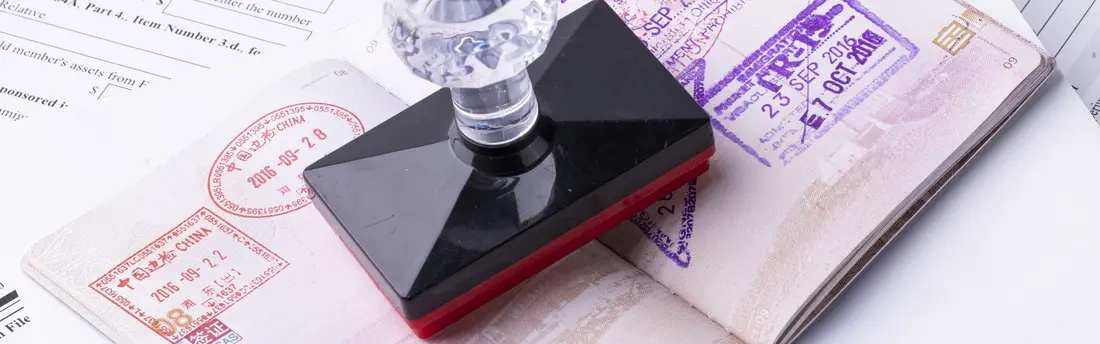
Anyone planning a trip to Thailand in 2026 will have to deal with two things: the visa regulations and the new Thailand Digital Arrival Card (TDAC).
This guide explains exactly what you need to know and gives you practical tips to avoid surprises at the border and prepare for a smooth entry.
Summary
If you only want the essentials, the following is what matters:
If that's enough for you to get started, you're well prepared. But if you'd like to feel even more confident during check-in and immigration, read on.
Most visitors to Thailand enter visa-free. Nationals of 93 countries can therefore stay in the country without having to apply for a visa beforehand. However, since May 19, 2026, the permitted stay for Western passport holders under this exception has been reduced to 30 days, down from 60 days previously.
These countries include the United States, Canada, Australia, the United Kingdom and most European nations.
If you are planning a typical holiday of 1–4 weeks, a visa exemption is usually sufficient.
Thailand offers various entry options depending on the length of your stay. For most first-time visitors, visa-free entry is the easiest and most common option.
Frequently asked questions about visa exemption
Is there a limit to the number of visa-free entries?
There is no official regulation limiting the number of visa-free entries to Thailand per year.
However, immigration officials could scrutinize travelers who stay in Thailand for extended periods or enter the country repeatedly in quick succession.
How long can one stay in Thailand per year with a visa exemption?
Thailand does not publish an official annual limit.
However, many immigration experts recommend limiting visa-free stays to approximately 150 to 160 days per year to avoid additional border checks.
This is not a formal rule, but merely a common guideline based on how immigration authorities typically assess travel patterns.
Are these entries automatically reset by the immigration authorities every year?
No. Your immigration history is not automatically reset every year.
The Thai immigration system records your previous entries. Officials may review your entire travel history, especially if you stay in Thailand for extended periods over several years.
Visa regulations don't change often, but they are occasionally updated. Therefore, it's advisable to check the current requirements on the official visa website of the Thai Ministry of Foreign Affairs before traveling.
Of all the preparations that need to be made, the document that is most often forgotten (which you definitely shouldn't) is the Thailand Digital Arrival Card (TDAC).
Here are the most important documents that airlines and immigration authorities may check before you enter Thailand.
1) Validity of the passport
Make sure your passport is valid for at least 6 months from the date of your entry into Thailand.
Airlines usually check this at check-in, and immigration officials will check it again upon arrival.
2) TDAC: Thailand Digital Arrival Card (mandatory)
From May 1, 2025, TDAC replaced the old TM6 paper arrival card.
In the next section, I will explain the entire TDAC process.
3) Proof of onward travel (return or departure ticket)
Travelers are officially expected to provide proof that they will leave Thailand before the end of their authorized stay.
Airlines generally check onward travel more strictly than immigration officials.
If you enter Thailand under a visa exemption and only have a one-way ticket, the airline may refuse you carriage unless you can prove that you will leave Thailand within your permitted stay.
From my own experience with numerous flights to Thailand, I know that airline staff often ask for my onward flight ticket at check-in. A printed ticket or confirmation on my mobile phone is usually sufficient.
4) Proof of financing
Thailand officially requires travelers to provide proof that they have enough money to finance their stay.
The following minimum amounts are usually mentioned:
Do I really need to carry 20,000 THB in cash with me?
Not everyone is required to provide proof of funding.
I myself have entered Thailand more than ten times and have never been asked for money – but I still make sure that I can show some if needed.
If immigration officials ask for proof of funds and you cannot demonstrate that you have them, they are entitled to deny you entry. Therefore, it's best to be prepared, even if you ultimately don't need the money.
5) Visa exemption, visa on arrival and tourist visas
Visa regulations are subject to change and vary depending on nationality. In unusual circumstances such as extended stays, frequent entries, or special visa requirements, it is advisable to check with the Thai embassy or your airline before departure.
3. Submission of the digital entry card for Thailand (TDAC)
It is mandatory for all foreign travelers (with a few exceptions, such as diplomats) before entering Thailand. Here you will find all the important information:
1) When do you need to submit it?
You can only submit the application within 72 hours before your arrival in Thailand.
If you try too early, the system simply won't accept the request. I personally set a reminder on my phone 48 hours before departure so I don't forget.
Some travelers have done this at the airport. But relying on airport Wi-Fi during boarding? I wouldn't risk it. Airlines can refuse boarding if this hasn't been done.
2) Is TDAC free?
If a website asks you to pay, you are on a third-party or fraudulent site. Always submit your documents exclusively through the official Thai Immigration Bureau portal.
3) What information do you need?
The form is simple and takes about 5–10 minutes to complete. You fill in the following:
If you haven't finalized your travel itinerary yet, simply enter the hotel for your first night. If you're staying with friends, use their address.
That's it. No document uploads. No payment.
If you make a mistake, the simplest solution is usually to submit a new form with the corrected information. The system saves the last valid submission.
4) What happens after submission?
You will receive a QR code via email. I recommend taking a screenshot of it and saving it. At immigration, simply showing the code on your smartphone will suffice. For added security, you can also print it out.
5) What happens if you forget TDAC?
Upon arrival without a completed TDAC form, you may be required to submit it before immigration control. This can cause delays and stress.
Some airlines also check TDAC identification before boarding. If you do not have one, you may be refused transport.
In some cases, airline staff also check that the TDAC is complete before boarding; they will refuse carriage if you do not have a TDAC.
6) Do children have to fill out the TDAC?
Yes. Every foreign traveler, including infants and children, needs their own TDAC certificate. Each child's details must match the information in their passport. Parents or guardians can help with filling it out, but the system processes each traveler individually. Therefore, one TDAC certificate cannot simply be submitted for the entire family.
Tip: You can find detailed step-by-step instructions for filling out the TDAC on the official portal of the Thai Immigration Department.
As long as your documents are complete, entry is usually straightforward. Most tourists are processed within minutes. This is roughly how the process works.
Step 1 – Follow the entry signs
After leaving the plane, simply follow the signs to immigration. At major airports such as Suvarnabhumi Airport or Phuket International Airport, the walk from the gate to immigration takes approximately 5–10 minutes.
If you are exempt from visa requirements, simply join the queue for foreign passport holders.
Step 2 – Show your passport and the TDAC QR code.
When it is your turn, go to the counter and present the following:
Most officials probably won't even ask for your TDAC QR code, as it's already stored in their system. However, I still keep it handy – a screenshot on my phone is usually sufficient, and I also carry a printout in case that's preferred.
Step 3 – Fingerprints & Photo
Thailand now uses biometric verification for foreign travelers. The official will ask you to:
This step usually only takes a few seconds.
For travelers with children: Fingerprints and photos are usually only required for adults; infants and toddlers are typically exempt.
Step 4 – Possible questions
Many travelers are not questioned at all. Occasionally, however, immigration officials ask some basic questions, such as:
Answer the question simply and confidently.
They answer simply, clearly, and directly.
Step 5 – Entry stamp
If everything looks okay, the official will stamp your passport.
The stamp indicates the date by which you must leave Thailand, depending on your visa or visa exemption. It is advisable to briefly check the date before leaving the counter.
How long does the immigration process take?
At major airports like Suvarnabhumi Airport in Bangkok, waiting times for most travelers are typically 10 to 40 minutes. During peak travel times – especially in the late afternoon and evening when many international flights arrive – queues can occasionally stretch to 45 to 60 minutes.
At smaller airports like Chiang Mai or Phuket, the process is often faster, but can still slow down if several flights arrive at the same time.
When are travelers subjected to a second check?
Occasionally, immigration officials ask travelers to step aside for an additional inspection.
This simply means they want to examine your travel situation more closely. It doesn't automatically mean you've done anything wrong.
The most common reasons include:
1) Frequent visits to Thailand: If you have entered Thailand many times within a year – particularly through repeated use of the visa waiver – officials may want to check whether you are actually entering as a tourist.
2) Immediate entries: Those who leave Thailand and immediately return (often referred to as a "border run") may face additional checks.
3) Unclear travel plans: If you cannot explain where you will stay or how long you intend to travel.
4) Missing documentation. For example, no return flight ticket or no information about accommodation upon request.
In most cases, travelers are admitted without further problems once everything seems plausible.
Common reasons for entry refusal?
Actual rejections are relatively rare for genuine tourists, but they do occur.
1) Overstaying the permitted length of stay on a previous visit: If you overstayed the permitted length of stay on a previous visit, the immigration authorities may refuse you entry on your next visit.
2) Attempting to live in Thailand using a visa exemption: The visa exemption is intended for tourism purposes. Repeated long stays with consecutive entries can lead to refusal.
3) No onward or return flight ticket. The immigration authorities want to see that you plan to leave Thailand before your approved stay expires.
4) Suspicious travel patterns. For example, multiple long stays with very short intervals between visits.
My personal habit for a smooth entry: I always print out my return flight ticket, hotel bookings, itinerary, and TDAC QR code, and bring proof of funds. Immigration has never asked for it, but it always puts my mind at ease to have everything readily available.
Some travelers wonder if they can extend their stay in Thailand by leaving and immediately returning – a practice often referred to as a “border run.” Here’s what you need to know:
1. Occasional re-entries are generally fine.
For one or two short trips per year, entry problems are usually not an issue. Ensure your trips are of a reasonable total duration and always carry proof of onward travel.
2. Frequent, consecutive entries may trigger a review.
Immigration officials have discretionary power. Multiple border crossings or consecutive short stays may lead to additional checks, further questions, or occasionally, denial of entry.
3. Would you like to stay longer and safely?
Instead of relying on repeated visa exemptions, you should consider official options such as a tourist visa, a Non-O visa, or a Destination Thailand visa. These allow you to stay longer without fear of being detained at the border.
Q: Can I enter Thailand with a single-entry visa if I plan to make several stops? A: With a single-entry visa, you are only allowed to enter once. If you wish to leave and re-enter, you will need a new visa or must apply for a visa waiver. Several short trips per year are generally not a problem. Just be careful not to extend your stay too much, as you may be asked questions at immigration.
Q: What happens if my return flight is delayed or I miss it? A: Immigration officials ensure you have a confirmed onward flight ticket upon arrival. Delayed flights generally do not affect your visa exemption or tourist visa. However, if you stay in the country longer than permitted, overstay regulations will apply.
Q: Do I need to declare cash or valuables? A: Travelers carrying more than USD 20,000 (or the equivalent) in cash must declare it. For most tourists, declaring smaller amounts of cash or credit cards is not required. However, it is recommended to check the regulations of your airline and Thai customs before traveling.
Q: Are border controls on land handled in the same way as at airports? A: Generally, yes – you will still need a valid passport, visa exemption or visa, and your TDAC card (for air, land, or sea travel). However, some border crossings may take longer, and biometric scanning may not be as quick as at major airports.
Q: Do I need travel insurance to enter Thailand? A: It is not mandatory, but it is strongly recommended. Some airlines require proof of insurance at check-in, especially during pandemics or for certain visa types.


Community
Comments 0
Start the conversation.