Thailand Long-Term Resident (LTR) Visa | ThaiEmbassy.com
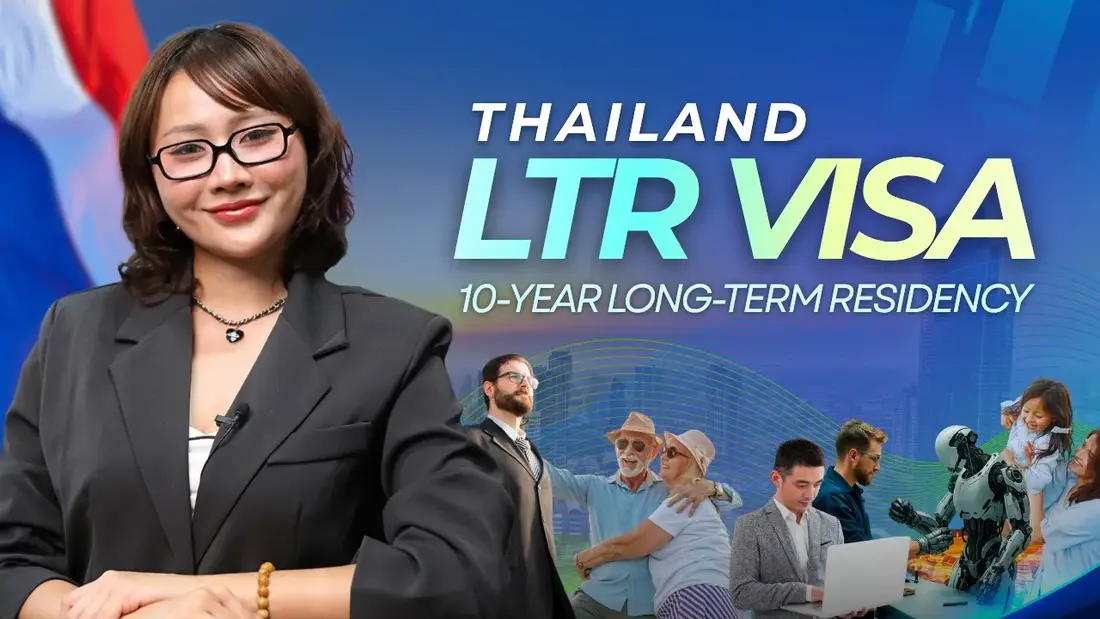
Thailand has announced adjustments to its Long-Term Resident (LTR) visa requirements, halving the application fee to 50,000 baht. The LTR visa is a long-term visa designed to attract promising foreigners to reside in Thailand long-term. This is believed to help boost economic development and stimulate overseas investment in the country in this post-pandemic era. Through this special visa, the government hopes to attract one million qualified foreigners over the next five years. This fee reduction is expected to attract more highly skilled and qualified immigrants who may have hesitated due to the previously high application fee (100,000 baht). Now, interested individuals will be able to obtain 10-year residency in the Land of Smiles by paying a one-time fee of 50,000 baht. According to a deputy spokesperson for the Prime Minister's Office, in addition to the reduced visa fee, other standards...
Taiguo.Source date 6 min read
Adapted from ThaiEmbassy.com (Siam Legal). Any first-person experiences in this article belong to the original author.
Thailand has announced adjustments to the requirements for Long-Term Resident (LTR) visas, halving the application fee to 50,000 baht.
The LTR visa is a long-term visa designed by Thailand to attract potential foreigners to reside in Thailand long-term. It is believed this will help boost economic development and stimulate overseas investment in the country in this post-pandemic phase. Through this special visa, the government hopes to attract one million qualified foreigners over the next five years.
This fee reduction is expected to attract more highly skilled and qualified immigrants who may have hesitated due to the previously high application fee (100,000 baht). Now, interested individuals will be able to obtain 10 years of residency in the Land of Smiles by paying a one-time fee of 50,000 baht.
According to the deputy spokesperson for the Prime Minister's Office, in addition to lowering visa fees, other standards will be made more lenient and accommodating for long-term resident visa holders.
The Cabinet's approval notice for this amendment was issued in May 2022, and the measure will take effect 90 days after its official publication in the Royal Gazette.
Who is eligible for a long-term resident visa?
The long-term resident visa, initially introduced in 2021, targets four different categories of foreign individuals, including:
Long-term resident visa holders can bring up to four family members, including their legal spouse and children under the age of 20.
This means that those seeking a “digital nomad” lifestyle can apply for an LTR (Long-Term Resident) visa, which, if they meet the eligibility criteria, allows them to work legally in Thailand for up to 10 years.
In addition, long-term resident visa holders will be able to apply for work permits to work within the Kingdom of Thailand.
What are the requirements for a long-term resident visa?
The eligible applicant groups mentioned have different requirements for long-term resident visa applications.
High-income foreign individuals and foreign retirees
Applicants must provide a medical insurance policy covering medical expenses in Thailand of no less than US$50,000. The remaining validity of the insurance must be at least 10 months from the application date, or proof of savings of no less than US$100,000 in a Thai or overseas bank account must be provided, and the savings must have been held for at least 12 months prior to the application date.
High-income earners must provide proof of personal income of at least $80,000 per year for the two years preceding the application.
Applicants must invest at least US$500,000 in Thai government bonds, foreign direct investment, or Thai real estate.
High-income retired foreigners
Applicants must provide a health insurance policy covering medical expenses in Thailand of at least US$50,000. The remaining insurance period must be at least 10 months prior to the application date; or provide evidence that they have held savings of at least US$100,000 in a Thai or overseas bank account for at least 12 months prior to the application date.
High-income earners must provide proof of personal income of at least $80,000 per year when applying.
If the applicant's annual income is between $40,000 and $80,000, they must invest at least $250,000 in Thai government bonds, foreign direct investment, or Thai real estate.
Foreign professionals
An employment contract or service agreement signed with a Thai or foreign company must be provided.
Foreign professionals must demonstrate at least five years of work experience in the target industry within the ten years preceding the application date.
The current employer must be a publicly listed company on a stock exchange, or a private company that has been operating for at least three years and has had a total turnover of at least $150 million over the past three years.
If an applicant's annual personal income has been between $40,000 and $80,000 in the past two years, the applicant must have a master's degree or higher, or own intellectual property rights, or have secured at least $1 million in Series A funding.
You must provide a health insurance policy covering medical expenses in Thailand of at least US$50,000. The remaining insurance period must be at least 10 months before the application date; or provide evidence that you have held savings of at least US$100,000 in a Thai or overseas bank account for at least 12 months prior to the application date.
Foreign experts
Foreign professionals must demonstrate at least five years of work experience in the target industry within the ten years preceding the application date, except for applicants holding a doctoral degree or higher in a related field.
If an applicant's annual personal income has been between $40,000 and $80,000 in the past two years or before retirement, the applicant must have a master's degree or higher and specialize in science and technology or have special expertise related to the work assignment in Thailand.
There is no minimum income requirement for foreign workers who intend to work in government higher education institutions, research centers, professional training centers or government agencies.
Other conditions for long-term resident visas
These conditions are announced by the government. However, they may change until all details and regulations are finalized and officially announced in writing.
Foreigners must submit an application and provide supporting evidence to the Thai Board of Investment or the BOI.
This 10-year visa is divided into two 5-year periods. Applicants will be granted an initial 5-year permit to stay in the country, which can be extended for another 5 years. The total duration of stay cannot exceed 10 years.
Long-term resident visa holders and their accompanying persons (spouse and children) must report their residency status to the relevant government agency annually.
Once a visa is granted and a work permit application is submitted, long-term resident visa holders can begin working immediately without waiting for the permit to be issued.
For professionals and experts with employers, work permits will be issued for a maximum of 5 years, with the possibility of an additional 5 years. For individuals without employers (who are self-employed), work permits will be issued for the period requested by the applicant, but not exceeding 5 years, with the possibility of an additional 5 years.
Long-term resident visa holders and their accompanying persons may apply to change their visa type in accordance with the measures and regulations issued by the Immigration Department.
If long-term resident visa holders and their accompanying persons fail to comply with the regulations and conditions, their visas will be cancelled.
Summary of Thailand Long-Term Resident (LTR) Visa
Thailand's long-term resident visa saw a surge in applications in its first year. The Thai Board of Investment is attempting to streamline the application process to make it easier for long-term resident visa holders. Thai government agencies aim to attract more foreign investment, so we expect this long-term resident visa program to be a long-term solution. Long-term resident visa holders will enjoy the benefits of long-term residency in Thailand.
If you have any questions about long-term resident visas, or plan to reside in Thailand long-term, please contact us for advice.
Online Q&A
CALL
CHAT
Chat with our representative
Contact Us
Other Thai Elite Visa Pages
Don't be a stranger, just say Hello!
WhatsApp
Line
Live Chat
Can I apply for a Thai elite visa if I have previously held a Thai student visa?
Thai marriage visa
Retire in Thailand
SourceThaiEmbassy.com (Siam Legal)
Contact
Let’s talk Thailand.
Tell us a little about what you have in mind. We’ll review your message and get back to you.

Community
Comments 0
Start the conversation.