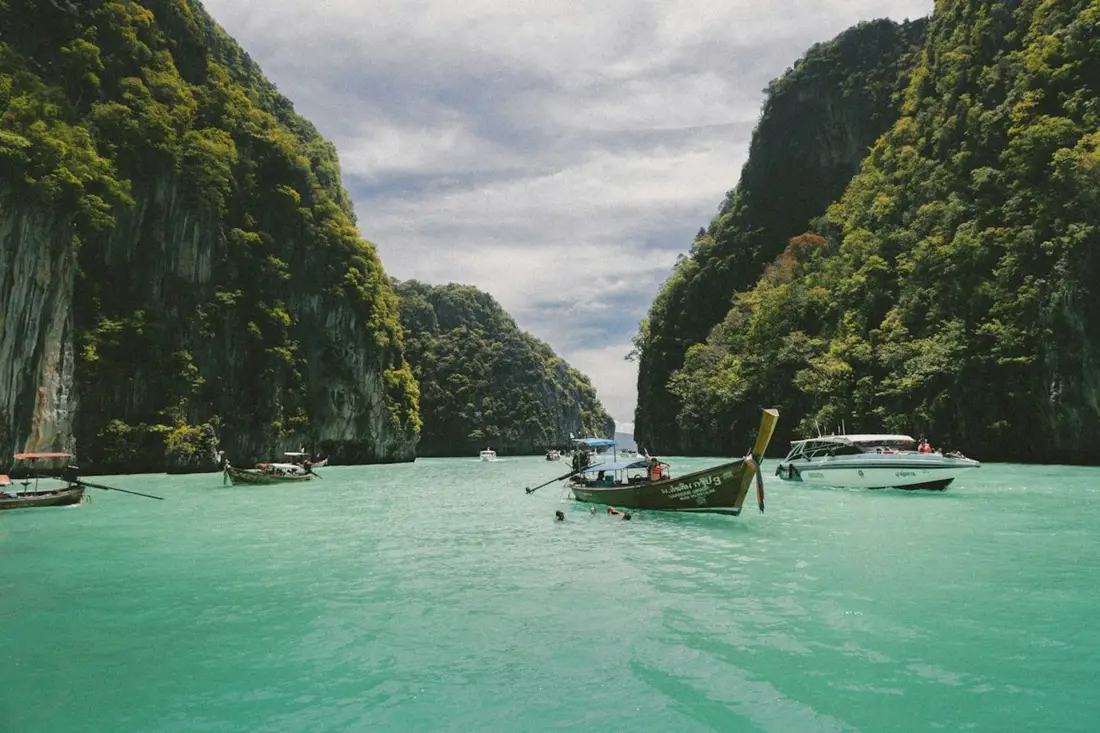
What first-time visitors should know before their trip to Thailand
For your first trip to Thailand, fly to Bangkok, spend three to four days there, then fly or take the night train to Chiang Mai and stay there for another three to four days. To conclude your trip, you can stay on one of the southern islands: Phuket or Krabi (November to April) or Koh Samui (May to September). You will need a passport that is valid for at least six months, as well as the free Thailand Digital Arrival Card, which you can apply for online up to three days before your arrival. Citizens of 60 countries, including the USA, UK, EU, Australia, and Canada, do not require a visa for stays of up to 30 days.
With a budget of 2,500–4,000 baht (US$75–119) per day for a comfortable, mid-range trip, you'll be able to live well. This guidebook will help you make the decisions that really matter for your first trip: the route, the island, the best time to go, the costs, and the few mistakes almost every first-time visitor makes.
Where to stay, starting in Bangkok
This guidebook covers three regions. Select your desired region, then your preferred location, and search by your travel dates. Filter for free cancellation if you'd like to book a room and decide later.
Open Booking.com with your travel dates · also on Expedia · Trip.com
Key Facts (2026)
Citizens from 60 countries receive 30 days free of charge as well as a TDAC.
No visa is required for stays of up to 30 days if you are from one of the 60 countries on the list (previously 60 days from September 15, 2026). The Thailand Digital Arrival Card is mandatory, free of charge, and can be applied for online up to three days before your arrival. Your passport must be valid for at least six months beyond your intended stay.
Travel between November and February
The weather across the country is cool, dry, and sunny. It's peak season, so it's recommended to book beach hotels 2-3 months in advance. April is the hottest month (the average high temperature in Bangkok is 36°C, with days reaching around 40°C in most years). From June to September, there are occasional short afternoon thunderstorms, and prices are lower; this is the dry season on Koh Samui.
Budget 2,500-4,000 baht per day ($75-119)
This includes a comfortable room, three meals, transportation, and one activity; backpackers can get by on 1,000–1,500 baht. Street food costs 50–80 baht per plate, a mid-range hotel 800–2,500 baht, and a beach resort from 5,000 baht. Thai ATMs charge 250–350 baht fees per withdrawal with foreign cards, so it is advisable to bring cash and withdraw larger amounts.
Make Bangkok + Chiang Mai + an island
Two weeks is ideal, with 3–4 days in Bangkok, 3–4 days in Chiang Mai, and 4–6 days on a southern island. One week is also suitable for the Bangkok–Chiang Mai–Phuket route. All flights are domestic and cost between 900 and 2,500 baht, taking about an hour, except for flights to Koh Samui with Bangkok Airways, which cost between 2,800 and 6,800 baht.
Bangkok has TWO airports – check yours.
International flights usually depart from Suvarnabhumi Airport (BKK). Low-cost carriers operate domestic flights from Don Mueang Airport (DMK), which takes about 90 minutes to cross the city. Booking a tight connecting flight between the two airports is a typical beginner's mistake, and I wouldn't take the risk.
Cover your shoulders and knees at the temples.
Shoes must be removed inside temple buildings. One should never point one's feet at a Buddha statue and should never criticize the monarchy, as lese-majesty is a crime. Tap water is not safe to drink, and bottled water costs 7–15 baht.
Where first-time visitors to Thailand should travel
All conversations about a first trip to Thailand lead to the same answer – and it's correct: Bangkok, then Chiang Mai, then a southern island. This triangle connects the capital, the cultural north, and the beaches without any detours. Each flight takes only an hour, and each stop teaches you something you can put into practice the next day. Bangkok will teach you about pricing, using Grab, and temple etiquette; Chiang Mai will let you unwind; and the island is the reward. Resist the temptation to add a fourth stop to a two-week trip. Thailand penalizes overly ambitious itineraries with extra travel days, and the country will always be open for a second visit.
Bangkok (3-4 days)
Land here and stay long enough to escape the traffic and get into the city. Your main day should be dedicated to the old city, starting with the Grand Palace at 8:30 am when it opens (500 baht), followed by the Reclining Buddha at Wat Pho next door (300 baht), and then the ferry (5 baht) to Wat Arun. Plan for dinner in Chinatown, a relaxing afternoon by the canal, and a pleasant evening on a rooftop terrace. The UNESCO ruins of Ayutthaya are a worthwhile day trip if you have a spare day; they can be reached in an hour by train or minibus. Staying near a BTS or MRT station will make the city feel more manageable. On the other hand, if you stay on Khao San Road, you'll spend most of your time in taxis.
Chiang Mai (3-4 days)
A one-hour flight north (900–1,500 baht if booked in advance) or an overnight train journey. See the "Transport" section for more information. It's worth planning your trip around this. Chiang Mai is Thailand's most walkable major city. The moated old city is full of teak temples. Here you'll find some of the best food in the country at fair prices. And almost every first-time visitor cites two things as highlights of their trip: a morning with rescued elephants at an ethical sanctuary (1,600–2,500 baht) and a Thai cooking class (1,000–1,500 baht). Doi Suthep, the golden mountain temple overlooking the city, is a worthwhile destination for a sunrise excursion. Important note: From mid-February to April, the air in the north is heavily polluted due to slash-and-burn agriculture. Avoid this region during these months.
Then the island, Phuket, Krabi or Koh Samui (4–6 days).
Choose first according to the time of year, then according to your personal preferences. From December to April, the Andaman coast is calm and dry, with November considered a transitional month as the rainy season subsides. Phuket is the right choice if you value infrastructure (international airport, hotels of all categories, and boat trips to Phi Phi and Phang Nga right on your doorstep). If, on the other hand, you're looking for stunning scenery and tranquility, Krabi is ideal – with the cliff-lined beaches of Railay, traditional longtail boats, and barely visible roads. From May to September, the Andaman Sea experiences monsoon season, and the Gulf coast is the better option. Koh Samui (and the neighboring islands of Koh Phangan and Koh Tao) is sunny all summer long and can be reached directly from Bangkok in just 70 minutes.
On your first trip, you should skip three things: Pattaya (it's not what you imagine a Thai beach resort to be), the remote islands that each require a day's travel (Koh Lipe and Koh Kood are beautiful, but better suited for a second trip), and trying to combine both coastlines. I would prefer one island that I properly explore to three fleeting visits.
Thailand Visa Requirements for First-Time Applicants (2026)
Entry is easier than most first-time visitors expect. Nationals of 60 countries and territories, including the USA, UK, all EU member states, Australia, Canada, and New Zealand, receive a free 30-day visa waiver with a stamp upon arrival – no application or fee required. You will need a passport valid for at least six months, proof of onward travel, and, if necessary, proof of sufficient funds (20,000 Baht per person; see the Royal Thai Embassy website). This is a good, inexpensive insurance option. A Thailand Digital Arrival Card (TDAC) is essential and can be completed online free of charge up to three days before your arrival. It only takes five minutes. It's best to do this when checking in for your flight.
Two important points to note: First, the number has recently changed. The exemption was valid for 60 days from July 2024 to September 15, 2026, which is why many information sources still use the old information. The current validity period is 30 days. Second, if 30 days are insufficient, any immigration office can extend the stay once by 30 days for 1,900 baht. Those wishing to stay longer should apply for the 60-day tourist e-visa before their flight, rather than waiting until arrival.
When should you visit Thailand for the first time?
November to February is the best time to visit for a first trip. It's cool (by Thai standards), dry, and sunny almost everywhere. However, this is also peak season, so it's advisable to book beach hotels two to three months in advance, and prices are highest between Christmas and New Year's. From March to May, it gets scorching hot, peaking in April. Average high temperatures in Bangkok then reach 36°C, and 40°C is reached in most years. As compensation, Songkran, the water festival celebrating the New Year in mid-April, offers three days of nationwide water fights that will either become your fondest travel memory or prompt you to go somewhere else.
From June to October, it's monsoon season, which is often misunderstood. The rain comes in heavy, hour-long downpours, mostly in the afternoon, not as continuous, all-day rain. The countryside is lush and green, prices drop by 30–50%, and tourist crowds thin out. The catch lies on the coast, as boat trips on the Andaman Sea are canceled when the sea is rough. A trick that can save a summer trip is the inversion weather pattern in the Gulf of Mexico. Koh Samui experiences its dry season, while Phuket experiences its rainy season. A trip between June and September simply swaps the islands and thus offers all the advantages. The only regional warning applies here as well: During the northern wildfire season from mid-February to April, you should probably plan your trip to the south.
Budgets, ATMs and tipping in Thailand
There are essentially three budget categories in Thailand. For backpackers, 1,000–1,500 baht per day is sufficient. This includes rooms with a fan or dormitories (300–500 baht), street food, and bus fares. The comfortable mid-range, where most first-time visitors end up, costs 2,500–4,000 baht (US$75–119). This includes an air-conditioned hotel for 800–2,500 baht, restaurant meals, Grab rides, and one paid activity per day. Pure luxury starts at 6,000 baht, as a 6,000 baht room in Thailand is comparable to what you would get in Europe for 20,000 baht. Two weeks on US$1,000 (excluding flights) is a realistic budget for backpackers.
Practical advice: Thai ATMs charge 250 baht per withdrawal with a foreign Visa card and 350 baht with a Mastercard. Therefore, withdraw the maximum amount (usually 20,000–30,000 baht) instead of topping up your account daily. Use a Wise or Revolut card for the best exchange rate. Exchange cash at exchange bureaus (similar to SuperRich), never at hotels or airport kiosks. Always refuse payments in your home currency. Pay in baht. Card payments are accepted in hotels, shopping malls, and larger restaurants. Only cash is accepted at markets, street stalls, songthaews, and small guesthouses. Tipping is not customary. Round up the taxi fare, leave small change at the restaurant, and give 50–100 baht to a masseur or tour guide. Any small gesture is appreciated but not obligatory.
Being a first-time visitor to Thailand
For flights between regions, flying is recommended. AirAsia, Nok Air, and Thai Lion connect all destinations except Koh Samui (Bangkok Airways, 2,800–6,800 baht) for 900–2,500 baht if booked several weeks in advance. None of the routes in the so-called "first-flight triangle" take longer than 90 minutes. The only booking pitfall lies in Bangkok, as the airport has two terminals. Low-cost carriers usually use Don Mueang (DMK), which is 90 minutes from Suvarnabhumi (BKK), where your international flight lands. Never book a connecting flight between the two terminals on the same day.
A romantic alternative to flying is the Bangkok–Chiang Mai night train. Train No. 9 departs from Krung Thep Aphiwat station (not the old Hua Lamphong station) at 6:40 p.m. and arrives at 7:15 a.m. A second-class seat (941–1041 baht) offers a flat bed, a curtain, and dinner while traveling through rice paddies. It's best to book through the National Railways website or 12Go as soon as the travel dates are confirmed. During peak season, lower seats are often booked weeks in advance.
In Bangkok's cities, the BTS Skytrain and MRT (17–65 baht per ride) are the fastest ways to reach all the modern sights and avoid the traffic. Grab, Southeast Asia's equivalent of Uber, is the go-to solution everywhere else, making price negotiations unnecessary. In Chiang Mai, red songthaews (shared taxis, 30–50 baht per ride) and Grab are good options. On the islands, you can use fixed-price taxis (which are quite expensive) or rent a scooter for 200–350 baht per day. But let's be honest: if you've never ridden a scooter before, a busy Thai island isn't the place to learn. Scooters are the leading cause of accidents involving tourists in the country.
Eating in Thailand for the first time
Street food is the heart of Thailand, and it's safer than first-time visitors fear if you follow one rule: eat where many Thais are out and about and the stalls fill up quickly. A wok that never stops turning leaves nothing untouched. The quiet, solitary stall is riskier than the chaotic, crowded one. Dishes cost between 50 and 80 baht. Start with the classic Pad Kaprao (fried rice with basil and crispy egg, Thailand's true national dish), an authentic grilled Pad Thai, Moo Ping (grilled pork skewers) with sticky rice, and in Chiang Mai, the northern Thai curry noodles Khao Soi, which are worth the trip alone. The first time you order Som Tam (papaya salad), order "Pet Nit Noi," which is a bit spicier. Spicy food in Thailand is a whole different ball game.
The infrastructure is helpful. 7-Eleven stores are everywhere, air-conditioned, and genuinely useful (toasted sandwiches, SIM cards, cold water), and stalls selling freshly cut fruit and smoothies for 40 baht guarantee refreshment on hot afternoons. Don't drink tap water anywhere. Bottled water costs 7–15 baht, and most hotels offer refill stations. Ice from street vendors is industrially produced and of good quality; the hole in the tube indicates that it's factory ice.
Thai etiquette that truly matters
Most etiquette concerns are unfounded. Thais are understanding hosts, and a smile can smooth over almost any faux pas. The truly important rules are: appropriate attire for temple visits (shoulders and knees covered, shoes removed indoors, sarongs can usually be borrowed at the entrance); never point your feet at a Buddha statue or step over anyone; never touch heads, not even children's, however sweet the impulse may be. Women should not hand anything directly to monks. And the monarchy is absolutely off-limits for jokes or criticism. Lèse-majesté is a crime with real penalties, not just a custom, and applies to foreigners as well. When the national anthem plays before a film at the cinema, stand up.
The wai, the prayer gesture with the hands, is beautiful, but don't worry about performing it correctly. A nod and a smile are perfectly sufficient, and Thais don't expect foreigners to know the hierarchy of hand heights. Remain calm in public disagreements. Loud shouting is inappropriate for everyone involved and ends negotiations that could have been conducted with serene friendliness.
The classic beginner mistakes and scams
The Grand Palace is closed today.
No, that's not true. A friendly stranger or tuk-tuk driver outside one of the main attractions will explain that it's closed for a ceremony and offer a tour with alternatives, ending at a jeweler's or tailor's shop, for which you pay him a commission. Just go to the ticket office and see for yourself. The attraction is open daily from 8:30 a.m. to 3:30 p.m.
Taxis without a taximeter and the jet ski deposit
At airports, you should use official taxi ranks or Grab and absolutely insist on a metered taxi. A simple "Please use a meter" works wonders. On beaches in Thailand, it's particularly common for jet ski rental companies to demand exorbitant "damage fees" upon return. Therefore, film every scratch before you set off, or better yet, forego renting a jet ski altogether. I would advise against renting one.
The connection between the two airports
Bangkok's international hub is Suvarnabhumi Airport (BKK). Domestic airlines fly from Don Mueang Airport (DMK), which is about 90 minutes away during rush hour. Always check the airport code when booking and be sure to avoid direct connecting flights between different airports on the same day.
Replanning
The most expensive mistake is a five-stop itinerary in two weeks. Book international flights, the first few nights' accommodation, and the overnight train; the rest can be arranged flexibly. Thailand rewards travelers with a free afternoon. Then there might be a tip for visiting a temple, perhaps from the guesthouse owner, or an extra day at the beach.
Bangkok's must-see temples
The Grand Palace
Wat Arun
Golden Mountain (Wat Saket)
Wat Arun viewpoint
The best hotels in Bangkok
My hotel selection in Bangkok in every price category, based on Google's hotel rating system. My top 10 hotels are displayed first, followed by the highest-rated ones. Each button takes you directly to the hotel's page on Booking.com, where your travel dates are already entered.
Highlights of the first trip to Chiang Mai
Doi Suthep Temple
Wat Chedi Luang
Zabb E Lee Thai Cooking School
Maerim Elephant Sanctuary
The best hotels in Chiang Mai
My hotel selection in Chiang Mai in every price category, based on Google's hotel rating system. My top 10 hotels are displayed first, followed by the highest-rated ones. Each button takes you directly to the hotel's page on Booking.com, where you've already entered your travel dates.
Beaches for beginners
Kata Beach
Nai Harn Beach
Railay West Beach
Phra Nang Cave Beach
Chaweng Beach
Choeng Mon Beach
The best hotels in Phuket
My selection of hotels in Phuket in every price category, based on Google's hotel classification. My top 10 hotels are displayed first, followed by the highest-rated ones. Each button takes you directly to the hotel's page on Booking.com, where your travel dates are already entered.
Hidden treasures waiting to be discovered
MIA Bangkok
Aoncorn Thai Restaurant
Royal Hall of Boromphiman
The Temple of the Emerald Buddha Museum (Wat Phra Keo Museum)
Pun Pun (Wat Suan Dok)
Free Bird Cafe
Create a daily plan from the route.
Frequently Asked Questions
Frequently asked questions about Thailand for first-time visitors.
Bangkok, Chiang Mai, and a southern island: 3–4 days in the capital, 3–4 days in the north, 4–6 days on the beach. From November to April, Phuket (good infrastructure) or Krabi (beautiful scenery) are recommended; from May to September, Koh Samui is ideal, as it's monsoon season on the Andaman coast. Each flight takes one hour.
Yes. Thailand is regularly ranked among the safest countries in Southeast Asia for tourists, and solo travelers (including women) can travel there without any problems. The usual precautions apply. Don't leave drinks unattended, use Grab or metered taxis, beware of scams involving gemstones and jet skis, and purchase travel insurance, especially for scooter accidents – the most common type of injury.
Two weeks is ideal, enough time for Bangkok, Chiang Mai, and a southern island without feeling rushed. One week is well-suited for the Bangkok-Chiang Mai-Phuket triangle, allowing one less day in each location. Ten days is a good middle ground. With less than a week, I would rather skip one region than try to see all three at breakneck speed.
Yes, excluding international flights. $1,000 for two weeks equates to roughly $70 per day, which is above the typical daily rate for backpackers of $30 and falls into the mid-price range. Expect to pay for air-conditioned hotels or guesthouses, street food and restaurant meals, one or two domestic flights, and some paid activities. $1,000 is a perfectly comfortable budget for a week.
Nationals of 60 countries and territories, including the USA, UK, EU, Australia, Canada, and New Zealand, do not require a visa for stays of up to 30 days. They will receive a free entry stamp upon arrival. All travelers must complete the free Thailand Digital Arrival Card online up to three days before arrival. Their passport must be valid for at least six months beyond their intended stay. The maximum stay was reduced from 60 to 30 days on September 15, 2026; any older information stating 60 days is therefore no longer valid. US citizens, dual nationals, and Green Card holders can find details in the Thailand Visa Guide for US Citizens.
September is the rainiest month in Bangkok and along the Andaman coast, while the Gulf islands experience rain from October to December. April is the hottest month, with average highs of 36°C in Bangkok and temperatures around 40°C in most years. If you are traveling to the north, you should avoid the slash-and-burn season from mid-February to April, as the air quality in Chiang Mai is severely affected by the fires. The safest time to visit for a first-time visitor is from November to February.
No, tap water is not safe to drink anywhere in the country. Bottled water costs 7–15 baht, most hotels offer refills, and ice cubes (the tubes with holes) are industrially produced and safe. A filtered water bottle pays for itself within a week through the amount of plastic it saves.
Vaccinations are only legally required if you are arriving from a yellow fever area. Vaccinations against hepatitis A, typhoid, and a current standard vaccine are recommended. The risk of malaria is negligible in cities and beach resorts. Prophylaxis is therefore only advisable if you are traveling to remote rural areas or near land borders. Pharmacies are widely available, and every major city has excellent private clinics.
Both. Card payments are accepted in hotels, shopping malls, and larger restaurants, but markets, street food stalls, taxis, and small guesthouses only accept cash. Thai ATMs charge 250–350 baht per withdrawal with foreign cards, so it's better to withdraw the maximum amount rather than topping up daily. Use a Wise or Revolut card to get a better exchange rate, and always pay in baht when a terminal offers your home currency.
Overplanning. Five stops in two weeks turn a vacation into a logistical challenge. The runners-up book a connecting flight on the same day between Bangkok's two airports (Suvarnabhumi and Don Mueang are 90 minutes apart), believe the tuk-tuk driver who claims the Grand Palace is closed, and learn to ride a scooter on an island road.
Where you can stay during your trip
Start with Bangkok (see below) – this guide also covers Chiang Mai, Phuket, Krabi and Koh Samui, all of which can be searched on their respective booking sites.
Compare prices on Booking.com
Compare prices on Trip.com
We may receive a commission for bookings made through these links – this will not incur any additional costs for you. Learn more.
Discover more in this guide
You might also like this
Thailand Honeymoon Guide and 10-Day Itinerary
Villas with private pools, sunsets in a longtail boat, and evenings perfect for two.
2-week Thailand itinerary
Capital city, night train, mountains, then along the Andaman coast island by island – thirteen nights, one way.
10 days in Thailand – Itinerary
Capital city, night train, mountains, then ferry to the Andaman coast – nine nights, one way, no return.
7 days in Thailand
Capital city, mountains, islands – six nights, two short flights and not a single day was lost to the journey.
Thailand on a budget
Thailand for less money, without sacrificing the best
I lived in Bangkok for four years and traveled throughout the country from there. The guidebooks reflect my personal opinion and are written as I would explain things to a friend planning a trip.
Ready to create your travel itinerary?
Use our free trip planner to save places, organize days, and share your trip.




Community
Comments 0
Start the conversation.