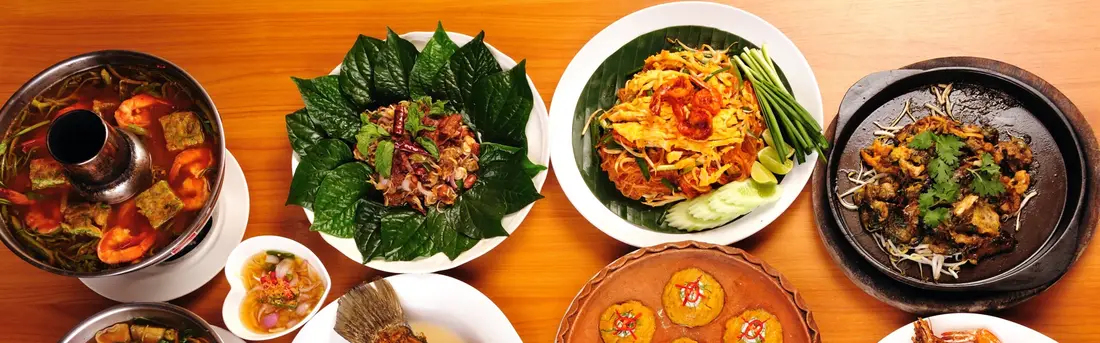
Many travelers rave about Thai food – myself included.
But what really surprised me was this: Each flavor has its own logic, and each region follows different rules.
This guidebook is not a list of recommendations on what and where to eat. You can already find that information online. It's about understanding the history behind the flavors and using that knowledge to plan your itinerary.
Let's open up Thailand like a map of food culture.
The secret of Thai cuisine: From chili peppers to curry
Think you know Thai cuisine? Think again. Sure, it can be spicy, but that's just the beginning.
The real spectacle is how sweet, sour, salty, and spicy flavors harmonize without overpowering each other. Every dish tells a story – of trade, culture, and the way Thailand invites you to savor life with every bite.
How Tom Yum explains the world of Thai flavors
Most travelers think of Tom Yum as "the spicy soup", but its appeal lies in the balance, not the spiciness.
Lime provides acidity, chili peppers provide spiciness, fish sauce provides saltiness, palm sugar reduces the spiciness, and herbs such as lemongrass and kaffir lime leaves give the whole thing an aromatic flavor.
Each ingredient has its own character, but together they create a harmonious whole. That is the heart of Thai cuisine.
This principle of balance is also reflected in Thai life. In a Buddhist country, harmony is important: unnecessary conflicts are avoided.
That's why the markets seem lively but not chaotic, and that's why everyday life feels calm despite the intensity around us.
Tom Yum is not just a typical dish; it is a snapshot of how Thailand deals with complexity – with harmony, not violence.
Why Thai food is spicy (and why that's not the whole truth)
Thai food isn't just spicy because people like it spicy.
In a hot, humid climate, chili peppers helped to cool the body, stimulate the appetite and keep food fresh – practical solutions long before refrigerators existed.
Interestingly, chilies were not originally native to Thailand. They arrived there in the 16th century via Portuguese traders and spread because they were easy to grow and had a long shelf life.
Despite its widespread popularity, Thai cuisine isn't always spicy. The key principle is a flexible balance – a flavor that adapts to each person and region.
You'll experience it for yourself: spices on every table and North English dishes that are naturally mild. Spice is optional; harmony is paramount.
Why there are so many curry colors in Thailand
One of the first things you notice in Thailand is that curries come in all colors – red, yellow, green...
It feels typically Thai, but the truth is more complex: these curries are the result of centuries of trade relations, migration, and cultural mixing.
Thailand lies at a crossroads of important land and sea routes. Spices, ingredients, and cooking methods from all over the world found their way here.
That's why every curry feels like a little traveler.
Those who want to try the most delicious curries should travel to Bangkok or Phuket – the old centers of trade and migration.
Sticky rice or jasmine rice? The simple choice that tells a bigger story.
If you spend a few days in Thailand, you will soon be faced with the classic question: "Sticky rice or jasmine rice?" It may seem like a small thing, but the choice reveals a lot about the region.
The climate determines the rice variety: cooler, drier north = sticky rice; warmer, wetter central/southern = jasmine rice
This difference is also reflected in people's eating habits.
Why your Tom Yum tastes different in every city
If you ask someone who has traveled through Thailand, you will always hear the same thing: "Tom Yum in Bangkok tastes completely different than Tom Yum in Chiang Mai or Phuket."
And they are right. One dish, many identities – because each region seasons its food according to its geography, history, and the cultures that have shaped it.
Here you can expect a milder, more herb-forward Tom Yum – often without coconut and without extreme spiciness. The flavors are earthy, thanks to influences from Myanmar and Yunnan.
In Isaan, the flavors are intense, direct, and unfiltered – shaped by Laotian culinary traditions. Think spicy, hot, and smoky, just like in papaya salad and grilled meat. Tom Yum here packs a punch.
Bangkok's Tom Yum soup embodies what most visitors consider a classic: balanced, aromatic, and mild. Its style is the result of a blend of diverse influences – royal cuisine, migration, and trade.
Further south, the soups become more aromatic, richer, and spicier. Coconut, seafood, and Malay-Chinese influences result in deep, fragrant broths with robust spices. For the same reason, southern curries are known for their intense flavor.
The 3 best cities to enjoy Thai food
We highly recommend Bangkok, Chiang Mai and Phuket, as these are the best places to see how Thai cuisine is changing throughout the country.
Bangkok = The Commercial Mile
If you only have one city on your itinerary, choose Bangkok to get a comprehensive insight into Thai cuisine.
Here you can find the most diverse kind of street food: traditional Thai Tom Yum, Teochew dumplings, Hakka stir-fries, Indian curries, Muslim snacks – all in a single district.
Much of this diversity originates from the Chao Phraya River. It once facilitated travel and brought migrants to the city, whose culinary traditions blended in neighborhoods like Chinatown and Bang Rak.
Even such entertaining traditions as boat noodles and floating markets originated from life along the river.
The street food is fantastic, but it's only one part of Bangkok's story. Don't miss the royal Thai cuisine – the epitome of Thai flavors. As Bangkok is the heart of royal life, it's the best place to experience authentic royal dishes and the culture that goes with them.
Chiang Mai = The Mountain Cuisine
When you try sour sausages or Khao Soi in Chiang Mai, the herby and slightly smoky aromas tell a story of the mountains.
For centuries, the city's isolation meant that ingredients arrived slowly, so locals resorted to herbs, fermentation, and smoking to preserve food.
Where can this logic best be observed in practice? In the markets of Chiang Mai. Farmers from hill tribes sell pickled vegetables, chili pastes, and herbs there.
Isolation also contributed to the survival of traditions. The Lanna dining style, with low tables – people sit on the floor and share food – is still common. The simplest and most enjoyable way to experience it is at a Khantoke dinner with local music, dancing, and traditional dishes.
Phuket = The Port of the Oceans
As an island, Phuket is famous for its seafood – but its true identity is owed to migration.
In the 19th century, tin mining brought waves of Chinese and Malay immigrants to the country, who blended their cuisine with local Thai flavors. This gave rise to Baba Peranakan cuisine: Thai spices, Chinese cooking techniques, and Malay warmth.
In Phuket's Old Town, you can taste this history. There, centuries-old kitchens serve baba curry, Hokkien Mee, steamed fish, and festive dishes amidst colorful shophouses.
This multicultural heritage also gives rise to Phuket's Vegetarian Festival (mainly in October) – a vibrant blend of Chinese ritual and Thai lifestyle.
If you would like to experience this contrast firsthand, we even offer a 7-day culinary adventure tour through Thailand, combining Bangkok and Chiang Mai – an easy and relaxed way to experience the flavors of both regions on a single trip.
7 unique ways to experience Thai food
Thailand offers not only a wealth of flavors, but also diverse ways to enjoy them. From morning markets to cooking classes with locals – every experience reveals a different facet of everyday Thai life.
We have compiled 7 unique ways for you to experience Thai cuisine.
1. Morning markets: The best way to experience true community life
Make sure you take the time at least once for breakfast at the morning market – it is the heart of everyday Thai life.
You will try classic Thai breakfast dishes: Moo Ping (grilled pork skewers), sticky rice wrapped in banana leaves, golden Thai-style donuts, Thai milk tea or traditional soy milk.
There, one can also observe an unspoiled, authentic, and very local everyday life. Office workers quickly grab rice porridge, aunts compare fish at the market, and monks in saffron robes pass by collecting alms.
For a truly unforgettable experience, you should visit the Trok Mor Market in Bangkok. Besides the usual breakfast offerings, you'll discover the city's diverse culture here: halal, vegetarian, and festive dishes change daily.
2. Night Market: Immerse yourself in Thailand's nightlife
Night markets are a simple and straightforward way to enjoy Thailand's nightlife without having to enter a bar.
You can stroll at your own pace, enjoy snacks and explore the area – Pad Thai, Som Tam, grilled squid and even insect stalls if you are curious.
But what really makes it special is the energy: locals and travelers mingle, music plays, and lights shine across the stalls.
The largest and most atmospheric markets are best found on weekends. Highlights include the Chatuchak Night Market on Fridays in Bangkok, Walking Street in Phuket, and the Sunday Night Market in Chiang Mai.
Of all the night markets I've visited, the Sunday market in Chiang Mai is my favorite. The atmosphere is more relaxed, and the connection between the night market and the nearby temples gives it a unique Thai flair.
If you're in Chiang Mai in November, don't miss the Yi Peng and Loy Krathong festivals (November 24–25, 2026). The Sunday market is made even more special by the floating lanterns.
3. Thai's Kitchen: Cook your own Thai cuisine
You can eat street noodles, fancy Thai cuisine, visit Michelin-starred restaurants… But until you've even entered a Thai home, you've only seen half the truth.
A cooking class in a private home brings everyday Thai life to life. Here, you don't just taste the food, you cook it yourself.
From selecting fresh ingredients to preparing traditional dishes, every step gives you a glimpse into how Thai families eat and live. It's a more personal experience, and you can get a real feel for local life.
Chiang Mai is ideal for this experience. It offers the most opportunities to buy products directly from the farm.
I highly recommend the cooking classes with a local family on the outskirts of town. You'll explore their charming stilt house, enjoy the peaceful rural atmosphere, and hear little stories from their everyday life.
4. Coffee farm in the north: From opium fields to a cup of coffee
Northern Thai coffee is not just a trend in cafes. It tells the story of how an entire region changed its path.
Decades ago, these hills were covered with opium. Forests were cleared, the soil eroded, and the communities were dependent on a crop with no future.
The turning point came with the Royal Project – an initiative to replace opium with sustainable crops. And coffee became a quiet success for the region.
A cup of Arabica coffee from northern Thailand is not just delicious. It is a symbol of reinvention.
If you'd like to experience it up close, join us for a walk through the coffee plantations. Listen to the personal stories of the Karen villagers and discover how this region transformed from opium fields to some of the finest coffees you'll ever taste.
5. Royal Thai Cuisine: A Taste of Living Cultural Heritage
Most travelers know Thailand for its street food – but few know that the country also has a whole world of royal cuisine to offer, which most visitors never try.
You will taste recipes passed down from the chefs who once cooked for the king. Each dish strives for a harmonious balance of Thailand's five most important flavors, such as the royal Tom Yum Goong. Every plate reflects centuries of culinary artistry. The dishes are often garnished with intricately carved fruits and flowers.
But the experience goes beyond the taste. The order of the dishes follows old palace rules, thus offering you a glimpse into royal dining culture.
Bangkok and Ayutthaya are the best places to enjoy royal cuisine, as they have long been the heart of the Thai monarchy.
The Blue Elephant is one of the most atmospheric places to try it. You sit in a hundred-year-old mansion, enjoy beautifully presented royal dishes, and listen to the stories behind each one from the waiter. A truly cultural experience.
6. Give alms – Participate in a religious ritual involving food.
To truly understand Thai food culture, one must give alms.
This simple, daily ritual shows you how the locals express their faith through food. Such an experience cannot be had in a museum or at a tourist destination.
Monks walk barefoot in silent line, and their bowls are filled with food. It's not just watching; you're part of the action.
This ceremony can be experienced in most Thai cities, but I like Chiang Mai the best. It's quieter than other cities and has a much more authentic feel. If you prefer a quiet and authentic experience, visit the Old City; for a more spectacular experience, I recommend a visit to Doi Suthep.
Tip: Locals used to prepare their own food, but in today's fast-paced world, some simply buy ready-made meals – and you can too. Most options are vegetarian and typically consist of hot rice, fruit, sweets, or pre-packaged foods.
7. 7-Eleven in Thailand: Your gateway to Thai flavors – open 24/7
You may have been to a 7-Eleven before, but in Thailand these stores are known for their Thai specialties.
Here you will find authentic Thai dishes such as Pad Krapow (fried pork with basil), green Thai curry, Thai milk tea and even special vegetarian options.
Even more unique are the sticky rice burgers, the individual bananas, and the option to prepare your own smoothie at the counter.
It's open 24/7 and is basically a tiny, reliable kitchen you can count on anywhere. I've even found it on the way to mountainous areas like Khao Yai National Park.
Would you like to see how these experiences can be combined? Our guide "How to Plan Your First Trip" contains all the important travel information.
Bangkok – Chiang Mai – Phuket: Your 10-day culinary journey through Thailand
In these three top cities for foodies, on your first visit you can explore sights, encounter elephants, relax on beaches and taste the country's most famous flavors.
For most first-time visitors, 10 days is ideal. This gives you enough time to fully enjoy each city, from street food to royal cuisine, and then relax afterwards.
Instead of offering you "popular" alternatives, we guide you to places where food reflects identity, history and culture.
You can view the following short itinerary: 3 nights in Bangkok, 3 nights in Chiang Mai and 3 nights in Phuket.
Bangkok (Days 1–3)
During these 3 days, we will organize for you a local breakfast at the Trok Mor market as well as a tour of the royal cuisine and street food.
We combine royal cuisine with your temple visit, offering you a comprehensive insight into the Thai royal family. This ritual dinner is also perfect for a romantic celebration.
To truly experience everyday Bangkok, we recommend combining street food with market visits at different times of day.
Start your morning with a visit to Bangkok's unique Maeklong Railway and Damnoen Saduak Floating Market, then explore the vibrant streets of Chinatown in the evening.
Along our journey, we will show you hidden treasures that most visitors miss and introduce you to culinary heroes who have been perfecting their craft for decades – or even centuries.
Chiang Mai (Days 4-6)
In Chiang Mai, the focus is on immersing oneself in local life, from street food to family cooking classes and Khantoke dinners.
In our cooking class, we take you into private kitchens, not commercial studios. You stroll through morning markets, chat with aunts about herbs, harvest vegetables from home gardens, and grind curry pastes by hand – it's personal and intimate.
If you have an extra day or are looking for a more intense experience, take a trekking tour to a mountain tribe's coffee plantation!
Experience how the locals have transformed opium fields into thriving coffee plantations. Get involved yourself – planting/harvesting, roasting, and enjoying your own freshly brewed coffee. Afterwards, a meal awaits you, straight from the field to your table, where you can taste what the villagers actually eat every day.
Phuket (Days 7–10)
In Phuket, we highly recommend starting with a street food tour to discover the local flavors, and then rounding off your Thailand trip with an unforgettable meal on the beach.
The old town is a popular spot for street food. In its colorful Sino-Portuguese streets, you can try typical dishes such as Moo Hong (braised pork), Hokkien Mee (fried noodles), and O-Aew (ice cream dessert).
Those who prefer a more lively and boisterous atmosphere should visit in the evening. In the morning, however, the atmosphere is much quieter.
For a sunset dinner, the west coast of Phuket is the perfect place.
Kata / Kata Noi beach offers the best views and numerous restaurants in the immediate vicinity.
If you prefer a quieter atmosphere, Karon Beach offers a wider and longer sandy beach, and the crowds are better spread out.
For a romantic evening, a candlelit dinner on the private beach of The Boathouse restaurant is highly recommended. Those seeking a more adventurous experience should visit Dinner in the Sky Phuket and enjoy a dining experience over 50 meters above the ground.
This itinerary is flexible, allowing you to swap meals, markets, or activities to suit your preferences – and if you need help with planning, we're happy to assist you.
Frequently asked questions about culinary trips to Thailand
Why don't Thai people eat noodles as a complete meal?
Noodles are quick to prepare, versatile, and perfect for breakfast or as a snack. A complete meal is traditionally based on rice – it's the staple food that connects different dishes and reflects the Thai concept of balance and sharing.
Why are Thai drinks so sweet?
It's hot in Thailand! Sweet drinks provide quick energy and hydration. They are usually served with plenty of ice, which dilutes the sweetness as it melts, providing refreshment and renewed energy.
How much do meals and experiences in restaurants really cost?
Are you considering participating in a culinary experience or a cooking class? These usually cost more, around 1,200–2,500 THB (~35–75 US dollars) per person, depending on the menu and the venue.
Is street food in Thailand safe to eat?
Street food is generally safe – most vendors cook at high heat, serve quickly, and prepare food fresh every morning.
I ate at food stalls every day for weeks and rarely had any problems. Simple rule: Go where the locals are.
What vegetarian options are available?
Look out for the “Jay” signs or ask the vendors to omit fish sauce and egg – most street food vendors will understand if you say “no fish sauce, no egg” and point to the ingredients.
For a quick snack, 7-Eleven stores offer vegetarian snacks, ready meals and plant-based drinks.
You can also use apps like HappyCow to find vegetarian and vegan restaurants near you.
Are you unsure how tipping works in Thailand?
Not as strict as in the USA, but tipping is "normal" in mid- to upper-priced restaurants.
Ready for your culinary journey through Thailand?
Tell us about your travel preferences – whether you're traveling as a couple, a family with teenagers, or for a celebration. We'll gladly create a customized itinerary that matches your wishes, schedule, and culinary highlights. Contact us and plan your unforgettable gourmet getaway.
Community
Comments 0
Start the conversation.