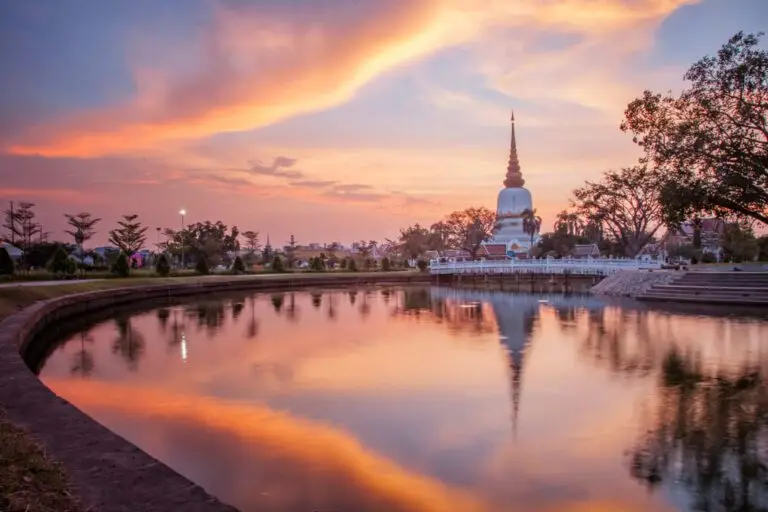
Thailand has welcomed a new UNESCO World Heritage Site. Wat Phra Mahathat Woramahawihan in Nakhon Si Thammarat was officially inscribed on the UNESCO World Heritage List in July 2026, becoming Thailand's ninth World Heritage Site. Known for its over 1,500-year-old Buddhist tradition and remarkable architectural influence in Southeast Asia, the sacred temple is now the focus of the Tourism Authority of Thailand's year-long campaign, "The Twelve Sacred Discoveries of Nakhon Si Thammarat: A Journey to World Heritage." Travelers are invited to experience the authentic culture, history, and faith of southern Thailand.
Wat Phra Mahathat Woramahawihan temple in Nakhon Si Thammarat has been officially inscribed on the UNESCO World Heritage List, becoming Thailand's ninth World Heritage Site and the country's sixth cultural site. This distinction recognizes one of Southeast Asia's most significant Buddhist landmarks, whose history, architecture, and spiritual traditions have shaped the region for centuries.
For travelers seeking an authentic Thailand beyond the famous beaches and vibrant cities, there has never been a better time to discover Nakhon Si Thammarat.
Thailand's newest UNESCO World Heritage Site
The inscription was officially approved during the 48th session of the UNESCO World Heritage Committee in Busan, Republic of Korea, on the recommendation of the International Council on Monuments and Sites (ICOMOS).
The proposal highlighted the temple's exceptional universal value as an architectural masterpiece reflecting centuries of cultural and artistic exchange in Southeast Asia. UNESCO recognized the site under criteria (ii) and (vi) for its exceptional influence on regional Buddhist architecture and its continuing importance as a center of living religious traditions.
Founded in the eighth century, Wat Phra Mahathat Woramahawihan has served as one of the most important Buddhist monasteries in the region for more than 1500 years.
Its architecture reflects influences from Northeast India, Central Java, Sri Lanka and the Mon region in southern Myanmar, creating a unique artistic style that would later inspire temples throughout Thailand and Southeast Asia.
A living legacy that continues to this day.
Unlike many historical monuments, Wat Phra Mahathat Woramahawihan is still an active place of worship where centuries-old traditions remain alive.
Visitors can witness ongoing cultural practices, including:
These traditions have been preserved over generations, making the monastery not only a remarkable historical landmark but also a vibrant center of faith and community life.
Celebrations for the first UNESCO World Heritage Site in southern Thailand
As the first UNESCO World Heritage Site in southern Thailand, Wat Phra Mahathat Woramahawihan represents an important milestone for the region.
To celebrate the inscription, Nakhon Si Thammarat held a province-wide festival with cultural performances, merit ceremonies, Buddhist chants, meditation sessions, exhibitions and performances by Nora and Khon, which are recognized by UNESCO as intangible cultural heritage of humanity.
Visitors also had the opportunity to commemorate the occasion through a special photo installation in the temple, capturing the moment when Thailand welcomed its newest World Heritage Site.
Discover the temple in every season
The Tourism Authority of Thailand (TAT) invites travelers to experience the destination throughout the year with the campaign “The Twelve Sacred Discoveries of Nakhon Si Thammarat: A Journey to World Heritage”.
This campaign's motto is: "Discover the past. Share the faith. Shape the future."
Throughout the year, the campaign will highlight various aspects of the temple and the province – from sacred architecture and Buddhist teachings to local wisdom, seasonal traditions and the stories that have shaped Nakhon Si Thammarat for centuries.
Inspired by the local proverb that “every person should pay homage to Phra That of Nakhon Si Thammarat at least once in their lifetime”, the initiative encourages visitors to deepen their understanding of Thailand’s living heritage while supporting responsible tourism, cultural heritage preservation and local communities.
Why visit Nakhon Si Thammarat?
While the UNESCO listing puts Wat Phra Mahathat Woramahawihan in the global spotlight, a visit to Nakhon Si Thammarat offers far more than just a single landmark.
The province is home to beautiful beaches such as Khanom Beach, Nai Phlao Beach and Ao Thong Yi; lush mountains; lively local markets; traditional handicrafts; authentic southern Thai cuisine; and centuries-old cultural traditions deeply rooted in everyday life.
Travelers can combine their visit to the UNESCO World Heritage Site with exploring local villages, experiencing the famous hospitality of southern Thailand and discovering one of the country's most culturally rich but lesser-known destinations.
Thailand's growing UNESCO World Heritage collection
With the addition of Wat Phra Mahathat Woramahawihan, Thailand now has nine UNESCO World Heritage Sites:
cultural sites
Natural sites
Taken together, these sites showcase Thailand's cultural heritage and its natural landscapes.
Experience Thailand's vibrant heritage
The UNESCO inscription of Wat Phra Mahathat Woramahawihan recognizes a living tradition that continues to inspire communities today.
Whether you are interested in Buddhist history, architecture, cultural heritage or meaningful travel experiences, Nakhon Si Thammarat offers you the opportunity to connect with one of Thailand's holiest places while supporting the preservation of traditions that have existed for more than a millennium.
As Thailand celebrates its newest UNESCO World Heritage Site, there is no better time to experience the history, spirituality and culture that make Wat Phra Mahathat Woramahawihan a unique travel destination.
Frequently Asked Questions
What is Thailand's newest UNESCO World Heritage Site? Wat Phra Mahathat Woramahawihan in Nakhon Si Thammarat became Thailand's newest UNESCO World Heritage Site in July 2026, recognized for its outstanding universal value and its more than 1,500-year-old Buddhist heritage.
Why is Wat Phra Mahathat Woramahawihan so important? The temple has been a significant Buddhist center since the eighth century and has influenced religious architecture throughout Southeast Asia. It continues to be the site of centuries-old traditions, ceremonies, and cultural performances.
Where is Wat Phra Mahathat Woramahawihan located? The temple is located in the province of Nakhon Si Thammarat in southern Thailand, making it the first UNESCO World Heritage Site in the region.
What is the "Twelve Sacred Discoveries in Nakhon Si Thammarat" campaign? It is a year-round initiative by the Tourism Authority of Thailand that encourages visitors to explore the province's Buddhist heritage, cultural traditions, architecture, and local communities through seasonal experiences.

Community
Comments 0
Start the conversation.