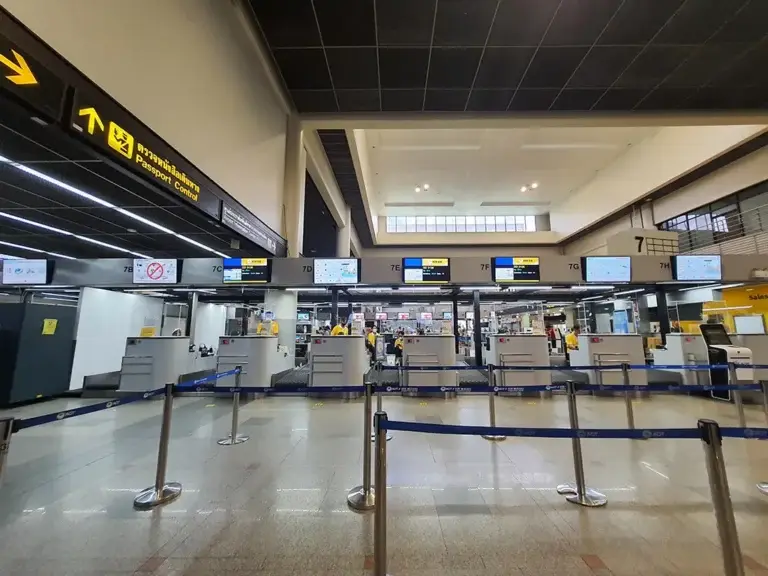
On August 31, 2026, Thailand published four decrees from the Ministry of the Interior in the Official Gazette, revising the entry requirements for short stays. The decrees will come into effect 15 days after their publication, meaning the current 60-day visa exemption for Thailand will remain valid until September 14, 2026.
From September 15th, most travelers who previously had 60 days of visa-free travel will instead only receive 30 days.
What will change on September 15, 2026?
30-day visa exemption for 60 countries and territories
The exemption period is reduced from 60 to 30 days. The list, published in the Royal Gazette, includes 60 nationalities, among them most Western Europeans, North Americans, and a number of countries in Asia, the Middle East, Africa, and Oceania.
A one-time extension of up to 30 additional days is still possible at a local immigration office for a fee of 1,900 THB, subject to approval by the official.
15-day visa exemption for Mauritius and the Seychelles
Mauritius and the Seychelles are switching from the 60-day rule to a 15-day exception. The Maldives, which were originally slated for this category, were instead added to the 30-day list when the final rules were drafted in July.
Visa on arrival reduced to three nationalities
The number of countries for which a visa on arrival is valid is reduced from 31 to three: Azerbaijan, Belarus, and Serbia. India, which was included in earlier drafts of the visa-on-arrival list, has instead been added to the 30-day exception category. The 15-day stay limit for visa-on-arrival entries remains unchanged.
Bilateral agreements remain separate
Countries with bilateral visa waiver agreements with Thailand are not affected by this reform, as these agreements are not covered by the repealed regulation. The length of stay under these agreements varies: from 14 days for Cambodia and Myanmar (only for entry via international airports), to 30 days for China, Hong Kong, Kazakhstan, Laos, Macau, Mongolia, Russia, East Timor, and Vietnam, up to 90 days for Argentina, Brazil, Chile, Peru, and South Korea.
If your nationality is not on the list of countries eligible for 30-day, 15-day, bilateral, or visa-on-arrival visas, you must apply for a Thai visa before your trip. You can submit applications online through the Thai e-Visa system via the relevant Thai embassy or consulate.
Land border crossings are limited to twice a year.
Travelers using visa exemptions at land border crossings are subject to a new limit of two entries per calendar year. This limit does not apply to nationals of Malaysia, Brunei, Indonesia, or Singapore. The Minister of the Interior may grant exemptions to other nationalities in the future. The limit applies exclusively to entry by land and does not affect entry by air.
Why Thailand changed the rules
Thailand introduced the 60-day exception in July 2024 as a temporary measure to boost tourism after the pandemic. An internal government review, completed in 2026, linked the longer stay to an increase in illegal employment, sham transactions, and visitors repeatedly using short stays to live in Thailand without the appropriate visa. The Cabinet also pointed to the broader "one country, one visa" principle, according to which each nationality falls into a single entry category and no longer enjoys different privileges.
Tourism authorities presented the change as a shift in strategy aimed at attracting travelers with a genuine interest in tourism, rather than maximizing visitor numbers. The reform was approved by the Cabinet on July 14, 2026, and the implementing regulations were signed on August 26, 2026, and published on August 31.
What you should prepare before your trip
All foreign nationals entering Thailand must present a Digital Entry Card for Thailand (TDAC) before arrival, regardless of the visa type. Immigration officers may also ask you to show the following:
Visa exemptions and visas on arrival are valid only for tourism purposes. If you intend to work, run a business, or stay in Thailand for an extended period, you will need the appropriate visa before entering the country, not after.
Options for a longer stay if 30 days are not enough
Should your travel plans extend beyond the timeframe allowed by the new exemption, various long-term visa categories remain available. The most suitable option depends on your age, income, employment status, and planned length of stay.
Frequently Asked Questions
Will I still receive a 60-day stay if I enter Thailand before September 15, 2026? Yes. If you enter Thailand under the existing regulations before the new rules come into effect, you will retain the length of stay granted upon arrival, even if it extends beyond September 15.
Can I extend my stay beyond 30 days after the new rules come into effect? Yes, if you meet the requirements for the 30-day exception, you can apply for a one-time extension of up to 30 additional days at a local immigration office, subject to approval by the official.
What happens if my nationality is not on any of the exception lists? You must apply for a Thai visa before your trip, either through a Thai embassy or consulate, or through the Thai online e-visa system.
Does the restriction on land border crossings also apply to flights to Thailand? No. The limit of twice a year applies only to entries via land border crossings, not to entries by air.
Affected by the change?
If the new 30-day waiting period affects your travel plans, or if you are considering switching to a long-term visa before the new regulations come into effect, Siam Legal International will be happy to advise you on your options. Contact our team for a consultation.


Community
Comments 0
Start the conversation.