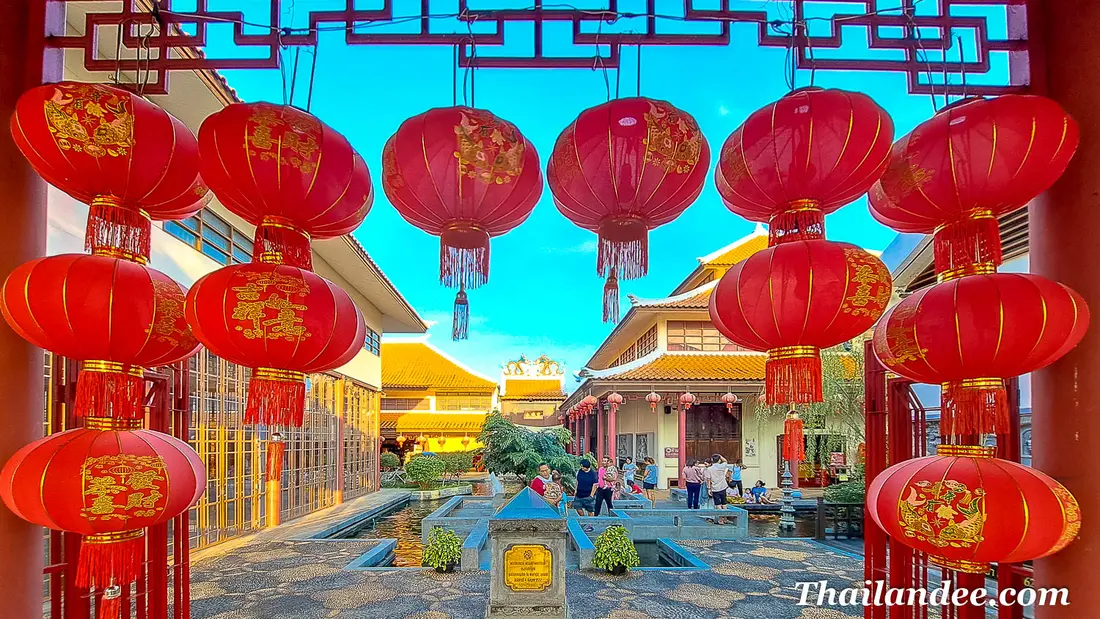
The Thai-Chinese Cultural Center is dedicated to preserving and disseminating the artistic, spiritual, and philosophical heritage of the Thai-Chinese communities. Located near Nong Bua Public Park and its lake, this unique complex is open to visitors. History of the Center: The Thai-Chinese Cultural Center was established with the aim of preserving the art, culture, traditional way of life, and philosophy of the Thai-Chinese communities living in Udon Thani. The foundation stone was laid on August 4, 2009, and the official opening took place on January 6, 2013. Both events were presided over by Her Royal Highness Princess Bajrakitiyabha Narendiradebyavati, the former Provincial Attorney of Udon Thani Province. The center even bears her name on part of the main building. Architecture and Main Building: The center comprises several buildings that combine to form a complex and meticulously designed architectural ensemble: Princess Bajrakitiyabha Building: This pavilion commemorates the princess's royal deeds and public duties during her time in Udon Thani. Khunnatham Museum (Upper Floor): It recounts the history of the Thai-Chinese communities over 120 years ago, the formation of the nine organizations and eleven clans, and the history of the Puya Foundation and the holy god Pu-Ya. It also details the activities of the Pu-Ya Shrine and the development of its committee since its founding. Hall of Fame: A place dedicated to individuals who have made significant contributions to the local Chinese community. It also presents the eight traditional Chinese worship rituals in an immersive 3D space.
The Thai-Chinese Cultural Centre in Udon Thani is open daily from 9:00 am to 4:00 pm. Admission prices: Adults: 50 THB, Children (6-12 years) / Students: 20 THB. Free admission for seniors (over 60 years) and children under 6 years.
Local bus lines 2 or 4 from Udon Thani stop near the Thai-Chinese Cultural Centre.
How to get there
How do I get to the Thai-Chinese Cultural Centre? Local bus lines 2 or 4 from Udon Thani stop near the Thai-Chinese Cultural Centre.




Community
Comments 0
Start the conversation.