In tourism, the preservation of a country's natural environment and cultural heritage is essential. In recent years, ecotourism has become a major focus in Thailand, encouraging travelers to travel responsibly, support local communities, and protect the environment.
Taiguo.Source date 5 min read
Adapted from Tourism Authority of Thailand — USA. Any first-person experiences in this article belong to the original author.
In tourism, the preservation of a country's natural environment and cultural heritage is of paramount importance. In Thailand, ecotourism has become a major focus in recent years, encouraging travelers to choose responsible travel options, support local communities, and protect the environment. With protected national parks, eco-friendly resorts, and community-based tourism projects, sustainable travel in Thailand offers a meaningful and unforgettable experience.
Thailand's commitment to environmentally friendly tourism
Thailand's approach to ecotourism focuses on conservation, education, and local community engagement. This includes supporting ethical wildlife sanctuaries and community-owned tourism projects. National parks, marine reserves, and eco-friendly resorts throughout the country emphasize sustainable travel, waste reduction, and environmental awareness, allowing travelers to enjoy Thailand's beauty while preserving it.
Eco-friendly resorts and sustainable stays
Eco-friendly accommodations in Thailand combine comfort with environmental responsibility. Many rely on renewable energy, local materials, water conservation, and the creation of jobs for the local population.
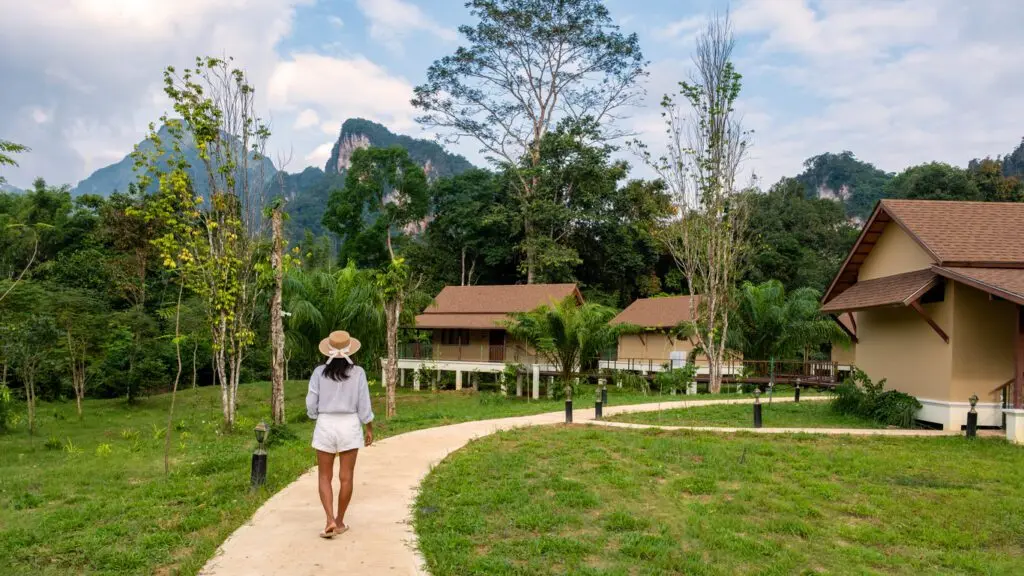
Khao Sok Our Jungle Camp (Surat Thani): Situated between the Khao Sok rainforest and the Sok River, Our Jungle Camp is an eco-friendly resort with a thoughtful design that offers immersive rainforest experiences.
Bangkok Tree House (Bang Krachao): Often referred to as Bangkok's "green lung," this urban eco-resort is surrounded by forest on the banks of the Chao Phraya River. The guesthouse offers visitors a peaceful retreat with a focus on sustainability.
Faasai Resort & Spa (Chanthaburi): Surrounded by lush countryside, the Faasai Resort & Spa is known for its environmentally friendly practices, natural landscaping, and focus on wellness and sustainability.
National parks and nature reserves
Thailand's national parks play a central role in the country's ecotourism efforts. They protect forests, mountains, wildlife and waterways while offering unforgettable nature experiences.
Khao Sok National Park: Khao Sok National Park is a nature reserve in southern Thailand that is home to the oldest evergreen rainforests in the world and offers conservation-oriented tourism activities such as guided nature walks and community-based initiatives.
Khao Yai National Park: A UNESCO World Heritage Site covering more than 2,000 square kilometers in central Thailand, known for its wildlife conservation programs, diverse ecosystems and numerous waterfalls.
Doi Inthanon National Park: Known as the "Roof of Thailand" due to its location as Thailand's highest mountain, the park offers visitors the opportunity to explore cloud forests, waterfalls and hill tribes while supporting conservation efforts.
Marine protected areas and responsible marine experiences
Thailand's marine ecosystems are just as important as those on land. Several island groups and coastal regions are subject to conservation guidelines to protect coral reefs and their marine fauna.
The Similan and Surin Islands are renowned for their crystal-clear waters and vibrant reefs. They promote responsible snorkeling and diving to protect the natural marine life. Diving in these archipelagos and experiencing the pristine underwater world is an unparalleled experience.
Koh Tao: Also known as Turtle Island, it is known for its programs to protect tropical coral reefs and for its marine life, including whale sharks, green sea turtles and rays.
Phang Nga Bay: This protected marine area lies between the mainland of southern Thailand and Phuket and offers kayaking tours as well as environmentally friendly excursions that allow travelers to explore limestone cliffs and mangroves without harming the environment.
Community-based tourism experiences
Community-based tourism in Thailand offers tourists the opportunity to connect with local communities and their daily lives, gaining an authentic understanding of the country. These offerings are designed and implemented by the local communities themselves, ensuring that tourism directly supports livelihoods, preserves traditions, and protects the environment.
Ban Mae Klang Luang (Doi Inthanon): The village is known for its terraced rice paddies, local coffee, and traditional way of life. It offers homestays, demonstrations of traditional weaving techniques, and guided nature walks.
Mae Kampong Village (Chiang Mai): A small village in the Huai Kaeo subdistrict, known for its cool climate, forested surroundings and sustainable homestay accommodations that highlight local traditions.
The villages of Chiang Dao and Mae Wang, home to the Hmong, Karen, and Dara-ang peoples, are known for their lush scenery, waterfalls, and hill tribe culture. Both villages offer authentic and environmentally friendly cultural experiences.
Eco-friendly activities to try in Thailand
Eco-friendly travel in Thailand means choosing experiences that respect nature while minimizing environmental impact. Thanks to the country's diverse landscapes, tourists have numerous opportunities for enriching and sustainable activities.
Guided nature walks and trekking tours: Explore forests, mountains and national parks with local guides who prioritize nature conservation and environmental education.
Ethical encounters with wildlife: Visit responsible wildlife sanctuaries that focus on animal welfare, rehabilitation, and education.
Kayaking and canoeing: Paddle through mangroves, rivers and coastal areas and experience Thailand's ecosystems.
Snorkeling and diving with environmentally conscious providers: Discover coral reefs and marine life while adhering to reef-friendly practices and conservation guidelines.
Cycling and hiking tours: An environmentally friendly way to explore cities, rural areas and cultural attractions while reducing your carbon footprint.
Wellness and slow travel experiences: yoga retreats, meditation centers and nature-based stays that emphasize mindfulness, balance and sustainability.
In Thailand, numerous ecotourism options offer travelers the opportunity to explore the country more consciously and mindfully. From nature reserves to homestays in villages, sustainable travel opens the door to more meaningful experiences. By choosing environmentally friendly destinations and practices, travelers can enjoy Thailand's natural beauty while preserving it for future generations.
SourceTourism Authority of Thailand — USA
Contact
Let’s talk Thailand.
Tell us a little about what you have in mind. We’ll review your message and get back to you.



Community
Comments 0
Start the conversation.