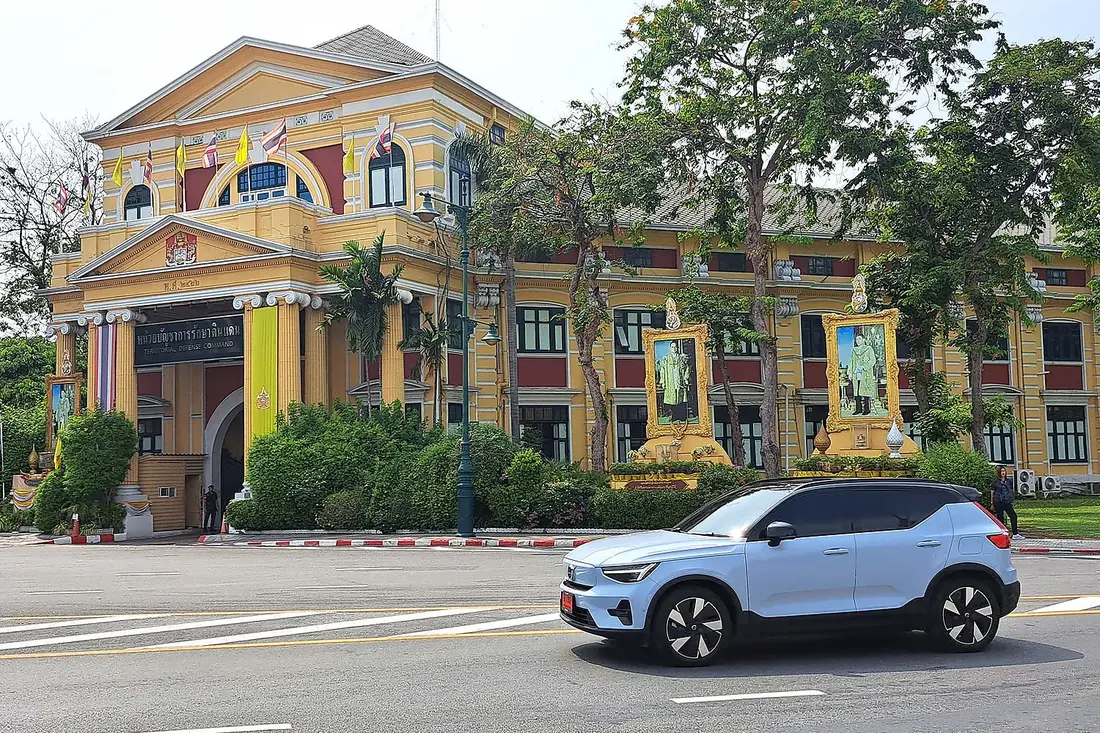
Laws and regulations you should know: Renting a vehicle during your holiday in Thailand means freedom and the opportunity to go anywhere and travel off the beaten track. However, especially with a scooter, it can quickly turn into a nightmare. Here you will find a comprehensive guide to renting scooters, motorcycles, and cars in Thailand, with all the practical information, laws and regulations you should know, and tips for a smooth experience. This article is intended exclusively for tourists, not expats.
In Thailand, traffic drives on the left, similar to the British system. Be especially careful at intersections and roundabouts. International Driving Permit required: To rent and, more importantly, drive a vehicle in Thailand, you need an International Driving Permit (IDP) in addition to your national driver's license. For motorcycles and scooters (regardless of engine size), you need a motorcycle license from your home country, which must be included on your International Driving Permit. Therefore, make sure your IDP is valid and covers the vehicle categories you intend to drive in Thailand. If you plan to travel by rental scooter, I recommend my article on renting and driving scooters in Thailand (in French). Without an International Driving Permit or the correct license category, you will also lose your insurance coverage. Note that driving a scooter in Thailand is often not covered by travel insurance. Helmet and seatbelt requirements: Wearing a helmet is mandatory for scooter and motorcycle riders and their passengers – and strongly recommended given the high accident rate involving two-wheeled vehicles on Thailand's roads! Seatbelt violations are common, especially in tourist areas. Police checks specifically targeting scooters and motorcycles are sometimes common. Seat belts are mandatory for all occupants in cars, and failure to wear one is punishable by a fine of up to 2,000 THB. There is also a law, though rarely enforced, requiring children under 135 cm tall to use a child safety seat. Driving under the influence of alcohol in Thailand: The legal blood alcohol limit in Thailand is 0.05% (or 0.02% for professional drivers and young drivers). This rule is strictly enforced in Thailand, and police checks are frequent, especially during the two major holiday weekends: New Year's Eve and Songkran in mid-April. Speed limits in Thailand: Speed limits vary by region: 50–60 km/h in towns, 80–90 km/h on rural roads, and 100–110 km/h on highways, depending on the road type. These limits apply to passenger cars.
Scooter rental in Thailand: Scooter rentals are ubiquitous in Thailand's tourist areas, and because they are inexpensive, the temptation is strong. Far too many tourists do this without ever (or hardly ever) having ridden a scooter before. Unfortunately, this often leads to accidents – sometimes with tragic consequences. Don't take scooter rental lightly! Required documents: To rent a scooter in Thailand, you need your passport and your international driving permit (with category "A", regardless of engine size – not A1 – to be legal). The rental company will likely require a cash deposit. Some require your passport to be retained as security, but this is illegal: Making a copy is common practice, but retaining it as security is not! A rental agreement should be drawn up between you and the rental company (this isn't always the case, so be sure to ask for a contract in English!), and you should receive a copy. Scooter rental costs in Thailand: The cost of renting a scooter in Thailand varies greatly depending on the location. On average, a basic model costs between 150 and 300 THB per day, with a T-Max or more powerful models costing correspondingly more. Discounts are often offered for longer rental periods. Insurance: Make sure the scooter is insured against damage to the vehicle and third parties. If possible, check whether the insurance also covers the rider (this is very rare in Thailand, however). As mentioned earlier, scooter riding may be excluded from your own travel insurance. If the rental company's insurance does not cover you, you will be responsible for all costs in the event of an accident – and medical treatment and hospital stays in Thailand can be very expensive. Tips before renting a scooter: Check the scooter before signing the rental agreement and take photos and videos. Fraud has been reported, particularly in Phuket and Pattaya (the same applies to jet ski rentals, although that is not the subject of this article). Always wear a helmet and appropriate clothing, even in hot weather: this will protect you in case of an accident. Avoid riding at night or in the rain. Never ride two-up on a scooter, even if Thais do. Given the high number of traffic fatalities involving two-wheelers in Thailand, you're better off renting a scooter rather than a car! It's less dangerous, the paperwork (international driver's license) is less complicated, and the insurance coverage is generally much better (and at least it's available, while many small rental companies don't insure their scooters at all or only minimally).
Car rental in Thailand – I know I'm repeating myself, but if you want to be flexible and independent during your trip to Thailand, rent a car. You'll have significantly better security and insurance coverage, especially with international providers. Required documents for booking a rental car: To rent a car, you'll need your passport, international driver's license, and a credit card for the deposit (some rental companies don't accept debit cards). A contract will be drawn up between the two parties; these contracts are much more comprehensive than scooter rental agreements. How to rent a car in Thailand: The cost of a rental car in Thailand ranges from 800 to 1,500 THB per day, depending on the type of vehicle, the time of year, and the rental company. To avoid unpleasant surprises, I recommend the major international rental car companies like Avis, Sixt, Hertz, and others, which you'll find in all major cities, at least at the airports. However, the most convenient option – also through these international providers – is Booking.com. You can book your vehicle in advance, often at a better price, and on some routes, you can pick up the car in one city and drop it off in another. Insurance: Everything is included with international car rental companies or Booking.com. Otherwise, you should ensure the car is adequately insured: Basic insurance is usually included, but comprehensive coverage is strongly recommended. Practical tips for car rental: Check the car before driving off and note any existing damage in the contract. Familiarize yourself with the local traffic rules before venturing onto Siam's roads: It's not just about driving on the left, but also other customs you'll need to adapt to. Drive carefully, especially on country roads where stray dogs are common. Watch out for two-wheelers: They can appear anywhere, even driving against the flow of traffic.
Find accommodation in Thailand Booking.com (function(d, sc, u) { var s = d.createElement(sc), p = d.getElementsByTagName(sc)[0]; s.type = 'text/javascript'; s.async = true; s.src = u + '?v=' + (+new Date()); p.parentNode.insertBefore(s,p); })(document, 'script', 'https://aff.bstatic.com/static/affiliate_base/js/flexiproduct.js');




Community
Comments 0
Start the conversation.