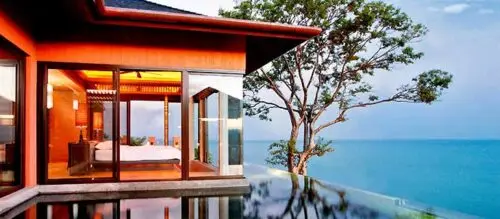
Phuket province is located in southern Thailand. It is the largest island in Thailand and lies in the Andaman Sea. The northernmost province is Phang-nga, and the easternmost provinces are Phang-nga and Krabi.
Phuket, also known as the "Pearl of the Andaman Sea," is an enchanting island that harmoniously combines all the elements of a tropical paradise with a touch of luxury, offering tourists a year-round water paradise. Located approximately 860 kilometers south of Bangkok, it is the largest island in Thailand and nestled in the tropical zone off the west coast of the Andaman Sea. Its white, powdery beaches, tranquil, expansive bays, limestone cliffs, and tropical forests contribute to Phuket's status as one of the world's most popular and renowned travel destinations.
With its growing number of top-class gourmet restaurants and wide selection of restaurants serving excellent food, Phuket is rapidly becoming one of the most popular gastronomic destinations for foodies and gourmets from all over Southeast Asia.
In 1785, the town of Thalang was besieged by Burmese troops who had invaded the coastal region. Led by Chan, the governor's widow, and her sister Muk, they managed to unite the townspeople and successfully drive the invaders out of Phuket. It took the defenders of Phuket, under Chan and Muk's command, over 30 days to achieve their victory. For these heroic deeds, Chan and Muk were awarded the titles Thao Thep Kasattri and Thao Sri Soonthorn, respectively. They are still highly respected by the people of Phuket today. During this period of peace, the town experienced an unprecedented boom in mining. Chinese businessmen and miners later immigrated to Phuket and soon amassed great wealth.
The island's long history has shaped modern-day Phuket with its diverse ethnic groups, culture, architectural influences, and exquisite cuisine. These features make Phuket a comprehensive travel destination, offering far more than just its natural heritage of sea, sand, forests, and world-renowned diving spots. The Sino-Portuguese architecture enchants visitors, and Phuket's warm hospitality never fails to impress guests from all walks of life.
Numerous exciting activities await you on this island. In the early days of regional maritime trade, Cape Phuket was known locally as Jung Ceylon, while the islanders called it Thalang. This name evolved into the name of the capital city located on the northern side of the island. As an ideal stopover, offering traders protection from the monsoons, Jung Ceylon welcomed merchants from India, Persia, Arabia, Burma, China, and Siam. In the 16th century, the island was a major trading port for tin.
Visitors to this island paradise can experience Sino-Portuguese architecture, the warm hospitality of the locals, seafood restaurants, diverse accommodations, and countless attractions. Among the most fascinating places in Phuket are Patong, Kamala, Karon, Kata, Nai Han, Rawai, Koh Racha, Koh Si-Re, Ao Chalong, Cape Prohm Thep, Phuket Town with its historic buildings, the Phuket Sea Shell Museum, Phuket Fantasea, and Wat Chalong.
Phuket has a strong Chinese influence, so you'll find many Chinese shrines and restaurants in the city. A Chinese vegetarian festival is held there every year. Although the Chinese community is quite large, many other ethnic groups also bring their traditions and festivals from around the world to Phuket.
Phuket, a large island, is surrounded by many stunning beaches, including Rawai, Patong, Karon, Kamala, Kata Yai, Kata Noi, and Mai Khao. The Laem Phromthep viewpoint is said to offer some of the most beautiful sunsets in Thailand.
But it's not just beaches there; there's also fantastic classical architecture, such as the Goom Restaurant. Combined with the very welcoming atmosphere and famous nightlife of Phuket, it's no wonder the island is a popular travel destination in Thailand.
– The beaches on the south coast are usually overcrowded, while it is much quieter in the north.
At all the larger beaches (such as Patong Beach, Kata Beach, Karon Beach, Nai Han Beach, Mai Khao Beach, and Nai Yang Beach), courses and equipment for diving, snorkeling, windsurfing, and sailing are available. Be sure to check for red flags before swimming!




Community
Comments 0
Start the conversation.