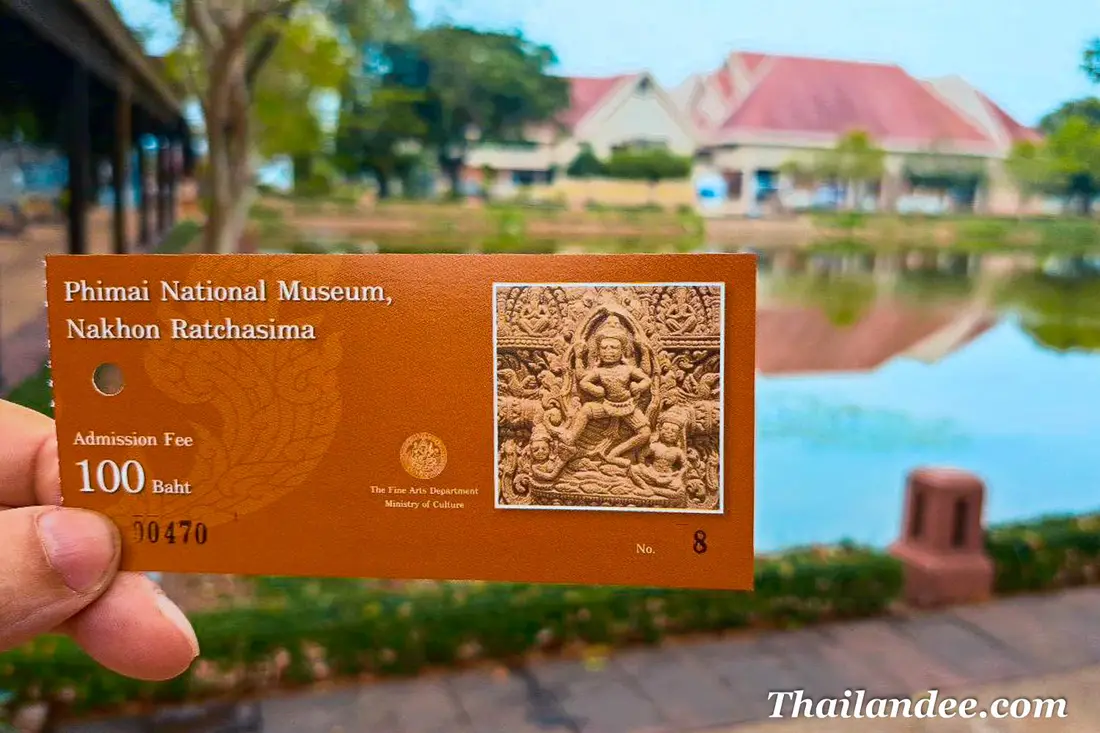
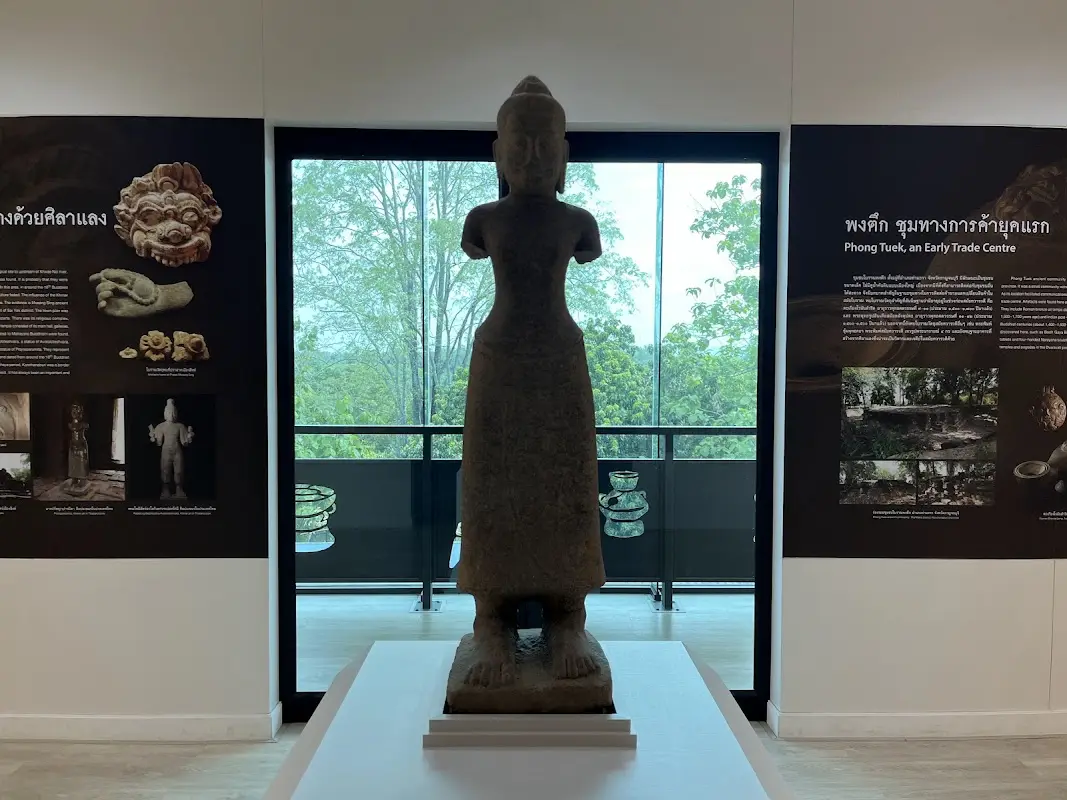
Opened in 1964 under the supervision of the Archaeological Department, the Phimai Museum began as an open-air museum, collecting artifacts from Prasat Phimai, the city's Khmer temple, and the surrounding sites. In 1975, it was placed under the administration of the National Museums of Thailand and became the Lower Isan Regional Museum. It traces the city's history through archaeological finds dating back to when the region was part of the Khmer Empire: statues, temple toppling artifacts, ancient pottery, and antique stone and bronze tools. The objects and statues on display are of the Dvaravati and Khmer styles. The centerpiece of the museum's collection is the stone statue of King Jayavarman VII. In my opinion, understanding the historical context is essential before visiting the nearby Khmer temple.
Admission: 100 THB per person. The Phimai Museum is closed on Mondays and Tuesdays (except public holidays) from 9:00 AM to 4:00 PM.
The Phimai National Museum is located near the Crane Bridge and not far from the Phimai Khmer Temple. It is less than a 10-minute walk from the entrances of Phimai's two main historical sites.
How to get there
How do I get to the Phimai National Museum? The Phimai National Museum is located near the Crane Bridge and not far from the Khmer Temple of Phimai. It is less than a 10-minute walk from the entrances of Phimai's two main historical sites.
Community
Comments 0
Start the conversation.