A travel guide for Phatthalung
Although Phatthalung province doesn't have a direct coastline, it boasts abundant water thanks to Lake Songkhla. As Thailand's largest lake, it occupies a significant portion of the province's eastern border. Lake Songkhla effectively forms a coastline, as Phatthalung overlooks a freshwater expanse dotted with boats and the characteristic Yok-Yor fishing nets.
Because Phatthalung is situated on such a large lake, the lifestyle of its inhabitants is closely intertwined with it. A visit allows you to experience the lives of the people firsthand: you will learn about their livelihoods, admire their handicrafts, and enjoy a culture that lives in rhythm with the water and the seasons.
Arrival
The most convenient way to get to Phatthalung is by train, as the station is located in the city center and close to hotels. Trains from Bangkok to Phatthalung depart at 1:00 PM, 2:45 PM, 3:10 PM, 3:35 PM, and 10:50 PM. Fares range from $7.50 for a third-class seat to at least $18 for a first-class sleeper berth.
Buses from Bangkok to Phatthalung stop at both the southern (Sai Tai Mai) and northern (Mo Chit) train stations and take 13 hours to reach Phatthalung station. Tickets cost between US$18 and US$32, depending on the seat category.
The best time to plan your visit to Phatthalung is to coincide with the pink lotus flowering season in Thale Noi from February to May; the wetlands are then carpeted with lotus blossoms. The cooler months from October to March are ideal for birdwatching in the same area.
locomotion
Many hotels in Phatthalung are located right at the train station exit. Those who prefer a more natural setting will be better off in a hotel like the Sri Pakpra, a resort like the Lampam Resort, or even private accommodation near Ban Thale Noi – some of which are even right on the water!
Activities in Phatthalung
The fishermen and farmers who live in the village of Ban Thale Noi on the edge of the Thale Noi Waterbird Reserve can teach you a lot about living in harmony with nature.
Their daily lives have changed little from those of their ancestors. Fishermen raise and lower the square nets called yok yor to catch freshwater fish, and farmers lead their water buffalo into the shallows. Other members of the community harvest the native sedge krajood, from which their women weave baskets, bags, and mats.
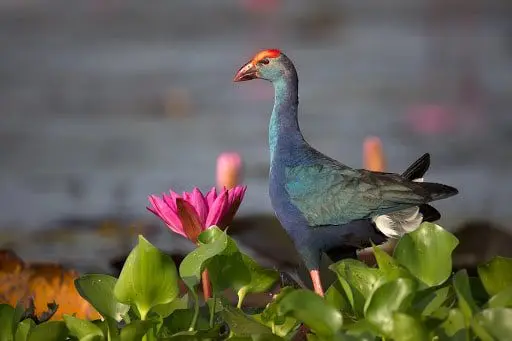
Depending on the season, Lake Thale Noi offers visitors a variety of impressions. During the colder months from October to March, over 43,000 migratory birds – including around 180 species such as purple herons, little grebes, and cormorants – land on the lake. When temperatures rise between March and April, pink water lilies bloom across parts of Lake Thale Noi, stretching as far as the eye can see.
To see these sights up close, visit the Thale Noi Wildlife Conservation Development and Extension Station, where tourist boats can be hired for US$14 (1.5 hours) or US$24 (2.5 hours).
While most local crafts require a lifetime of practice, the art of Krajood weaving can at least be tried at Varni Craft (Google Maps), a craft center in Ban Thale Noi. The center produces high-quality Krajood products for export and also offers tourists a glimpse into the production process.
Guests of Varni Craft can (for a fee) decorate their own Krajood bag or arrange an overnight stay with the affiliated host family.
The inhabitants of Phatthalung are proud to live off the land – and they are always happy for an opportunity to let tourists share in it.
At the Napokae Learning Center (Google Maps), visitors can learn more about rice cultivation in Phatthalung and its unique traditions, and then try their hand at it themselves. Guests can, for example, guide water buffaloes while plowing a rice field, plant rice by hand, and much more.
The Napokae Learning Center is open daily from 8:00 am to 6:30 pm, admission is free.
On Saturdays, the Pa Phai Sang Suk market has a very special, organic and homemade atmosphere: This "joyful market" is located in the middle of a bamboo grove and is proud of its philosophy of environmentally friendly and purely natural packaging.
Instead of polystyrene and plastic, the market stalls use renewable resources such as plates made from banana leaves, cutlery made from coconut shells, and drinking cups made from bamboo. Around 200 vendors offer local handicrafts, southern Thai sweets, and street food. The market is open every Saturday from 8 a.m. to 3 p.m.
Then there is Ban Khok Wua Handicraft, the “coconut shell craft village” in Chai Buri, which redefines the boundaries of craftsmanship.
The village community can make almost anything from coconut shells: water bowls, coffee cups, ladles, even lamps. Besides coconut products, the artisans also craft pottery and other items from the locally sourced red clay. What isn't sold locally, they sell to their numerous international export customers.
Is pottery too relaxing for you? Don't worry, Phatthalung also knows how to get your adrenaline pumping.
A whitewater kayaking trip starting from Nan Mot Daeng in the Pa Phayom district of Phatthalung is a true adventure. The 6.5 km stretch of river takes about four hours, but every moment will be unforgettable. Paddlers will navigate 40 rapids of varying difficulty (Class I to III).
The strong current along the river can make it difficult for kayakers to navigate without capsizing. While being carried along by the current, one can admire the natural splendor of the landscape: shady banks and the chirping of native birds, which can be heard even above the roar of the rapids.
At the end of the journey, a herbal steam bath awaits you: the ideal relaxation after a few hours battling against the current.
Selected articles about phthalate
5 unforgettable romantic experiences in Thailand
Thailand is known for its ancient temples, tranquil beaches, vibrant cities and diverse landscapes – so it's no wonder it attracts couples…
Do you need travel information?
Discover everything you need to know before your trip – from visa requirements and entry guidelines to essential travel tips and frequently asked questions.




Community
Comments 0
Start the conversation.