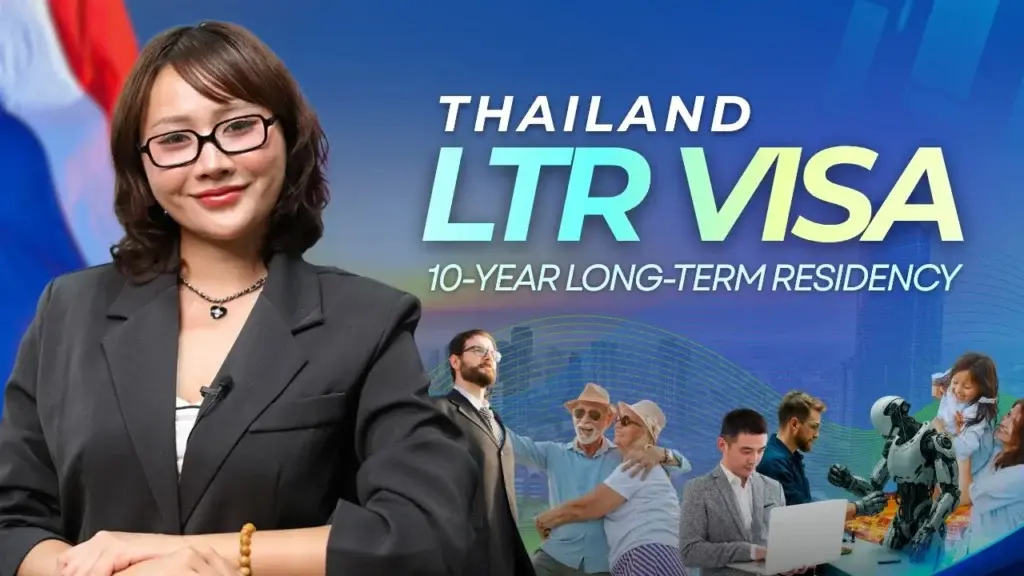
The Long Term Residence (LTR) visa for Thailand is designed for highly skilled foreigners who wish to relocate to Thailand, offering a convenient immigration solution and valuable, exclusive benefits. This makes the LTR visa ideal for foreigners with assets, pension entitlements, or professional qualifications that can contribute to Thailand's economic growth.
If this applies to you and you plan to settle in Thailand long-term, the LTR visa is a straightforward solution. While the application process for an LTR visa is more complex than for most other Thai visas, the benefits it offers will make building a life in Thailand easier and, in some cases, even more profitable.
On this page you can find out more about the long-term stay visa for Thailand, who is eligible, what criteria must be met for each visa type and how you can apply for such a visa.
Why should you apply for an LTR visa for Thailand? Learn about the advantages of the LTR visa for Thailand on our page and discover why it's one of the most popular visas for expats.
Who is eligible to apply for an LTR visa for Thailand?
Before you can apply for the LTR visa, you must choose one of the categories or "strands" that best suits you. There are four types of LTR visas, each for a specific group of expats:
There is also a fifth category of LTR visas for spouses and dependents, specifically for those accompanying a primary LTR visa holder.
What are the requirements for a long-term residence visa?
Foreigners belonging to one of the five aforementioned categories can apply for an LTR visa in Thailand. However, each category has its own eligibility requirements and required documents. Therefore, your qualifications must match the category you are applying for, and you must submit the documents required for that category.
Here you will find lists of the requirements for each category of the LTR visa in Thailand.
1. Wealthy global citizens
If you don't want to work during your stay in Thailand and prefer to live off the passive income from your investments, this is the right investment option for you. To qualify, you must meet the following requirements:
2. Wealthy retirees (pensioners)
If you are 50 years or older and would like to spend your retirement in paradise, this course is perfect for you. To qualify, you must meet the following requirements:
*Passive income must not originate from employment. Permissible sources of passive income include, but are not limited to, pensions, rental income, capital gains, dividends, and interest payments.
3. Skilled workers working from Thailand
If you live in Thailand as a digital nomad and want to work remotely for a foreign company, this program is perfect for you. To participate, you must meet the following requirements:
4. Highly qualified professional
If you possess extensive qualifications, high levels of expertise, and/or valuable professional experience, this program will enable you to access a highly paid position in a Thai company or institution. The prerequisites for participation are:
5. Spouses and dependents of long-term visa holders
Your spouse and dependent children can obtain their own LTR visas and enjoy all your privileges. In addition, you can now add any number of dependents, including parents and other legal family members. To qualify, each family member must meet the following requirements:
How to apply for an LTR visa in Thailand
To apply for a long-term visa for Thailand, you must gather and prepare all the required documents for your chosen category. Please note that missing or incorrect documents may lead to delays in processing your application or even its rejection.
Once your application documents are complete, you must register online with the Board of Investment of Thailand (BOI), the authority that issues this visa. You submit your application through their online portal and then wait. Processing time can take four to eight weeks or longer, depending on the quality of your application. The BOI may request additional documents or clarifications during this time.
If your application is approved, the BOI will contact you to schedule an appointment for visa collection. If you are applying from outside Thailand, you will receive your visa and travel document from the Royal Thai Embassy in your country of residence.
What you should consider after receiving your LTR visa
Once you receive your long-term visa for Thailand, you must adhere to the conditions it contains; otherwise, it will be revoked. Here are some points to keep in mind:
Professional LTR visa application assistance for Thailand
As we have seen, the requirements for a Thai long-term visa are not always easy to meet, and the application process is lengthy and complex. However, the effort is well worth it if you want to settle in Thailand and build a comfortable and successful life there. To make this process simpler, faster, and less stressful, we recommend professional support from Siam Legal for your LTR visa application for Thailand.
We are a full-service law firm with an in-house visa consultancy, and for over 20 years we have been helping people from all over the world to enter and settle in Thailand quickly and easily. Our Thai visa consultancy team will assist you in compiling all the necessary documents and preparing them according to the requirements of the Thai Bureau of Immigration (BOI). We will submit your application and supporting documents to the relevant authorities on your behalf to ensure the fastest possible processing.
With the support of Siam Legal, you will receive your LTR visa for Thailand quickly and with minimal risk of delays or rejection. We pave the way for a comfortable new life in Thailand with all the advantages you need for wealth building and career advancement.
Contact Siam Legal today to start your professional LTR visa consultation.
Frequently asked questions about the Thailand LTR visa
This website is operated by Siam Legal. In our more than 20 years of operation, our law firm has received numerous questions regarding Thai visas, particularly the LTR visa. Here you will find a list of our clients' most frequently asked questions.
1. Can I apply for the LTR visa while I am in Thailand on another visa?
Yes, you can apply for a long-term stay visa and convert your existing Thai visa, provided you meet the eligibility requirements.
2. How long does it take to process an LTR visa?
Processing typically takes 4–8 weeks. However, if documents are missing or your application contains errors, the BOI may request corrections or clarifications, which could extend the processing time. Applications submitted from outside Thailand may also experience delays due to the high volume of cases at the respective embassy.
3. What should I do if my application for an LTR visa is rejected?
If your application is rejected by the BOI, there's no need to panic. You can reapply after addressing the reasons for the rejection. Siam Legal's advisory services will help you pinpoint the exact reasons for your application's rejection and ensure they are addressed in your next application, maximizing your chances of approval.
4. Can holders of an LTR visa purchase real estate in Thailand?
Like all foreigners in Thailand, holders of an LTR visa cannot purchase land in their own name, but they can buy apartments and houses. They can also enter into long-term lease agreements, which effectively grant them control over the land and any buildings on it. The real estate team at Siam Legal will assist you in selecting the right property and guide you through the entire purchase or lease process.
5. Can I obtain a Thai work permit with an LTR visa?
This depends on the type (category) of your LTR visa. For example, skilled workers with "Work-From-Thailand Professionals" status cannot obtain a work permit, while highly skilled workers can.
6. Are my family members allowed to work in Thailand if they have an LTR visa?
Yes, your family members can apply for a work permit after successfully obtaining their LTR visa. However, they must also meet the necessary requirements for employment in Thailand.
7. Do I need to apply for a re-entry permit if I leave Thailand on an LTR visa?
No, the LTR visa is a multiple-entry visa. This means you can leave and re-enter Thailand as many times as you like, as long as it's valid. No further steps are required. Simply show your passport with the visa, and you can re-enter Thailand. You can even use the priority lane!
8. Do I have to report to the Thai immigration authorities every 90 days if I have an LTR visa?
No, one of the biggest advantages of the LTR visa is that holders only have to report to the Thai immigration authorities once a year, unlike most other Thai visa types, which require this every 90 days.
9. What is the difference between the Thailand LTR visa and the Thailand Elite visa?
The LTR visa is primarily aimed at skilled professionals and active investors in Thailand. The Thai Elite Visa, available through the Thailand Privilege Program, is intended more for residents and frequent travelers. It offers a validity period of 5 to 20 years, numerous benefits and free perks, and is significantly easier to obtain than most other Thai visas, especially the LTR visa. However, as it is a tourist visa, employment with a Thai company is not permitted. With an Elite Visa, however, you can work from Thailand.
10. Do I need health insurance to apply for an LTR visa?
Yes, all applicants for an LTR visa must provide proof of health insurance with a minimum coverage of USD 50,000. This can be issued either by your home country or by Thailand. Alternatively, you can demonstrate that you have over USD 100,000 in a Thai bank account to prove your ability to cover any potential medical expenses.
11. Do I need to be employed before applying for an LTR visa?
Yes, you must submit an employment contract if you are applying under the "Highly Skilled Professionals" or "Professionals Working in Thailand" programs. However, if you are applying under the "Global Wealth Citizens" or "Wealthy Retirees" programs, an employment contract is not required.
12. Can social security benefits and other state pensions help me meet the financial requirements for the LTR visa?
Yes, your social security benefits count towards your income and are considered "passive income" for meeting the financial requirements of the LTR visa if you are applying in the "Wealthy Retirees" category. However, if the monthly payment is insufficient to meet the minimum income requirement, you must supplement it with other sources of income.
13. I am in a same-sex marriage. Is my partner eligible for a dependent LTR visa?
Yes, same-sex marriages have been legal and recognized in Thailand since October 2024. Under Thai law, same-sex couples enjoy the same rights and privileges as everyone else, including eligibility for dependent visas such as the LTR visa.
14. Which government agencies issue the Thai LTR visa?
Unlike most other visas, the Thai Board of Investment (BOI) is responsible for issuing the LTR visa. This visa was created for economic development purposes, which is why searches for "LTR visa Thailand" will return BOI pages, not those of the Thai Immigration Bureau or other government agencies.
Summary of the LTR visa for Thailand
New applications for the Thai Long Term Residence (LTR) visa were very popular in its first year. The Thai Investment Bureau has sought to simplify the application process to make it easier for LTR visa holders to obtain the visa. As Thai government agencies aim to attract more foreign investment to Thailand, this Long Term Residence program is expected to continue. LTR visa holders enjoy the benefits of long-term residency in Thailand under this program.
If you have any questions about the LTR visa or are planning a long-term stay in Thailand, contact us for advice.
LIVE SUPPORT
CALL
CHAT
Chat with our employee

Community
Comments 0
Start the conversation.