If you are a foreigner staying in Thailand for an extended period, you will need to complete numerous entry formalities. These forms play a crucial role in determining your length of stay, your travel options, and the validity of your visa.
The problem is that there are a lot of forms, and Thai bureaucracy is notoriously complex. Some forms must be filled out upon arrival, others when moving, and a few are only required if you leave and want to return. Failure to comply with these regulations can result in fines or visa revocation.
This FAQ covers the most common entry forms for tourists and expats. You'll learn what each form is for, who needs to fill it out, and the consequences of not completing it. Whether you're just visiting Thailand for a short time or living there permanently, this guide will help you avoid mistakes that could lead to problems.
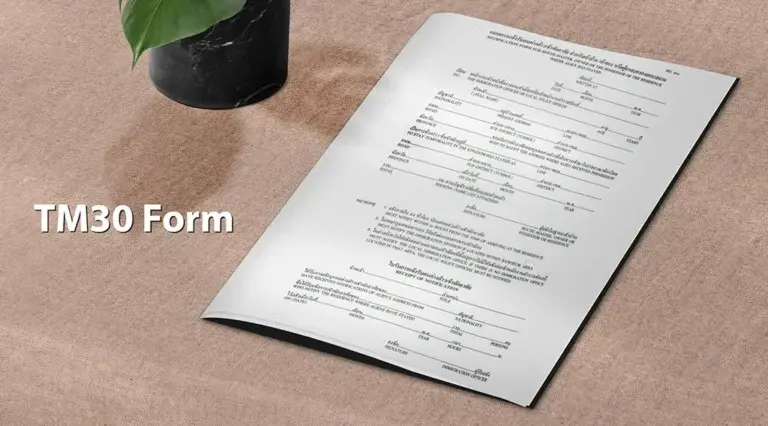
What is the TM30 form?
Form TM30 informs the Thai Immigration Bureau of your whereabouts. If you are a foreigner and not staying in a hotel, your landlord must report this within 24 hours.
It helps the government monitor residency and prevent visa overstays or illegal activities. It is also required for visa extensions, 90-day reports, and important appointments.
Who is responsible for submitting the TM30?
The landlord is required to submit the notification. This could be the owner of the condominium, the house, or the manager of your serviced apartment. Hotels submit this notification automatically. Even if you are not responsible for submitting form TM30, you must ensure that it has been done.
If the form is missing, the immigration authorities may refuse your visa extension or impose a fine. In some cases, you can submit it yourself if your landlord provides you with a signed power of attorney.
When must form TM30 be submitted?
Form TM30 is not a one-time thing that can be ignored. It must be resubmitted if your address changes. The immigration authorities use it to track the whereabouts of foreign nationals, and failure to update it can result in fines.
You will need a new TM30 if any of the following occur:
Even if you own a house in Thailand, you still need to file a TM30 declaration for yourself. This rule applies to all foreigners without exception.
How do I submit a TM30 claim form?
Your landlord or their representative must prepare the following:
Once the form is approved, you will receive a small receipt. This serves as your registration confirmation; therefore, keep a copy of it along with your passport.
What is the Thailand Digital Arrival Card (TDAC) and what is it needed for?
The TDAC is the digital entry card for Thailand and has replaced the old paper form TM6. From May 1, 2025, every foreign traveler must complete the TDAC before entering Thailand.
It helps immigration authorities screen arrivals and track your whereabouts, and also includes a brief health check. If you do not complete it before your arrival, you should expect delays at passport control.
Who needs to submit a TDAC registration?
If you are not a Thai citizen, you must complete the form. This applies to tourists, expats, and visa-free travelers. It doesn't matter whether you live in Thailand or are just visiting, nor does it matter how you arrived by plane, bus, or ferry. The TDAC form is required for every entry. If you are traveling as a family, each family member, including children, must submit their own form. However, the forms can be submitted together online.
When should you take out the TDAC?
You can submit your TDAC up to 72 hours before your scheduled arrival. If you arrive at the airport without it, you can still fill it out on your smartphone, but this may delay your check-in.
Ideally, you should do this at least one day before your flight. You don't need to print anything; you can simply save the confirmation on your phone.
What do you need to complete the TDAC?
Before you begin, obtain the following:
Filling out the form only takes a few minutes if you have everything prepared.
Is the TDAC the same as a visa?
No. The TDAC is not a visa. It does not authorize you to stay in Thailand. It is more of a preliminary check. You still need the appropriate visa or must be exempt from visa requirements to be allowed to enter the country.
Can you update or resubmit your TDAC?
Yes, but not everything. You can correct your address or travel dates, but not your name, passport number, or date of birth. If you make a mistake, you will need to submit a new TDAC application. There is no fee for resubmitting, but only the correct version will be accepted.
What is the difference between TDAC and TM30?
The TDAC form documents your entry into Thailand. The TM30 form documents your residency in the country. If you are only visiting Thailand and staying in a hotel, the TM30 form is not required. However, foreigners entering Thailand must complete the TDAC form.
Both documents are required for certain processes, such as extending your visa. Therefore, it is advisable to keep accurate records of both documents.
TM88 (Visa on Arrival)
Form TM88 can be used to apply for a visa on arrival, a short-term visa that is ideal for visitors who are not exempt from the visa requirement.
What is a visa on arrival and who can use it?
With a visa on arrival, travelers from certain countries can enter Thailand without applying for a visa in advance. This visa is exclusively for tourist purposes and is issued upon arrival at the airport or at the border.
To use this service, you need a passport from one of the approved countries. You also need to prove, with a connecting ticket, that your stay in the UK is only short.
What are the requirements for obtaining a visa on arrival?
To apply for a Visa on Arrival (VOA), you must prove that you are entering Thailand as a short-term tourist and meet the basic entry requirements. Immigration officials will check your documents at the border or airport.
You must meet the following conditions:
You don't need proof of vaccination or COVID insurance, but medical care isn't free. Consider taking out travel insurance in case you need treatment.
Where can I obtain a visa on arrival?
You can obtain this visa at most international airports and some land border crossings. These include Suvarnabhumi, Don Mueang, Chiang Mai, Phuket, and U-Tapao airports. You can also apply for it at border crossings such as Mae Sai and Nong Khai.
Visa counters are usually located near immigration control. Proceed to the visa-on-arrival queue, complete form TM88, and present the required documents.
How much does the visa cost upon arrival?
The fee is 2,000 baht. It must be paid in cash and in Thai baht. No refund will be issued if your application is rejected. It is recommended that you exchange money before your arrival. You may find a currency exchange counter at the airport, but this option is not available at many border crossings.
How long can one stay in the country with a visa upon arrival?
This visa allows you to stay in Thailand for up to 15 days. If you need more time, you must leave and re-enter Thailand or apply for a longer-term visa at a Thai embassy outside of Thailand. Converting this visa into another type of visa within Thailand is not possible. After the 15 days have expired, you must leave the country.
What is the TM87 form?
Form TM87 is the visa application form you need to apply for a Thai tourist visa at a Thai embassy or consulate when traveling from outside Thailand. Therefore, you must submit form TM87 before your trip, not upon arrival.
When should you use the TM87 form?
Use TM87 in your application for:
You must complete the form and submit it, along with your other documents, to a Thai embassy or consulate. This is often required if you are staying longer than 30 days or if you are not from a country whose citizens can travel visa-free.
What information do you need to complete the TM87?
Before completing form TM87, have all the required information ready. The form asks for accurate details, and errors may lead to delays or the rejection of your application.
Please carefully check that all information is correct. If the details do not match your flight or hotel booking, your visa application may be rejected.
Where must the TM87 form be submitted?
You must submit the form to the Thai embassy or consulate in your home country or place of residence. Some embassies accept online applications, while others require a printed form and an appointment. It's best to check the respective website beforehand to save time and avoid problems.
What is the purpose of the TM7 form?
Form TM7 is used to apply for a visa extension within Thailand. Most travelers use it to extend their tourist visa or 30-day visa exemption stamp. You fill out form TM7 if you wish to stay longer than your original entry permit allows. This must be done at a local immigration office before your current stay expires.
When should you submit your TM7?
You should submit your application at least 7 days before your visa or entry stamp expires. Late applications will not be accepted by the immigration authorities. If you miss the deadline, you will have to leave the country or pay a fine for overstaying your visa.
Some people line up in front of the immigration offices early in the morning. To avoid delays, you should bring all your documents with you in a single visit. Alternatively, you can hire a visa agent to handle this for you.
What information do you need for TM7?
You must provide personal information and answer questions about your reason for staying. You must also include the following:
Tourists usually request a 30-day extension, but people with other visas can also request longer stays depending on the visa type.
Where does the TM7 form need to be submitted?
You must contact a Thai immigration office in the province where you are staying. Some offices require an appointment, while others are open without one.
How long can you extend your stay at TM7?
If you enter on a tourist visa or visa waiver, your stay will be extended by 30 days with TM7. Some non-immigrant visas allow longer extensions, but usually require more paperwork and permits.
TM7 is for short-term stays. It does not change your visa type, nor does it grant you permanent residency.
What is a TM8 re-entry permit in Thailand?
With a re-entry permit, you can leave and re-enter Thailand without invalidating your current visa. If you have a single-entry visa and leave the country without this permit, your visa will become invalid.
Form TM8 is used to apply for this authorization. It does not extend your stay, but merely protects your existing visa from cancellation during your trip.
Who needs a Thai re-entry permit?
You need such a card if your visa only allows a single entry. This includes:
If you are unsure, check the note on your visa. If it says "entry visa", you must apply for this authorization before you leave the country.
For which visas is a re-entry permit not required?
You do not need a permit if you have a multiple-entry visa. This includes:
These visas allow you to enter and leave the country as often as you like during their validity period.
Where can I apply for a re-entry permit for Thailand with TM8?
You can apply to two places:
If you are submitting your application at the airport, you should arrive early. The process takes 15 to 30 minutes, depending on the number of people.
What documents do you need for the TM8 form?
If you need to fill out the TM8 form, you will need the following:
Some airports provide the TM8 form, but it is better to print and fill it out in advance.
How much does a re-entry permit for Thailand cost?
The fee depends on the chosen type:
Payment must be made in cash, and there are no refunds if your travel plans change.
What happens if you leave Thailand without a re-entry permit?
If you leave without a valid residence permit and your visa only allows a single entry, it will be cancelled. This means you will need to apply for a new visa to re-enter the country, unless you are exempt from visa requirements or receive a visa on arrival.
This mistake is common and costly. Therefore, always check your visa type before leaving Thailand.
What is the purpose of form TM47?
Form TM47 is used to update your address with the Thai immigration authorities every 90 days. This is required if you, as a foreigner, are staying in Thailand for more than 90 days, which is typically the case if you hold a long-term visa for Thailand, such as a retirement or work visa.
The report helps immigration authorities register long-term foreign residents. It does not change your visa or extend your stay; it simply confirms that you are still in the country and at the same address.
Who in Thailand is required to submit a 90-day report?
If you leave Thailand and re-enter, your 90-day period starts anew, but you must then reapply 90 days after your return.
When will you submit TM47?
You can submit the report 15 days before or up to 7 days after the due date. If you miss this deadline, you risk a fine of 2,000 baht. The immigration authorities may also delay other services if you fail to submit the report on time.
Mark the date in your calendar, as the Thai immigration authorities do not send reminders.
How do you fill out the TM47 form?
Online reporting is not available in all provinces and is considered extremely unreliable. In some areas, you may be required to submit the report in person.
What documents do you need for the Thai 90-day report?
If you are submitting the documents by post, please enclose a stamped return envelope worth 10 Baht so that the confirmation can be sent to you.
What happens if you don't create the 90-day report?
Failure to register will result in a fine of 2,000 baht. This fine can increase to 4,000 baht during random checks. Late registration may also delay your visa extension or other immigration procedures.
You do not need to reapply for your visa. However, the immigration authorities may request additional documents if they observe a pattern of late filing.
What is the purpose of form TM28?
Form TM28 is used when you move to a different province within Thailand. It informs the immigration authorities of your change of address. This form is for foreigners with a long-term visa or a visa extension.
This report helps to verify your immigration information with your actual place of residence. It also ensures that the appropriate immigration authority processes your future registrations and renewals.
Who needs to submit the TM28?
You must submit form TM28 if:
If you are only traveling within Thailand for a short time, you do not need to register. However, if you are moving permanently or changing your residence, registration is required.
When should you submit form TM28?
You must report your change of address within 24 hours of arriving at your new address. Otherwise, you risk a fine the next time you interact with immigration authorities. Immigration frequently checks this as part of the 90-day reporting process or during visa renewals. If a discrepancy is found, you will be asked for the reason.
How do I fill out form TM28?
You submit form TM28 in person to the immigration office in your new province. Please bring:
Some officials may waive the requirement for form TM28 if form TM30 has already been submitted. However, the rule remains in place, and in many provinces both forms are required.
What happens if you skip TM28?
If you fail to submit form TM28 and the immigration authorities find out, you may be fined. You may also experience problems with your 90-day report or visa extension. Some officials will not process your application until you have updated your information.
Professional support with Thai immigration
Thailand uses various entry forms to record where foreigners are staying, how long they intend to stay, and what type of visa they hold. Each form serves a specific purpose, and skipping a step can result in fines or delays. If you plan to stay for more than a few weeks, be sure to find out which forms are relevant to your situation. Submitting the forms correctly and on time will maintain the validity of your visa and help you avoid unnecessary problems.
Errors in these forms can lead to rejected extensions, canceled visas, or problems at immigration. Therefore, it is advisable to consult a lawyer familiar with the system. We will assist you in compiling the correct documents, submitting them correctly, and communicating with the immigration authorities should any difficulties arise. Contact Siam Legal to ensure everything runs smoothly and you avoid problems with Thai immigration.


Community
Comments 0
Start the conversation.