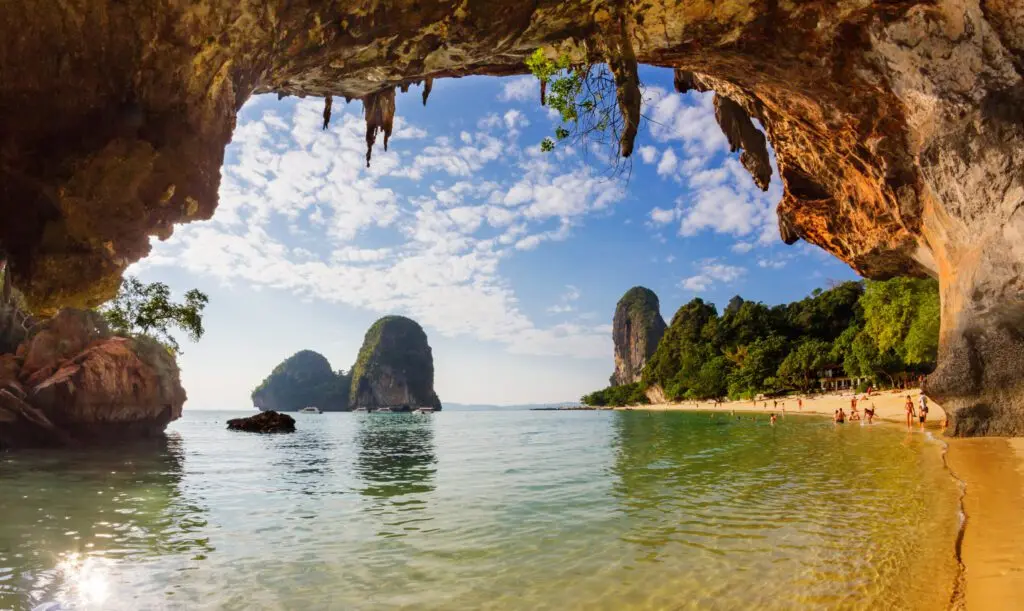
There are places on Earth so special that time seems to stand still. Those fortunate enough to experience them firsthand struggle to find the right words to describe them. It is a rare, untouched beauty that takes your breath away and enchants you instantly. The awe-inspiring inner peace that only nature can bestow. As you stand there in awe, letting your surroundings work their magic, you think: "It's like being in a movie."
Well, you're not alone in that view. Thailand's natural landscapes are diverse, off the beaten track, unique and vast, extending far beyond pristine beaches and mountain panoramas, many of which have been featured in major Hollywood blockbusters.
Now you too have the chance to experience these places up close. We present to you a travel guide to Thailand's legendary filming locations from Jurassic World: Rebirth. So sit back, read on, and plan your next vacation.
Trang Province
This province stretches for 123 miles along the Andaman Sea coast. Once a major trading center during the time of the East India Company's influence, Trang is also credited as the first place in Thailand where rubber trees were introduced. Today, the province is known for its limestone cliffs, lush jungles, and pristine beaches, and two of its best-kept secrets have even made it to the big screen.
Sunset Beach
Sunset Beach, named one of the world's ten best beaches for 2025 by Lonely Planet, remains accessible only on foot. Nestled on Kradan Island and part of a national park, there are no vehicles, shops, bars, restaurants, toilets, or shade here! The walk takes about 20 minutes along a dirt path through the humid jungle, so pack sunscreen, water, and a towel for a secluded beach adventure. Although the beach is only 100 meters long, its turquoise waters and white sand will recharge you faster than a Tesla Supercharger. Please remember to leave no trace and help keep the beach clean.
Emerald Cave
Discover the hidden lagoon on Koh Mook Island. Many are captivated by the Emerald Cave, accessible only by boat and renowned for its crystal-clear, emerald-green waters. But the Emerald Cave's true attraction is a secluded beach, completely enclosed by towering limestone cliffs and lush vegetation. You'll need to swim through a narrow, dark tunnel, as it's inaccessible by boat. Be sure to bring a waterproof flashlight, a life jacket, and a companion; the cave entrance can be intimidating. It's like discovering a hidden paradise lost to time.
The Emerald Cave is best explored with a local guide and is inaccessible at high tide. A visit is recommended around midday when the sun illuminates the water, giving the cave its characteristic emerald-green glow. Be sure to plan your visit in advance. The entire island is closed from June 1st to September 30th to allow the ecosystem to regenerate.
Phang Nga Province
Phang Nga province boasts a long history, with ancient cave paintings and burial sites indicating early human settlement. Maritime records dating back to the 7th century further attest to its significant role in trade between India, China, and the Malay world. The 200-year-old floating Muslim fishing village of Koh Panyee adds to this rich cultural diversity. Today, the region is best known for Phang Nga Bay, whose island hopping, diving, and diverse marine life have sparked a tourism boom.
James Bond Island
Better known by its nickname "James Bond Island," it made its screen debut in 1974. The previously unknown island of Ta Pu served as the villain's hideout in "The Man with the Golden Gun." Since its breakthrough, the island has become a popular destination for day-trippers from the surrounding area. It is only accessible by boat and is not suitable for overnight stays. The journey itself is an experience. Book a longtail boat and take your time. Rent a kayak and explore the surroundings and its unique limestone formations at your own pace.
A single, upright limestone formation, seemingly rising from the sea, is the island's main attraction. It leans slightly and appears to float, further enhancing its illusion and appeal. The Thai name "Ta Pu" means thorn or nail, and that's precisely what the rock formation resembles. Hence the name.
Be sure to enjoy the breathtaking scenery on the drive to the island – the best viewpoint is from the bay. An hour is plenty of time to explore the island. Discover the area on foot or breathe in the fresh sea air. You'll be amazed.
Krabi Province
Besides its pristine beaches on the Andaman Sea, Krabi is also a world-class destination for climbers. The imposing limestone mogotes – steep, isolated cliffs – attract climbers and cavers from all over the world. And of course, the province's picturesque islands are another highlight and an absolute must-see for every visitor.
Huay to the waterfall
This eleven-tiered waterfall never carries water. The lower tiers offer freshwater pools, ideal for a quick dip before the climb. The path can be slippery, so sturdy footwear is essential if you plan to explore all the tiers. Located in the lush evergreen forest of Khao Phanom Bencha National Park, Huay To Waterfall remains largely untouched by tourism. The area is clean and well-populated, and the nature trail is well-maintained. Bring water and insect repellent. The loop hike takes two to three hours, depending on your pace.
Another highlight, which can also be seen on the big screen, is the 120-year-old giant sompong tree. Just a short walk from the first level, it's definitely worth the detour.
Phra Nang Cave Beach
According to legend, Phra Nang Cave Beach is protected by a local female spirit. Phra Nang, meaning "Holy Lady," is the spirit of a fisherwoman who died while waiting for her husband to return from the sea. It is believed that her spirit took up residence in the cave, which has since been dedicated to her as a shrine. Located at the far end of the beach, fishermen regularly stop there to offer sacrifices and hope for calm seas and a bountiful catch. Please respect local customs and traditions during your visit. The local people hold the shrine in high esteem, and it should be treated with respect.
The beach itself, with its sun-drenched turquoise waters and soft, white sand, is breathtaking. From the peninsula, it's just a short walk to Railay Beach. The path winds through caves and jungle, where monkeys swing from vine to vine – even the journey there is a magical experience.
Khlong Rut and Khlong Nam Sai
These two interconnected freshwater canals are best explored by kayak. Start your tour in the popular resort town of Ao Nang and paddle to the provisional starting point of the Khlong Rut. There you will find kayak rentals, guides, and numerous shops where you can buy water and snacks.
A kayaking trip through the Klong Rut feels like a journey through a flooded jungle. The overhanging trees and dense vegetation seem eerily alive, surrounded by an aura of stillness. Paddle through rubber plantations and mangrove swamps until you reach the spring waters of the Khlong Nam Sai.
Have you ever heard of the "Blue Space Effect"? It describes the idea that being near water improves well-being and reduces stress. The natural, crystal-clear waters of Khlong Nam Sai offer far more than just an uplifting mood. The fresh spring water shimmers turquoise and is so clear that you can see friendly fish, a diverse array of aquatic plants, and the sandy bottom below. It's also the perfect place for swimming. There's nothing quite like floating in a crystal-clear jungle pool, surrounded by nature and tranquility. In some places, the water is so pure that you can see air bubbles rising from the bottom, as if the canal is breathing.
As a refreshing break from Krabi's beaches and the scorching sun, this inland adventure is the perfect short break.
*Please note that there is a small entry fee for all national parks in Thailand, which is usually between 200 and 400 Baht.




Community
Comments 0
Start the conversation.