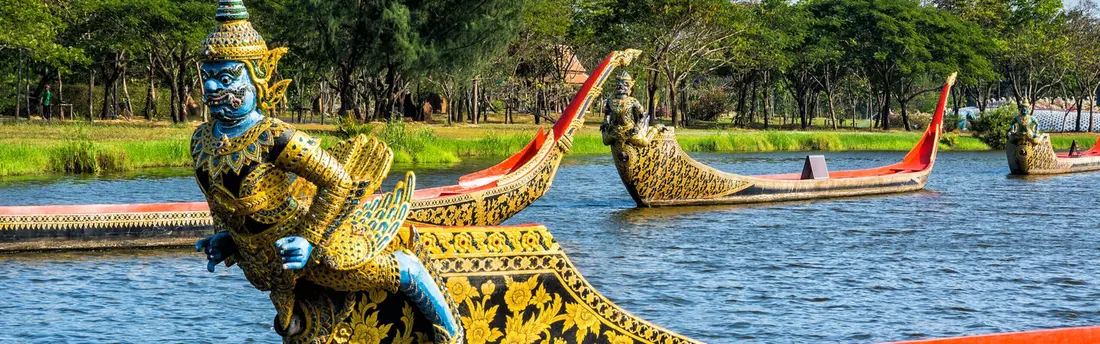
Bangkok, the gateway to Thailand, perfectly blends modern charm with cultural treasures. This guidebook, reflecting our extensive travel experience in Bangkok, is designed to help you plan your dream trip to Bangkok.
1. When is the best time to travel to Bangkok?
Since the weather is coolest and driest during this period, November to February is considered the best time to visit Bangkok. However, please note that even during this cooler time of year, average daytime temperatures in Bangkok, a tropical city, still exceed 30°C.
From March to May, sunny days continue to be common, but temperatures reach their peak with average daily highs of 35°C. It's best to plan your outdoor activities for the cooler early morning hours or evening during this period and ensure you stay well hydrated.
Since the heat keeps most travelers away, you may have the cultural attractions almost entirely to yourself and benefit from hotel and flight discounts. Furthermore, the Songkran festival in April offers a fantastic opportunity to participate in the impressive water fights that take place throughout the city.
With the onset of the rainy season from late May to October, temperatures drop slightly. September and October are the wettest months, with frequent afternoon thunderstorms. Despite the rain, outdoor exploration is still possible with flexible scheduling.
Find out about the worst time to travel and the monthly weather in Bangkok under “The best time to travel to Bangkok”.
2. How many days should one spend in Bangkok?
If Bangkok is just one stop on your Thailand trip, three days is the perfect length of stay. You can see the main sights without feeling rushed.
Typically, first-time visitors spend a day after their arrival exploring Bangkok's famous sights, including the Grand Palace, Wat Pho, and Wat Arun. The following day, they immerse themselves in Bangkok's vibrant life, visiting typical markets such as the railway market and the floating markets.
Five days are ideal for a more comprehensive exploration of Bangkok. Besides the absolute highlights, you can also discover hidden gems, such as a cooking class in a local village or a bike tour through Bang Krachao. Day trips to nearby cities are also a great way to see more than just Bangkok. The ancient city of Ayutthaya, with its UNESCO World Heritage sites, is a particularly popular destination.
3. Plan your Bangkok itinerary
We have carefully compiled the following three itineraries as suggestions for the most popular travel durations.
1) A day program in Bangkok
If you only have one day in Bangkok, it's generally recommended to focus on the city's most famous sights: the Grand Palace, Wat Pho, Wat Arun, and Chinatown. Since these landmarks are located close to each other, you can easily visit them in one day.
Marvel at the majestic palace to learn about Thai royal life, see the famous 46-meter-long reclining Buddha at Wat Pho, and admire the exquisite decoration of Bangkok's most beautiful temple – Wat Arun.
If you would like to experience medieval Bangkok in a more tranquil atmosphere, you should consider the Museum Siam or the Bangkok National Museum.
To round off the day, an evening culinary tour through the lively Chinatown is recommended.
2) A 3-day itinerary for Bangkok
If you have 3 days, we strongly recommend that after exploring Bangkok's top sights, you immerse yourself in the exotic local life.
For an unforgettable experience, a trip to the outskirts of Bangkok is highly recommended to visit the Mahachai Market, the Maeklong Railway Market, and the Damnoen Saduak Floating Market. Each market has its own unique charm, and all are conveniently located along the same route.
At the Mahachai market you can buy both fresh and dried seafood, at the Maeklong railway market, a market directly on the tracks, you can enjoy a unique experience, and you can explore the canals of the Damnoen Saduak floating market by small boat.
Here is a summary of the itinerary:
You can find more details in our article: 3 days in Bangkok.
3) A 5-day Bangkok itinerary
Compared to a 3-day trip, a 5-day trip allows you to explore Thai culture more intensively and experience the typical relaxation in Bangkok.
If you have a little more time in Bangkok, we recommend a day trip to nearby Ayutthaya to explore this fascinating historical site (the capital of Siam from 1350 to 1767) beyond the modern metropolis. On your last day in Bangkok, relax with a traditional Thai massage or spa treatment and a cooking class.
Read more about the best day trip destinations near Bangkok.
4. Set your budget.
The daily cost of living in Bangkok is very low, especially compared to major Western capital cities.
Bangkok offers a wide range of accommodation options. In Riverside and Sukhumvit, you can stay in a luxury hotel for US$200–500 per night, while in the city center, you can find mid-range hotels for US$100–150 per night. Budget travelers can find hostels starting at US$20 per night in Khao San Road and the Old City. During the off-season (March to June and September to October), discounts of up to 30% are often available.
Entrance tickets for attractions generally cost less than US$10. The Grand Palace, for example, is the most expensive main attraction at US$9.90. Those wishing to see cultural performances or enjoy a spa treatment should expect to pay higher prices – at least US$50.
Food is super cheap: street food costs about 1-2 US dollars, and you can eat in an air-conditioned restaurant for about 10-15 US dollars per person.
If transportation is your priority and you don't mind a little effort, public transport like the subway and canal boats is really affordable at around $10 per day. However, if you prefer the comfort of private transfers or taxis, you should expect to pay around $30–$50 per day.
For a comfortable trip to Bangkok, you should therefore expect to spend around US$150–200 per person per day. Further pricing information can be found in our sample Bangkok tour: 5-day Bangkok round trip.
5. Decide where you want to stay in Bangkok.
For greater comfort and convenience, we generally recommend a stay in the following areas: Riverside, Siam or Sukhumvit.
For a luxurious and romantic stay, the Riverside district is highly recommended. Here you can relax and enjoy the magnificent views of the Chao Phraya River. Furthermore, top attractions such as the Grand Palace and Wat Arun are easily accessible.
Siam Square/Siam is ideal for families. This district boasts large shopping malls like Siam Paragon and CentralWorld, as well as a wide variety of restaurants, from street food to international cuisine. The subway (MRT) and Skytrain (BTS) provide quick and convenient access to all areas.
Sukhumvit is the ideal place for those seeking Western comfort and modern amenities. This vibrant district boasts trendy rooftop bars, upscale restaurants, and luxurious spas. Thanks to its connection to the BTS Skytrain, exploring the city is a breeze.
If you're looking for budget-friendly hotels, consider Khao San Road and the Old City, where historical landmarks like the Grand Palace are located. However, heavy traffic often makes getting around difficult.
Hotel recommendations for the individual areas can be found under "Accommodation in Bangkok".
6. Book your flights to Bangkok
Bangkok has two main airports: Suvarnabhumi and Don Mueang.
Suvarnabhumi Airport (BKK) is the city's main international hub, offering a wide range of flights and first-class service. The journey to the city center takes about an hour.
Don Mueang International Airport (DMK), on the other hand, focuses more on domestic flights and some regional international routes, which are mainly served by low-cost airlines.
The two airports are about an hour's drive apart. Therefore, if you have a layover, please allow at least 3 hours for your journey.
Here you will find detailed information on how to get to Bangkok.
7. Consider how you can get around in Bangkok.
As in most cities, private transfers are the most convenient and affordable, albeit most expensive, mode of transport in Bangkok.
Taxis offer similar comfort but require a bit more preparation. Since few taxi drivers speak English, it's best to write down your destinations beforehand.
Due to frequent traffic jams, the BTS Skytrain, the MRT subway and the boats on the Chao Phraya River are better and cheaper alternatives for getting around the city more efficiently during rush hour.
However, they might be overcrowded and offer limited seating during peak hours. Furthermore, you would have to travel certain distances to reach your destinations and plan your routes yourself.
Those wanting to experience the authentic Bangkok can enjoy a fun and exciting way to get around in a tuk-tuk. These three-wheeled vehicles are a symbol of the city, but beware of the prices, which can sometimes be exorbitant for tourists.
8. Plan where (and what) you want to eat in Bangkok.
A trip to Bangkok wouldn't be complete without a visit to Chinatown for all street food lovers. On the main street, Yaowarat Road, you'll find fresh snacks and drinks everywhere – from typical Thai desserts like mango sticky rice and coconut ice cream to deep-fried insect skewers.
Culinary adventures in Michelin-starred restaurants are also possible there, for example Lim Lao Ngow for fish ball noodles, Patonggo Savoey for dough sticks and Khao Gaeng Jek Pui for Thai curry.
For an unforgettable culinary experience, reserve a table at one of the Michelin-starred restaurants near Wat Pho Pier. From there, you can enjoy a breathtaking sunset and stunning views of Wat Arun at night. Rongros, Sala Rattanakosin, and Chakrabongse Dining are known for their excellent Thai cuisine and fantastic views.
Those who prefer dinner on a rooftop terrace overlooking the illuminated city should visit Silom or Sukhumvit and spend an unforgettable evening above the city lights. The rooftop restaurants generally offer Western cuisine.
9. Insider tips for first-time visitors to Bangkok
How can I pay in Bangkok – cash or by card/app?
Cash in Thai Baht is widely accepted in Bangkok, especially for street food and in markets, but card payments/cashless payments are becoming increasingly common in shopping malls and larger businesses.
What should I pack for my trip to Bangkok?
Pack light, breathable clothing for the heat, as well as a light jacket for cooler evenings and air-conditioned rooms.
Don't forget comfortable shoes for hiking and exploring. Insect repellent is essential if you're going on a jungle or mountain tour.
Is it customary to tip in Bangkok?
Tipping is not mandatory in Bangkok, but it is appreciated. In restaurants, it is customary to round up the bill or leave some small change. In more upscale restaurants, a 10% tip is typical.
What should I wear to temples in Bangkok?
When visiting temples or palaces, you should dress modestly and cover your shoulders and knees. This is a sign of respect, and some temples provide clothing if needed.
Wearing sandals or flip-flops is ideal on temple days, as you have to take off your shoes before entering the halls.
Can I buy a SIM card at the airport, and which one is the best?
You can easily purchase a tourist SIM card from AIS, TrueMove H, DTAC, or other providers at the airport or in 7-Eleven stores in the city. Expect to pay around 100–300 baht (approximately US$3–10) for a basic prepaid SIM card. Your phone must be unlocked (no network restrictions) to use a prepaid SIM card.
Do I need a visa to enter Bangkok?
Citizens of many countries, including the USA, Australia, Canada, and the UK, do not need a tourist visa to enter Bangkok. Most travelers can stay in Bangkok for up to 30 days visa-free.




Community
Comments 0
Start the conversation.