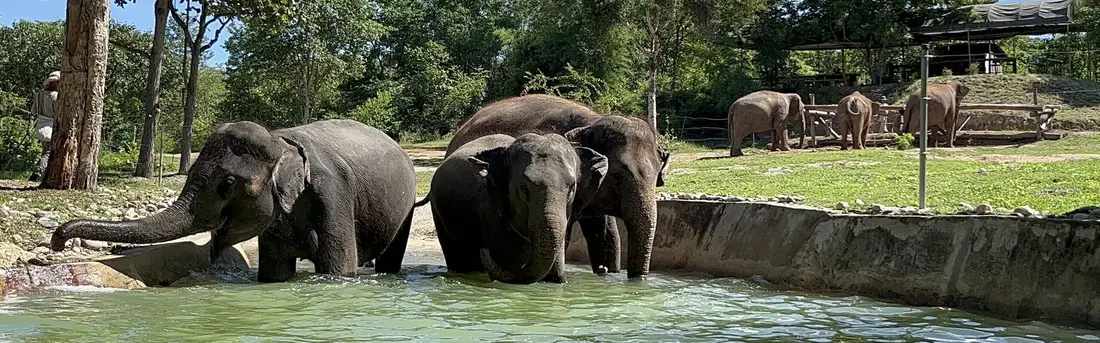
In Krabi, an elephant sanctuary is a great place to experience animal encounters in addition to the enjoyable beach activities.
With over 20 elephant camps in Krabi, how do you choose an ethically sound elephant sanctuary to ensure that the money truly benefits the elephants? Which is the most ethical sanctuary in Krabi?
Scroll down to discover insider tips based on customer feedback and our on-site visits.
Is Krabi a good place to visit ethically managed elephant sanctuaries in southern Thailand?
Yes, Krabi is a great place to visit an elephant sanctuary, even if you are looking for the strictest sanctuary where touching is prohibited.
On the southern islands of Thailand, Krabi is the only place that hosts a sanctuary entirely focused on preventing interventions in the elephant population.
Most sanctuaries in Krabi offer short elephant encounters, such as two-hour sessions or half-day tours. Compared to places like Koh Samui and Phuket, Krabi is also more affordable for similar elephant experiences.
How do you choose an ethically sound elephant sanctuary in Krabi?
In Krabi, there are elephant camps that offer horseback riding, which we strongly advise against. Our research on local elephant sanctuaries has revealed a simple trick to identify these riding camps: avoid camps that include "Camp" or "Park" in their name.
When selecting a truly elephant-friendly establishment, we first follow one basic rule: no elephant riding, no shows, and no use of chains or elephant hooks.
Next, choose camps with limited visitor numbers. Smaller groups mean less stress for the elephants and a more personal experience for you.
Finally, one should look for sanctuaries that offer retired and rescued elephants a large natural environment where they can play and roam freely.
What are the two best ethically sound elephant sanctuaries in Krabi?
After reviewing over ten ethical elephant sanctuaries in Krabi, we have selected the following two for you, which turn out to be the most ethical options.
1. Follow the Giant Elephant Sanctuary signs: Highly ethical, no touching
Anyone looking for the most ethical option in Krabi should visit the Following Giant animal sanctuary. It is one of the few sanctuaries in Thailand that meets the highest animal welfare standards of World Animal Protection: no touching, no feeding, and no bathing.
Everything for the well-being of the elephants: jungle camps and limited visitor numbers
According to the strict "hands-off" philosophy, one was only allowed to observe the elephants from an undisturbed distance and walk alongside them.
Following Giants operates two camps in Krabi: Ao Nang, Krabi (5 elephants, 80 hectares) and Koh Lanta (6 elephants, 45 hectares). Both camps offer the elephants spacious, jungle-like enclosures where they can play freely, roam, and bathe (in natural rivers or pools).
Both camps have participant limits to ensure the well-being of the elephants. The Krabi camp can accommodate a maximum of 12 people, and the Lanta camp up to 10 participants.
What do they offer as part of an elephant experience?
Following Giants offers various programs of different durations: jungle hikes, half-day tours, full-day tours and a one-week volunteer program (Koh Lanta only).
Jungle trek with elephants (basis of all programs)
For all programs that take place within one day, the jungle trek is the only opportunity to see and observe elephants: 90 minutes in Krabi and 2 hours in Koh Lanta.
They would watch an educational video about the history of the reserve, accompany elephants on a hike through the hilly jungle, and learn more about their natural behavior from a guide.
For those seeking unforgettable moments with elephants, Krabi Camp is the perfect destination. They offer picturesque elephant walks at sunrise or sunset.
Insider tip: Good physical fitness is required, as you have to walk up and down on wet and dirty streets.
Other experiences beyond the jungle hike
Starting with a jungle hike, a half-day tour involves making seed balls and launching them to plant trees for elephants. (This is the highlight of our visit! Launching the seed balls with catapults reminds us of our childhood and is also a great way to release pent-up frustration.)
On a full-day tour, you would book additional programs: elephant dung paper production and outdoor adventures – kayaking in Krabi or a hike to the Tiger Caves waterfalls in Koh Lanta.
Those who want to experience elephants up close can participate in the volunteer program at Koh Lanta Camp. There, volunteers care for the elephants daily, help with visitor services, and assist in setting up the campsite.
Insider tip: The short jungle hikes and half-day tours are especially popular, particularly at Ao Nang Camp. Therefore, book at least one month in advance.
2. Krabi Elephant Sanctuary, Thailand: Feeding and bathing elephants (limited number of visitors)
Besides Following Giants, other ethically managed elephant sanctuaries in Krabi also typically offer experiences such as feeding, walking, and bathing with elephants. Among these ethically managed sanctuaries, we highly recommend the Elephant Sanctuary Krabi Thailand.
They offer half-day tours twice a day and limit group sizes to a maximum of 12 people. This small group size helps ensure a calm environment for the elephants, so they feel comfortable and are not disturbed by large crowds.
On a half-day tour you would help make protein balls, feed the elephants, bathe them in the mud, and enjoy tea or coffee before departure.
Instead of just observing them, you would interact with them respectfully. In their palm-fringed camp, the elephants can roam freely – without chains, barriers, or mounts – and bathe and eat as they please.
(During our visit, we were able to take photos with elephants during the photo shoots. The mahout only stopped us if he noticed any signs of stress in an elephant. Throughout the program, the staff also helped us with the photography and then sent us the pictures free of charge via email. This allowed us to fully concentrate on the experience.)
Insider tip: Don't confuse this elephant sanctuary with the Krabi Elephant Sanctuary, which was closed during the COVID-19 pandemic.
How much does a visit to the elephant sanctuary in Krabi cost?
In Krabi, short, two-hour activities such as elephant feeding or walks with them typically cost between 1000 and 1700 THB (30 to 51 USD) per person. Hotel transfers are likely not included.
Prices for the most popular half-day programs typically range from 2,300 to 2,900 THB (68 to 86 USD) per person, while full-day experiences cost around 4,000 THB/119 USD. These fees generally include hotel transfers, guided tours, and time spent with the elephants.
Even though these prices are higher than in riding camps or circuses, your money goes directly towards the care and rescue of these animals, which makes a big difference.
When is the best time to travel to Krabi?
Krabi enjoys a constant temperature of around 30°C throughout the year. However, the amount of rainfall varies.
For guaranteed sunny days, the dry season (November to April) is the best time to travel to Krabi. During this time, you can optimally enjoy outdoor activities such as water sports and visits to elephant sanctuaries.
During the hottest months (March to April), it is advisable to plan outdoor activities for the cooler early morning or late afternoon hours. Elephants may also be less active at midday.
During the rainy season (May to October), it is expected to rain every two days. The showers are usually short, lasting about 30 minutes to an hour. Therefore, apart from beach activities, most other activities are hardly affected. In fact, a visit during this time can be very pleasant, as it is quieter.
Where should you stay in Krabi?
Most ethically managed elephant sanctuaries in Krabi are located near Ao Nang. Therefore, it is recommended to stay at nearby beaches such as Klong Muang Beach, Ao Nang Beach, and Railay Beach.
The hotels in these areas are only about a 15-minute drive from most elephant sanctuaries, with the furthest sanctuary, Following Giant, being just under half an hour away, making a visit very easy.
How do you get around in the elephant sanctuary in Krabi?
Most elephant sanctuaries are easily accessible within a 30-minute drive from popular hotel areas such as Krabi Town, Klong Muang Beach, Ao Nang Beach and Railay Beach.
For half-day and full-day activities, most elephant sanctuaries provide hotel transfers via group transport. However, if you opt for a shorter, two-hour activity, you will need to arrange your own travel to and from the sanctuary.
You can easily book the most convenient private transfer through a reliable provider or a taxi. Since taxis in Krabi don't have meters, it's essential to negotiate the fare with the driver beforehand to avoid unpleasant surprises.
You often read in blogs that you should rent a motorcycle. Honestly, though, that's not the best idea for most people. Traffic can be very heavy, especially from November to April, and the winding mountain roads to some elephant sanctuaries can be treacherous for inexperienced riders.




Community
Comments 0
Start the conversation.