Koh Klang is a tranquil Muslim enclave, far removed from the hustle and bustle of nearby Krabi. Here you can experience the locals more intensely and learn more about their unique culture.
Just a short boat ride from the popular resort town of Krabi lies the little-known island of Koh Klang, a tranquil little Muslim enclave. Although only 5 minutes by longtail boat from Krabi Town, it feels a million miles away – a journey back in time to a peaceful rural community where locals grow organic rice and live off the bounty of the sea.
After our short ferry ride, we are picked up by colorful tuk-tuks and taken to our accommodation, an eco-resort called Islanda Hideaway Resort. Thatched villas overlook an infinity pool and, beyond it, a spectacular sunset: towering limestone islands stand out against a pinkish-purple sky.
The next morning, we take a tour along the shore to learn how to dig for shells at low tide. Afterwards, we go out to sea in a longboat with a local fisherman to see his fish traps. He shows us how they use some clever techniques to catch fish overnight when the tide comes in.
It requires patience (as with any fishing trip) as we scour the muddy sandbanks for the telltale bubbles in the mud, collect the mud, and pick out the shellfish. They don't look particularly appetizing, but I'm assured they taste delicious with some garlic and chili.
The fish traps are located further out in the estuary; they consist of a series of triangular funnels that taper downwards and finally catch their prey at low tide. Our guide lifts the net, revealing a few mud crabs, crayfish, and some shrimp.
The caught seafood is transported upstream to one of the floating fish restaurants, where a true seafood feast awaits us. The fish and crabs caught in the traps are kept in floating tanks for guests to choose from – and some appear to have reached an impressive size.
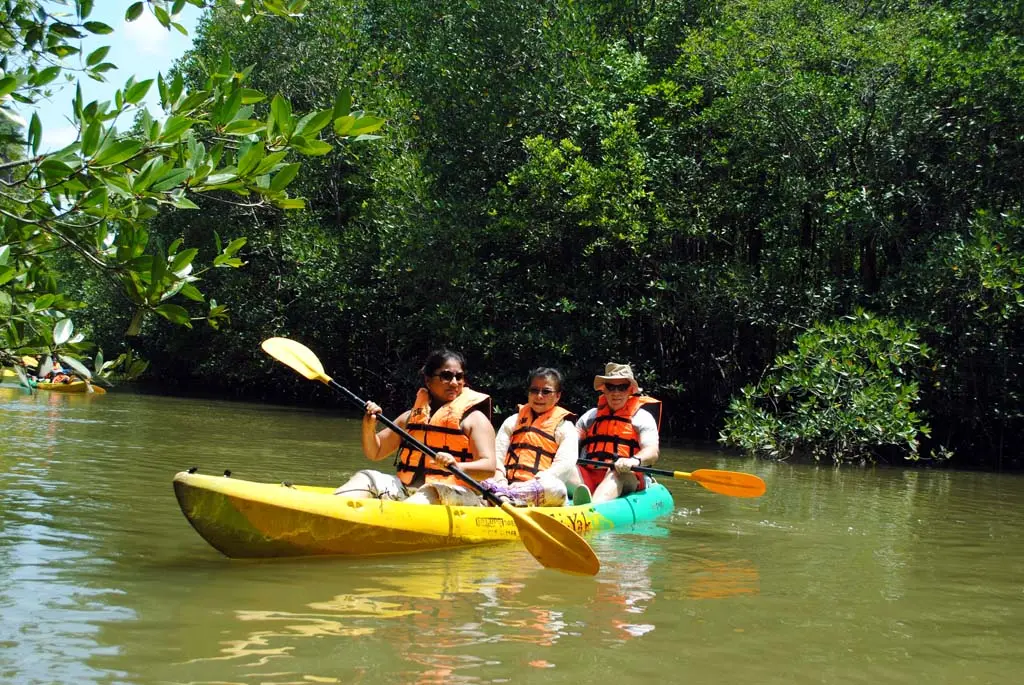
From here we continue upstream, where we transfer to kayaks and paddle through the dense mangrove forests. We make our way through a labyrinth of mangrove roots and steep limestone islands, following our guide to a sandy bank for a break.
Towering limestone cliffs, riddled with caves, surround the beach. A ladder leads up to one of the larger caves, which, we are told, was once used by Japanese troops as a hiding place from the Allies during the war. The small entrance opens into a vast grotto where tall stalagmites reach down to their corresponding stalactites.
After exploring the nooks and crannies of the cave, we return to the beach to refuel with grilled coconut paste and sugarcane before returning to our accommodation for the night.
The next day we receive another lesson in local agriculture by being guided through the rice fields and then shown how to grind the organic red rice grown here on the island, before being taken back to the village for an art lesson.
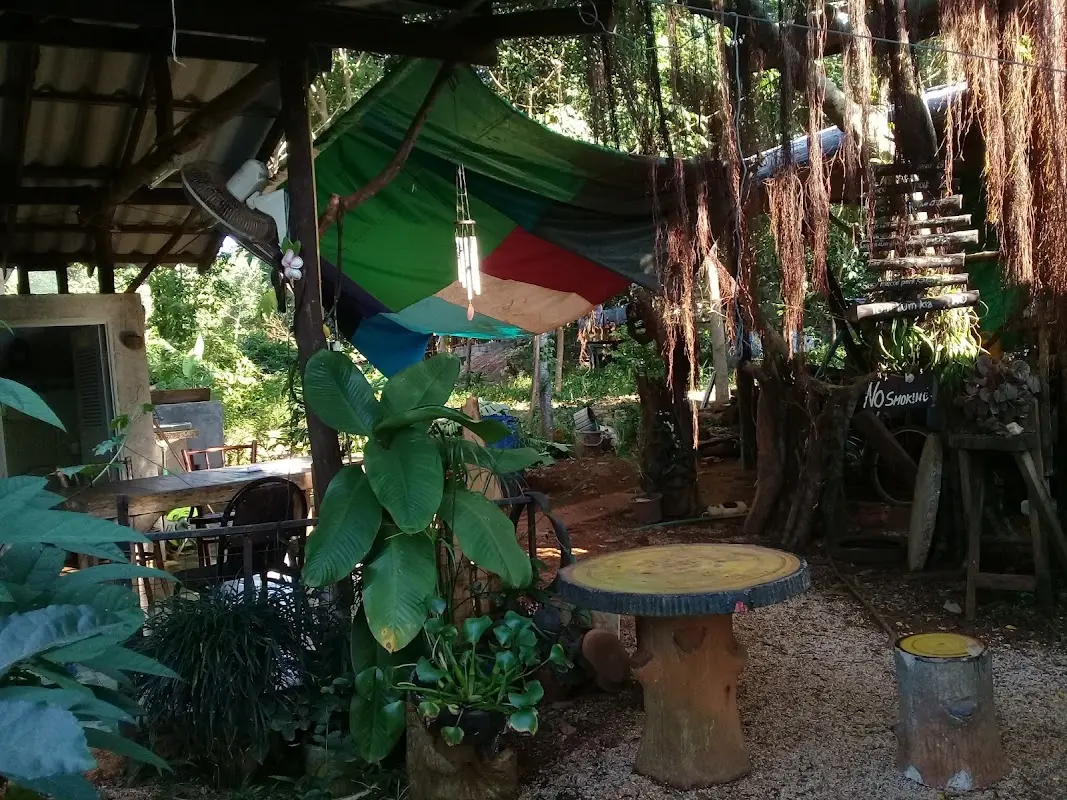
The locals create beautiful batik fabrics here, and we're invited to join in and create some small works of art ourselves. In the shade of a giant fig tree, we discover our inner Picasso and paint within the wax lines before returning to the resort for the evening – our last chance to enjoy the sunset.
Community
Comments 0
Start the conversation.