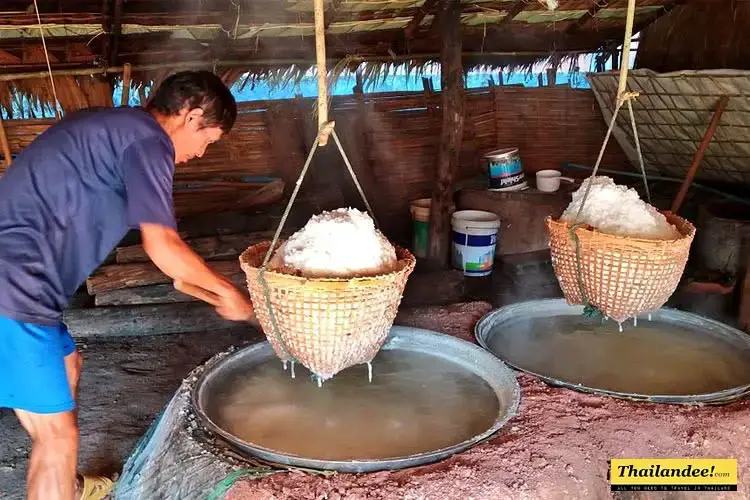
Nestled in the mountains of Nan Province lies Bo Kluea, a village whose name literally means "salt springs," a reference to its natural saltwater sources, despite being located deep in the mountains and hundreds of kilometers from the sea. These ancient salt springs and the area's spectacular mountain scenery have made Bo Kluea famous throughout Thailand. Here, salt is still harvested from natural underground brine using traditional methods. Villagers draw the salty water from the springs and boil it for several hours in large cauldrons until white salt crystals form. This ancient technique has been passed down for generations. Salt production in Bo Kluea dates back over 1,000 years. At a time when salt was a strategic resource and essential for preserving food, the area became an important trading center. Salt from Bo Kluea was traded throughout the ancient Lanna Kingdom and as far afield as Laos and southern China. Control of these springs was even a matter of political and military importance. Although the salt springs are the main attraction, the village itself has retained an authentic atmosphere. Bo Kluea is primarily surrounded by mountains and offers breathtaking scenery, especially when the rice paddies are lush and green. Numerous guesthouses and private accommodations provide an exceptional natural setting, making it particularly popular with Thai tourists. They visit in large numbers on weekends and long holiday weekends, especially around New Year's. PS: I've included the coordinates of the small museum, but there are a few more salt springs along the same road, just before it.
The salt springs open to visitors are accessible daily from 7:00 am to 6:00 pm.
There is a local bus service between Pua and Bo Kluea (it used to be a songthaew). The journey is quite slow on the winding mountain roads and not ideal if you want to fully appreciate the scenery along this route, which is considered one of the most beautiful mountain roads in Thailand. Having your own vehicle is therefore the best option. The roads between Pua and Bo Kluea are among the most scenic in the country and offer numerous spectacular viewpoints. There is also a local bus service between Nan and Pua. The challenge is coordinating the two services so that you don't have to wait too long in Pua. However, I recommend spending at least one night in Pua and staying in one of the guesthouses nestled among the rice paddies. It's one of my absolute favorite places in Northern Thailand!
How to get there
How do you get to Bo Kluea? There's a local bus service between Pua and Bo Kluea (it used to be a songthaew). The journey is quite slow on the winding mountain roads and not ideal if you want to fully appreciate the scenery along this route, which is considered one of the most beautiful mountain roads in Thailand. Having your own vehicle is therefore the best option. The roads between Pua and Bo Kluea are among the most scenic in the country and offer numerous spectacular viewpoints. There's also a local bus service between Nan and Pua. The challenge is coordinating the two services so you don't have to wait too long in Pua. However, I recommend spending at least one night in Pua and staying in one of the guesthouses nestled among the rice paddies. It's one of my absolute favorite places in Northern Thailand!




Community
Comments 0
Start the conversation.