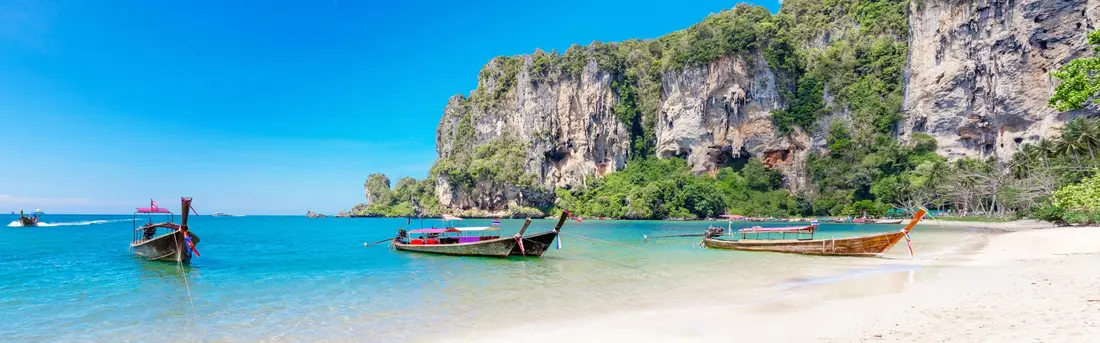
The best time to visit Krabi is from November to March, when the weather is optimal – clear skies, low humidity, and pleasant temperatures. It's the perfect time to soak up the sun and discover Krabi's natural beauty.
However, this is also the peak tourist season in Krabi, which means higher prices for accommodation and flights. Popular attractions are often crowded, so it's advisable to book accommodation and activities well in advance.
From late March to early June, Krabi experiences its hot season, with peak temperatures in April and May. Although the heat can be intense, there are fewer tourists during this time. This means more space at popular attractions and cheaper deals on accommodation and flights. The long, sunny days still offer plenty of opportunities for outdoor activities.
The rainy season in Krabi typically lasts from May to October, with the heaviest rainfall usually occurring between September and October. If you prefer beach holidays and water sports, it's advisable to avoid these two months, as boat trips can be delayed or cancelled due to extreme weather conditions.
What is it like to travel in Krabi during the three seasons?
Krabi has three distinct travel seasons: the dry season (peak season), the hot season, and the rainy season.
Each season in Krabi offers a different travel experience. Find out what to expect and choose the best time for your trip.
November to early March: The best weather for outdoor activities
Weather: From November to early March, Krabi enjoys its most pleasant weather – clear skies, cooler nights, and low humidity. Daytime temperatures typically range between 25 and 32 °C, making it ideal for spending extended periods outdoors.
What to expect: The cooler temperatures and calm seas offer the perfect time to experience Krabi's most beautiful outdoor adventures. Try rock climbing on the limestone cliffs of Railay – it's less hot here and the rocks offer better grip – or hike under a brilliant blue sky through the lush rainforest surrounding Emerald Pool. If you enjoy snorkeling, you'll find the waters around the Four Islands and Phi Phi exceptionally clear – ideal for discovering vibrant coral and marine life.
In December and January, Krabi is filled with festive cheer. Along Ao Nang Beach, the beach bars are aglow with Christmas lights, and on New Year's Eve, people gather for lively countdown parties and fireworks displays. It's one of the most exciting times to experience Krabi's nightlife and the festive atmosphere by the sea.
Tips and challenges: As the peak season attracts many visitors, flights and hotel rooms are often booked up quickly, especially around Christmas and New Year's. To secure the best deals and avoid last-minute stress, it is advisable to book early.
To avoid the crowds, we recommend a private tour where you can customize your itinerary. For example, you can explore the less crowded Four Islands by private longtail boat – away from the large, packed boats that usually go to Phi Phi. This allows you to snorkel in peace and discover the breathtaking coastlines at your own pace.
Those seeking a quieter experience and wishing to escape the crowded beaches like Ao Nang should visit lesser-known gems such as Tubkaek or Klong Muang. Both beaches offer breathtaking cliff views. Tubkaek is a tranquil beach, renowned for its crystal-clear waters, while Klong Muang, with its relaxed atmosphere, is ideal for water sports and stunning sunsets.
April to June: Peak travel season with great travel deals
Weather: This is the hot season in Krabi, with April and May being the hottest months. Daytime temperatures can exceed 36°C, and humidity increases, especially from May onwards, accompanied by occasional showers. The heat is most intense at midday, so planning accordingly is advisable.
What to expect: Due to the heat, fewer tourists visit Krabi at this time. Therefore, hotel prices drop by 30–40% compared to the high season, and the attractions are significantly less crowded.
If you don't mind the high temperatures, now is a great time to explore Krabi in a more peaceful setting. Popular spots like the Emerald Pool offer more space to relax and swim. The hike to the Tiger Cave Temple is quieter with fewer people around. And despite the heat, activities like snorkeling and island hopping to the Four Islands remain enjoyable thanks to long sunny days and calm seas.
Furthermore, in April you can experience Thailand's famous water fight at the Songkran Festival (April 13–15). Join the festivities at the biggest event on Ao Nang beach or in Krabi Town.
Here's how to beat the heat during the hot season: Plan your outdoor activities for early morning or late afternoon to avoid the worst of the heat. At midday, you can cool off in your resort's pool or enjoy a Thai spa treatment.
Those seeking a shady beach should visit the west-facing Tubkaek Beach. It's ideal for relaxing under palm trees in the morning and then enjoying the breathtaking sunset. Phra Nang Cave Beach also offers pleasant coolness thanks to its famous cave and provides breezy shade until the afternoon.
May to October: Off-season with lush tropical scenery
Weather: From May to August, Krabi experiences short but heavy showers, mostly in the late afternoon or evening, which typically last one to two hours. Mornings are often clear and sunny, offering good weather for outdoor activities.
September and October are the rainiest months, although the rain rarely lasts all day. The rain contributes to a slight cooling of temperatures, which then range between 25 and 31 °C.
What to expect: With fewer tourists around, Krabi has a calm and relaxed atmosphere. The rain makes the landscape glow in lush green and makes natural attractions like the Emerald Pool and Than Bok Khorani National Park appear particularly verdant.
This is also an ideal time to snag bargains at luxury resorts, as accommodation prices drop noticeably during the off-season.
While afternoon thunderstorms can occasionally disrupt outdoor activities, mornings are often dry and sunny – ideal for a relaxing day at the beach or island hopping. Land-based activities, such as hiking near the Emerald Pool or rock climbing, are generally less affected, as the rain usually passes quickly.
Please note that September and October are the months with the heaviest rainfall, which can sometimes lead to delays or cancellations of boat tours and island excursions. If you plan to explore the outlying islands, booking a private tour offers more flexibility to adjust your schedule to the weather.
How to spend your rainy days: Rainy days in Krabi don't have to be boring. You can also enjoy many enriching experiences indoors.
To experience local life, explore the vibrant market halls of Krabi Town, such as Krabi Walking Street, known for its handicrafts and delicious snacks. If you're interested in Thai culture, visit Wat Kaew Korawaram or spend some time in the tranquility of other temples in the area.
Want to learn more? Visit the Andaman Cultural Study Center and delve deeper into the region's history. Or take part in a hands-on Thai cooking class to take home new flavors and stories.
And when it's time to relax, treat yourself to a traditional Thai massage or a spa visit – the perfect way to recover during a tropical downpour.
Krabi Weather Monthly Guide
Here you will find a short monthly guide to Krabi, which should help you choose the best month to travel.
Note: Visitor numbers and best times to visit are rated from * (lowest) to ***** (highest/best). Prices are rated from $ (low season) to $$$$$ (high season).
Popular Krabi tours
We would be happy to put together your ideal Krabi trip, tailored to your group size, schedule, budget, interests, preferences, and other wishes. Contact us.
Or you can use one of our popular travel routes as a starting point:




Community
Comments 0
Start the conversation.