With only 3 days in Bangkok, how can you make the most of your time and create a dream itinerary that matches your interests?
Bangkok is one of our most established travel destinations in Asia. We have years of experience in the city and know both the famous sights and hidden gems. Thanks to our expertise, we can create unique, tailor-made itineraries that offer you an authentic and unforgettable Bangkok experience.
Are 3 days enough for a visit to Bangkok?
Yes, three days are perfectly sufficient to experience Bangkok intensely and enrichingly. Normally, you can spend two days exploring the city's main attractions, such as the Grand Palace, Wat Arun, and the vibrant street markets.
On the third day, a day trip to the surrounding area is a great way to get to know Thailand even better. Just an hour and a half's drive from Bangkok lies Ayutthaya, which, with its tranquil, historic sites and UNESCO World Heritage sites, is an excellent choice.
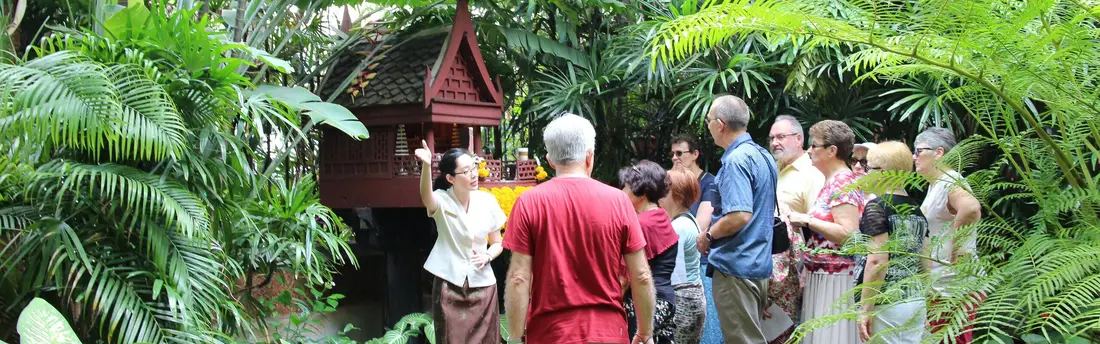
Alternatively, you can discover other hidden gems of Bangkok, such as the Jim Thompson House. Relax with a spa visit or massage, or take part in a cooking class to experience local life.
A recommended 3-day itinerary for first-time visitors to Bangkok
Here is a classic 3-day itinerary for first-time visitors to Bangkok. To minimize travel time, we have grouped activities by geographical proximity. For a customized Bangkok itinerary, please contact us!
Day 1: Bangkok's historical sights
Your Bangkok adventure begins with an immersion into the history of the old city. To save time on transfers and make the most of the experience, follow this classic route: Wat Pho – Grand Palace – Wat Arun – Chinatown.
The first stop is Wat Pho, home to the impressive 46-meter-long reclining Buddha statue. If you arrive around 9 a.m., you can listen to the peaceful chants of the monks in the prayer hall and experience a serene start to the day.
Wat Pho is also known as the original school of traditional Thai massage, although we do not recommend getting a massage there due to the long queues.
Next, we'll visit the Grand Palace. For an exciting experience, we recommend a ride in a tuk-tuk (a three-wheeled motorcycle taxi). Along the way, you'll pass the Pak Khlong Talat flower market and can watch the Thai people making beautiful flower garlands.
Admire this architectural masterpiece and learn more about the history of the Thai royal family. While on the grounds, you can also visit the impressive Emerald Buddha at Wat Phra Kaew.
Alternatively, if you want to avoid the crowds and the heat, the National Museum of Bangkok near the Grand Palace is recommended.
Tip: If you're traveling independently, beware of scammers at the entrance claiming the palace is closed. Stick to your plan and go inside. Our local guides will help you explore the sights stress-free.
Next, visit Wat Arun, one of Bangkok's most beautiful temples, located opposite the Grand Palace on the other side of the river. The best way to reach it is by longtail boat, which departs in 10 to 15 minutes from Tha Tien Pier, directly in front of the palace. This short trip offers scenic views of the Chao Phraya River and a glimpse into the lives of locals along the waterways.
Arriving at Wat Arun in the late afternoon is one of the best times to experience the stunning light effects on the temple's tiles.
Tip: Wat Arun is a top spot for photographers. For a unique photo experience, you should wear traditional Thai clothing and climb the steep steps to the prangs (towers) to capture perfect postcard-worthy shots.
End your day with a visit to Chinatown, which comes alive in the evening. Stroll along Yaowarat Road, where shops offer everything from gold to everyday items. Explore the vibrant Talat Kao Market with its variety of fresh and dried fruits, Chinese herbs, and delicious street food.
Day 2: Exploring the local markets
Immerse yourself in the vibrant atmosphere of the local markets around Bangkok. We've selected three for you: the Mahachai Market, the Maeklong Railway Market, and the Damnoen Saduak Floating Market. These markets offer a unique glimpse into Thai culture and daily life – each with its own distinct charm.
They are all located in the same direction from Bangkok, with distances varying between 50 and 100 kilometers (31 to 62 miles). The best way to travel is by private car with a local driver/guide.
1st stop: Mahachai Fresh Market
Start your day at the Mahachai Fresh Market, one of Thailand's largest fish markets.
Experience the vibrant atmosphere as vendors offer a wide variety of fresh seafood, fruits and vegetables, and local specialties. It's an excellent place to observe the daily lives of local fishermen and market traders.
2nd stop: Maeklong Railway Market
Next, you should visit the famous Maeklong Railway Market, where the stalls are set up directly on the railway tracks.
The Maeklong Railway Market is located about 30 kilometers from the Mahachai Fresh Market. To experience the local atmosphere and a little adventure, we recommend taking a water taxi across the Tha Chin River to Ban Laem. Enjoy a tour of the city on a tricycle before heading to Ban Laem Station, Bangkok's oldest railway station. From there, you can take the train to the Maeklong Railway Market. The train journey takes about an hour.
At this unique market, you'll be amazed at how quickly the vendors dismantle their stalls before the train whizzes past at a distance of just 1.80 meters. A ride on our specially selected miniature train through the market is much more pleasant than watching from the crowded sidelines!
Tip: Check the timetable in advance to make sure you catch the train that passes by the market. This train usually runs several times a day, typically at 6:20 a.m., 9:00 a.m., 11:30 a.m., and 3:30 p.m.
Stop 3: Damnoen Saduak Floating Market
Finally, visit the Damnoen Saduak floating market, one of the most famous markets in Thailand.
Rent a small boat and explore the lively waterways where vendors offer fresh fruit, regional specialties, and handicrafts. Sample delicious local dishes like coconut pancakes and boat noodles.
Day 3: Day trip to Ayutthaya
Today you will embark on a wonderful journey to the historical wonders of Ayutthaya, a UNESCO World Heritage Site located just 80 kilometers (50 miles) north of Bangkok.
Start your day early to avoid the tourist crowds and explore the temples and ruins of this ancient city in peace. A leisurely 1.5-hour drive is recommended, ideally starting around 7:00 AM.
1st stop: Ayutthaya Historical Park
Start your day at Ayutthaya Historical Park, a UNESCO World Heritage Site with ancient temple ruins. For a day trip, it is recommended to focus on two or three temples in the old city.
Enjoy the panoramic view from the top of the chedi at Wat Yai Chai Mongkhon, observe the worshippers at Wat Phanan Choeng and marvel at the splendor of Wat Phra Si Sanphet, the largest temple ruin in Ayutthaya.
Tip: For a more efficient visit, we recommend a guided tour by car, as the sights are quite spread out. While cycling is popular, we advise against it due to the often difficult traffic, unless you are an experienced cyclist.
2nd stop: Visit to the Bang Pa-In Royal Palace
After your temple visit, continue to the magnificent Bang Pa-In Royal Palace, an imposing complex that blends Chinese, Burmese, and Gothic architectural styles. Stroll through the meticulously maintained gardens, opulent pavilions, and ornate buildings that tell the story of Ayutthaya's royal heritage.
3rd stop: Trip in a longboat on the Chao Phraya River
After exploring the temples and ruins, it's time to relax with a scenic longboat ride on the tranquil Chao Phraya River in Ayutthaya. The trip typically lasts one to two hours, depending on the number of stops.
These longboats can be found at the Chandra Kasem National Museum dock or at some restaurants along the riverbank. Our private package already includes this experience, so on the day of your trip you can simply sit back and enjoy the ride.
If you have more time...
With more time in Bangkok, you could experience even more of Bangkok's cultural highlights, such as attending a Muay Thai fight, relaxing with a Thai massage, and taking part in a cooking class.
Alternatively, you could take day trips from Bangkok to other nearby cities if you don't mind a 2 to 3 hour journey each way.
Read more about the best day trip destinations near Bangkok.
Where can I stay in Bangkok for a 3-night stay?
For a comfortable stay during a 3-day trip to Bangkok, you could stay in the following areas.
The Riverside district offers a tranquil oasis with breathtaking river views and famous landmarks within easy reach. It is also home to world-class hotels such as the Peninsula Bangkok, the Anantara Riverside Bangkok Resort, and the Four Seasons Hotel Bangkok.
Siam Square / Siam is ideal for families with seniors and children. In this area, you can visit family-friendly attractions with your children, such as Lumphini Park, Madame Tussauds Bangkok, and SEA LIFE Bangkok Ocean World. You also have a wide selection of shopping malls and restaurants.
Sukhumvit is better suited for those seeking Western comforts. This trendy hotspot offers a wealth of rooftop bars, upscale restaurants, and spas.
The area around Khao San Road and the old town is not recommended due to the limited number of hotels (mainly catering to backpackers). Furthermore, the traffic there is very heavy, making travel outside these areas time-consuming.
How to get around in Bangkok
Bangkok boasts an efficient public transportation network with taxis, buses, the BTS, and the MRT. For a more comfortable and stress-free travel experience, private transfers offer greater flexibility, especially when exploring the outer districts and nearby attractions.
For a unique experience of local transport, you should not miss a boat trip and a tuk-tuk ride.
How much money do you need for 3 days in Bangkok?
Bangkok is affordable and offers a wide range of experiences for different budgets. While the city boasts luxurious options, it also offers numerous budget-friendly alternatives.
For a comfortable three-day exploration of Bangkok, investing in a private tour can be worthwhile. At average costs of US$150–200 per person per day, you'll enjoy the benefits of a private guide and vehicle, stay in a 4-star hotel, and dine in mid-range restaurants serving authentic Thai cuisine.
Generally, you should expect to spend around US$500 per person for a comfortable 3-day trip to Bangkok.
When is the best time to travel to Bangkok?
From a weather perspective, the best time to travel is between November and February. This is the coolest and driest period, with maximum temperatures around 31°C and plenty of sunshine. During this time, you can enjoy outdoor activities and cultural attractions without being bothered by heat or unexpected rain showers.
To avoid the worst weather, you should take the seasons into account: During the hot season, from March to May, there is sweltering heat with maximum temperatures exceeding 35°C (95°F), and during the rainy season, from May to October, there is heavy rain, especially in September and October.
March and June through August are the ideal months for travel. In March, average high temperatures reach 34°C, and you can expect almost no rain. From June to August, daytime temperatures typically range between 30 and 33°C, and there's a brief afternoon shower on every other rainy day. Travel is therefore very feasible, especially if you're flexible with your travel plans to take advantage of the cooler, drier hours.




Community
Comments 0
Start the conversation.