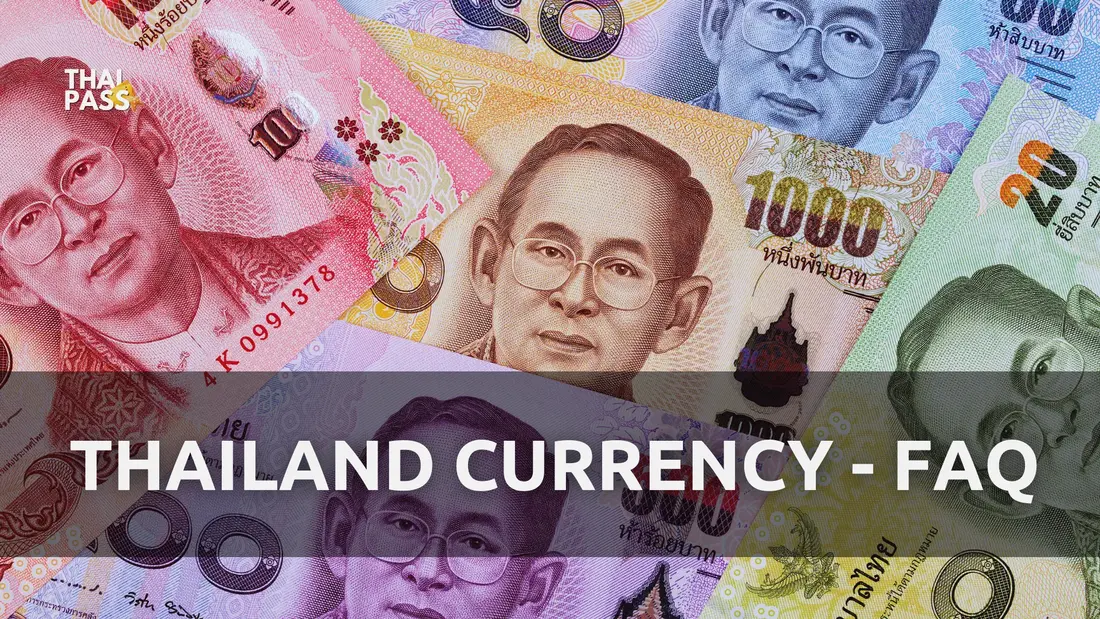
Planning a holiday on Thailand's stunning beaches and vibrant culture? Before you picture yourself relaxing in a hammock with a cocktail in hand, there's one important thing to sort out: money. Dealing with a new currency can be confusing, especially when it comes to exchange rates. This FAQ guide answers all your questions about the Thai currency in India, the current exchange rate, and how to exchange your Indian rupees – ensuring a stress-free holiday. We'll explain everything from the current exchange rate to the best exchange bureaus, so you can get the most out of your hard-earned rupees in Thailand, the Land of Smiles!
Frequently asked questions about Thai currency for Indian travelers: Converting rupees to baht – it's easy!
1. What currency does Thailand use?
The currency of Thailand is called Thai Baht (THB). It is used for all transactions in the country.
2. What is the exchange rate of 1 INR to Thai baht (THB)?
On October 30, 2026, 1 Indian Rupee was approximately equal to 0.355 Thai Baht, and 1 Thai Baht was approximately equal to 2.82 Indian Rupees. However, the exchange rate between Indian Rupees (INR) and Thai Baht (THB) fluctuates daily. You can calculate the amount of Indian Rupees you can exchange for Thai Baht by multiplying the current exchange rate by 1 Rupee.
Example: 10000 rupees = 10000 * 0.355 THB ≈ 3550 THB
3. What is the exchange rate of the Thai rupee to the Indian rupee?
As of October 30, 2026, 1 Thai Baht is approximately equivalent to 2.82 Indian Rupees. Therefore, 1000 Thai Baht would be approximately 2816 Indian Rupees.
4. What is the minimum amount of cash one should bring with them when entering Thailand?
To enter Thailand, visitors must provide proof of sufficient funds upon request. Immigration officials may require 10,000 THB (approximately 28,200 ₹) per person or 20,000 THB (approximately 56,300 ₹) per family in cash or equivalent documentation.
5. Is it mandatory to carry 10,000 Thai Baht?
Visitors must prove they possess at least 20,000 baht if traveling with their family. Individuals need at least 10,000 baht.
6. Is it better to exchange currency in India or in Thailand?
Currency exchange in Thailand is often cheaper. To exchange Indian rupees for Thai baht, it's more economical to use exchange bureaus or withdraw Thai baht from ATMs upon arrival in Thailand. It's advisable to check exchange rates and fees beforehand.
7. What is the maximum amount of cash I am allowed to bring from India to Thailand?
Currently, you are allowed to bring a maximum of 50,000 Baht per person from India to Thailand.
8. Which currency is best suited for a trip from India to Thailand?
The best currency for traveling from India to Thailand is the Thai Baht (THB). While you can also bring US dollars (USD) to travel in Thailand, it's recommended to use your home country's currency. Make your trip even easier with a Pro membership and enjoy exclusive travel benefits in Thailand.
9. How do I get Thai Baht upon arrival?
You can withdraw cash from ATMs using an international debit card. Since there's a transaction fee of 150 Thai Baht, you should withdraw a maximum of 20,000 Baht at a time. The AEON Bank ATM is the cheapest, by the way.
10. What denominations of Thai Baht should one carry with them in Thailand?
As a tourist, you should always carry smaller banknotes (usually 20, 50 and 100 Baht) with you during your trip through Thailand.
11. Is the Indian Rupee (INR) accepted in Thailand?
No, Indian Rupees are not accepted in Thailand. You must exchange your Indian Rupees for Thai Baht well in advance of your trip to Thailand.
12. Is 1000 THB per day sufficient for one person?
Well, that's not always the case, or it depends entirely on your needs. You can easily find a decent hotel for 1000 baht per night. However, how much comfort you require varies from person to person. For most visitors, 1000 baht per day isn't enough.
13. Should I take US dollars or Indian rupees to Thailand?
If you want to exchange Indian Rupees (INR) in India, exchanging US Dollars (USD) for INR is significantly easier than exchanging Thai Rupees (TBH). Demand for TBH is consistently higher, and you might end up paying more than the correct exchange rate. Since US Dollars are also accepted in Thailand, you can choose this option if you encounter difficulties exchanging currency.
14. Can I pay with an Indian debit/credit card in Thailand?
Yes, most large stores and shops in Thailand accept all major credit and debit cards. Smaller shops, however, generally do not accept cards and prefer cash, which is understandable.
15. What is the safest way to bring Indian cash into Thailand?
In Thailand, the safest way to carry money is with a combination of credit/debit cards for larger purchases and cash for smaller ones. Solo travelers should avoid carrying large amounts of cash. Instead, use cards or a special payment card from a local provider that doesn't charge high transaction fees.
16. What are the basic requirements for traveling from India to Thailand?
To enter Thailand from India, the following basic requirements must be met: a valid passport with at least six months' validity, a return ticket, proof of sufficient funds (10,000 THB per person), and completed entry forms. Tourists do not require a visa, as Thailand has granted visa-free entry to Indian citizens for up to 30 days since September 15, 2026.
17. Is 50,000 INR enough for a trip to Thailand?
Yes, 50,000 INR is sufficient for an affordable trip to Thailand. This covers basic expenses such as accommodation, food, public transport, and sightseeing for 4 to 5 days, depending on your travel style. However, for a longer stay, additional funds may be necessary.
18. Where can I check the current exchange rate of Thai Baht to Indian Rupees?
The exchange rate between the rupee and the Thai rupee changes daily. However, you can check the current exchange rates using currency converters such as the Bloomberg currency converter or the Reuters currency converter.
Diploma
This FAQ guide will make using the Thai currency – the Baht – easy. You'll now be well-equipped to confidently convert INR to Thai Baht and thus make the most of your travel budget. So pack your bags, immerse yourself in the vibrant culture, and enjoy the delicious cuisine. Also, be sure to familiarize yourself with the visa requirements for Thailand and plan a smooth trip.




Community
Comments 0
Start the conversation.